Runa Troy – Creative Crone

Practical Magic for Modern Seekers

Menu
  • Home
  • Creative Crone Shop
  • Courses & Consulting
  • Blog
  • ABOUT
  • Contact
    • Out & About With The Witch
    • Confidentiality & Security, Ethics & Terms
Menu

Tag: jay blades

What the Witch Is Reading — May 2026

Posted on May 28, 2026 by runa
This section of my blog is dedicated to spreading the love of reading and books and the people who make them happen. I would not be the Witch I am today without books. I owe an obscene amount of gratitude to all the makers of books out there. This is my way of giving back. I hope that something I pick up and review will guide you to acquire the next tome on your To Be Read stack.

This month has been busy with spirit-work seminars, kin-keeping, garden-building, and the affects of Jupiter return energy (more on that later), so book reading time has been at a premium. Regardless, still have three titles to share with you. What have you been reading? Tell me, please in the comments!
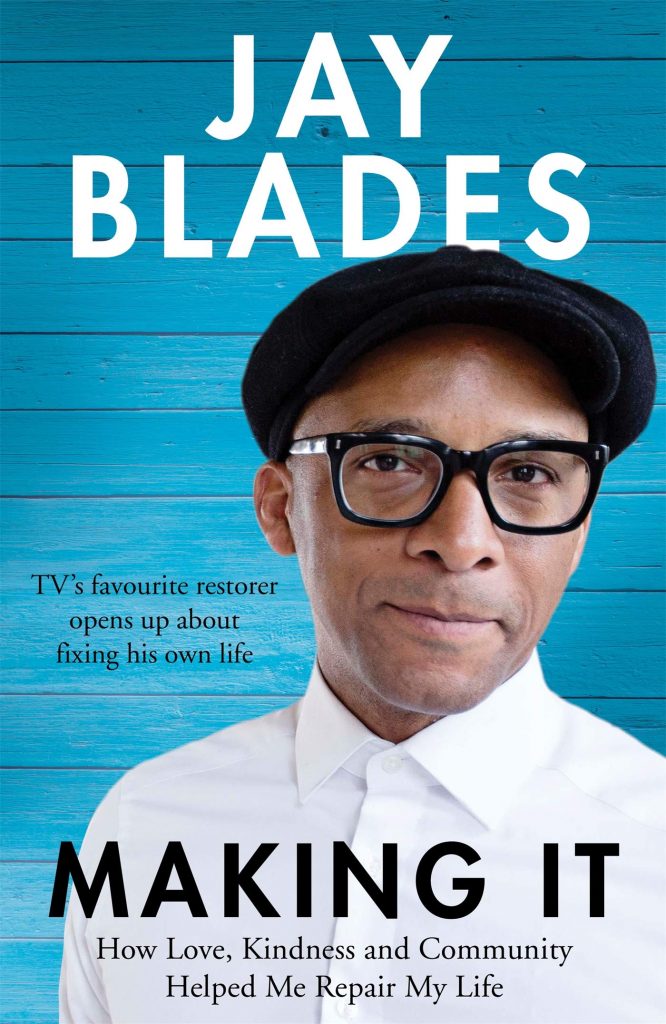
Making It: How Love, Kindness and Community Helped Me Repair My Life

By Jay Blades

I once had a friend who told me that the one thing he appreciated about me was that I made his life look good. Yeah, it wasn’t a compliment, but I felt that sentiment while reading Making It. Gratitude. Yet, hope has seemingly always powered Mr. Blades through his life. And it gave me gratitude and hope reading this. 

I also have a whole new perspective on the person many of us may have first met through the cozy show The Repair Shop. As a couple, my partner and I love treasure hunting in thrift stores, garage sales, and curb-side garbage picking.  So I deeply appreciate Blades and by default also The Repair Shop for saving what was important to the last generation. To me, this feels dutiful and appreciative for the those who came before. 

But like the layers of dirt and slapshod paint that Blades has removed from countless pieces of furniture, there’s more to this man than what one tv show portrays. I respect him even more having read this memoir, especially given all the bullshit he’s been through – As an American, to hear that Britain is just as bad as the United States in regards to young black men is bitter. Why did I think the UK was more progressive? 

Regardless, the memoir is certainly inspiring and the call for anti-racism, expressing emotion from men, especially in interpersonal relationships, as well as de-stigmatizing mental illness and behavioral health treatment, is threaded throughout his personal story. By the last chapter, I was left with the reassurance that if you just keep trying, keep showing up, the Universe makes sure the opportunities come forward. You just have to keep trying. You can’t give up. 

Well worth the read, or a listen if you’re into audio books.

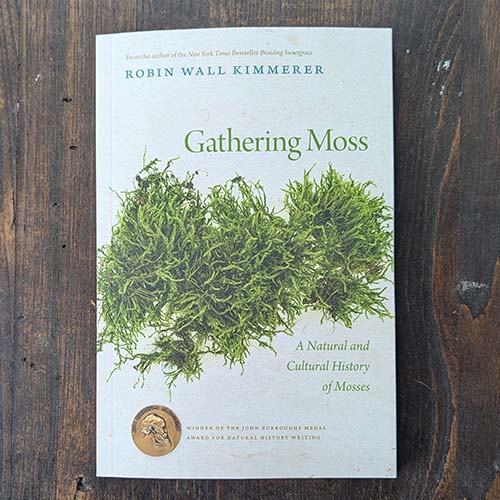
Gathering Moss: A Natural & Cultural History of Mosses

By Robin Wall Kimmerer
Up front, I need to tell you that I love listening to Professor Kimmerer while working the Land. So this book was definitely an audio listen. But, like all her books, I’ll listen, and then I’ll get the book for reference for my shelves. Each essay in Gathering Moss is peppered with wisdom inspired by the author’s indigenous worldview and of different types of mosses. They break down the science into stories and that’s some of my favorite reading. Kimmerer looks at mosses in this book not just scientifically but shows us the spirit within the moss, too. The fact that a PNW university helped publish this book is just a bonus for the collective culture of the Land where I reside as well. I’m shoving this book into my insurance companies face when they say I need to remove moss from my roof. It’s a capitalistic lie. I think I’ll take an Environmental and Forest Biology professor’s word for it and not yours. 

The Grief Cure: Looking for the End of Loss

By Cody Delistraty

Checked this one out of the library, because I’ve been doing a personal exploration of loss and grief, especially in the context of the culture of the United States. This book fit the bill, since the writer of this book explored an array of perspectives, actions, and events to deal with their grief, from trying to figure out if they had a disorder over their grief to trying to expand neural pathways with psychedelics. It’s clear this book was born of deep feelings. And reading it you will likely have lots of feelings about the author’s journey. I certainly did. 
The author was desperate to find the end of the feelings of loss they endured after their mother’s death. All of us have endured some sort of loss that produced grief, and the author’s situation is clearly relatable. They tried therapy, talked to AI, did mushroom therapy, laughter therapy (which made him have to force laugh in a very public place), visited shamans, did bibliotherapy (which I didn’t  know was a thing, but might check into it), etc. They wrote, “There is a difference, too, between closure on the one hand and memorials and rituals on the other. Memorials and rituals, I think, are healthy and helpful. It is the belief, however, that they signal the end to grief and reflection that can prove shortsighted.” As a person who has always side-eyed western funerals, this comparison between closure and grief’s end made so much sense. Portions of the book feel a bit too self-centered on the author, but moments like that kept me reading. 

Much that hampered the author’s journey with the grief over the loss of his mother, is our own society. Our own hang-ups, societies dictation, or even how loss and death presented itself in our lives. They write: “What a society chooses to grieve is ultimately its way of “posing the question of who ‘we’ are,” writes the philosopher Juidth Butler. “By asking whose lives are considered valuable, whose lives are mourned, and whose lives are considered ungrievable.” Yet Delistraty concludes quickly through half of the actions, therapies, and coping mechanisms, that: “In death and grief, there may be no singular truth at all, only what we tell ourselves.”

One of the interesting things is that the author themselves recommended text within the prose about other books on death and grief we should read. This includes: Mrs. Death Misses Death by poet Salena Godden; R.K. Narayan’s The Guide, which sound like more fodder for this Scorpio Stellium’s relationship with loss and death. Like the author of this grief exploration, it’s not how grief affects us, but what we do with it. “How easy it is to be engulfed by grief, drowned in it. To retain the positive memories is to be its master. To some extent that is the great experiment of life: to not become your loss, to alchemize it into wisdom.” 
What The Witch Is Reading – April 2026

Posted on April 29, 2026 by runa
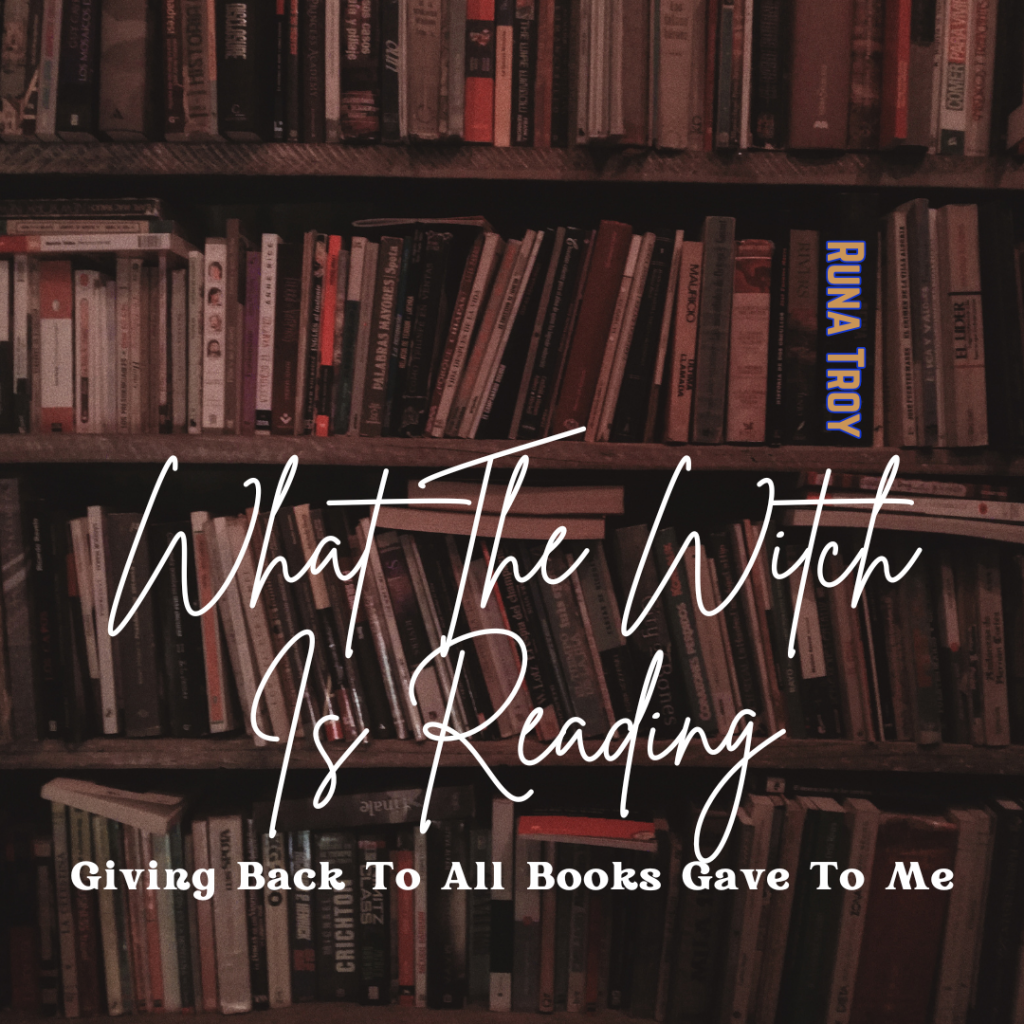
A picture of library bookshelves stuffed full with one book in particular that reads RUNA TROY on the Spine. The words: WHA THE WITCH IS READING are in script over the top of the image. Underneath that title is the subtitle: Giving Back To All Books Gave To Me

This section of my blog is dedicated to spreading the love of reading and books and the people who make them happen. I would not be the Witch I am today without books. I owe an obscene amount of gratitude to all the makers of books out there. This is my way of giving back. I hope that something I pick up and review will guide you to acquire the next tome on your To Be Read stack.


Books That Shape a Witch’s Journey

I’m writing classes* again this season whilst trying to create a magical covenstead. Reading time has also been split between research and fun. The two fun books included getting perspective on Land tending from a former journalist turned farmer and some straight-up creepy fiction. Although it took me a minute to finish them all in between moving too many cubic yards of materials, they were all lovely companions during breaks and at the end of the day. Damn I love books. Here’s What The Witch Is Reading:

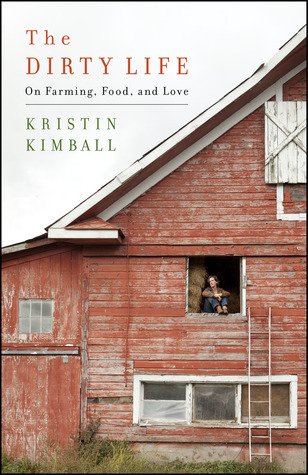
The Dirty Life – A Memoir of Farming, Food, and Love by Kristin Kimball

I overheard someone talking in our local food co-op about this book/ They said she was a jet-setting journalist with an Ivy-league background turned go-to-bed-exhausted New England farmer. Like the fiend that I am for books, I pulled up my phone and requested it from my local library asap. 

Kimball’s ability to recall the nitty gritty of being pulled to the Land (and the love of her life) was done with such tender-loving care that even if her worldview does not include the esoteric – you can tell they have a relationship. She also had me enthralled by the love of food and the semi-gourmand focus of the text. I will die on the hill that growing your own food and then preparing it to nourish self, kin, and community is some of the most powerful abundance magic anyone can conjure. Kimball seems to agree. She wrote, “Food, a French man told me once, is the first wealth. Grow it right, and you’ll feel insanely rich, no matter what you own.” No Lies Detected.

It also is an investment in healthcare that you didn’t know was a benefit on partnering with the Land and working it to live harmoniously with it and on it. In the book she details how she and her partner wanted what they did to be birthed from sustainability. Although she doesn’t talk about applying permaculture principles to the Land, many of their practices were at minimum regenerative, if not shadowing permaculture. That sustainability often meant more labor in the “start up” time of creating a prolific piece of Land that remains healthy. Doing that often makes the Land tender healthy, too. In The Dirty Life, Kimball records the alarming juxtaposition at a community meeting where old-school farmers who had plowed with draft horses like she did at her farm, against the younger generation that had embraced commercial farming practices – think lots of giant machinery and diesel fuel costs and harsh chemicals and a focus not on soil health, but that of output – showed physically the reflection of their methods in their appearance. She wrote, “…the old people looked healthier than the young who tended toward the obese.” Again, another telltale sign that she’s really in league with Land and community. 

The most quotable moment in the text which now is typed up and hung on the wall in the harvest shed here at #VillaWestwyk: 

“A farm is a manipulative creature. There is no such thing as finished. Work comes in a stream and has no end. There are only the things that must be doe and things that can be done later. The threat the farm has got on you, the one that keeps you running from can until can’t, is this: do it now or some living thing will wilt or suffer or die. It’s blackmail, really.” 

Seriously though, living close to the Land – whether its a community park that you tend or a huge farm like Kimball, or a tiny covenstead like yours truly, there is a richness there that defines that relationship:

“On our evening farm walks, the list of crops to harvest grew longer, we cruised the peas as the sun went down, grazing on handfuls of pods so full they looked dented…This is the farmer’s privilege, a form of decadence, and it made us feel rich.”

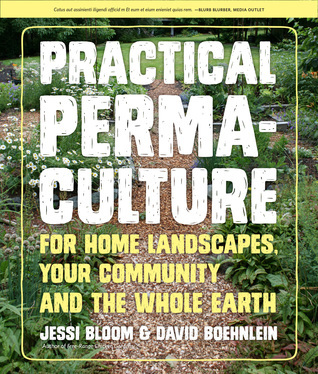
Practical Permaculture for Home Landscapes, Your Community, and the Whole Earth by Jessie Bloom & Dave Boehnlein

The Home Landscapes part of the title is what pulled me to this book. Also, I’ve read just about everything that Jessie Bloom has written about permaculture as well as heard her lecture. She has a lived experience in permaculture design and knowledge that is “local” in its approach, meaning she knows the nuances of doing what I’m doing in the Pacific Northwest, because she is as well. So it wasn’t a tough sell to get this book, except this home landscapes bit.

My hope was this book would present an integration between permaculture and a more modest piece of land, be it city lot or small rural covenstead that tends to be missing in some of the books on permaculture. Most of them present the information under the pretense of huge swaths of land. We have two acres, which is perfect for the covenstead, our neighbors, and community to live abundantly. Therefore, I was deeply interested in Bloom’s perspective on integrating smaller spaces in a permaculture design. I’m less familiar with her co-author, but his CV is clutch and I’m always ready to learn from others who are living their consulting/writing/business. They didn’t disappoint.

This book has actionable insights and advice to apply permaculture anywhere. It’s a comprehensive how-to whether you’re a beginner or a more intermediate designer. There’s not a lot of preachy language in this book, which I appreciate. Permaculturists are tired of preaching, but it still comes out in other texts I’ve read. 

I would say this book is great for beginners or veteran permaculturists, because if nothing else it’s a great idea generator. Apparently, it is used by the Oregon State University Permaculture Design Certificate course. Bloom & Boehnlein definitely get expert status in this covenstead of Beaver alum. There is a PNW bias to the book, I found, but not that it was a problem for me. Given that Bloom cut her permaculture teeth in this environment, many of the stories and lessons would happen in that coastal maritime zone. But all growing zones are featured and the diagrams and lists are super helpful. Want to learn more about the bones of permaculture? This is definitely a good place to start. 

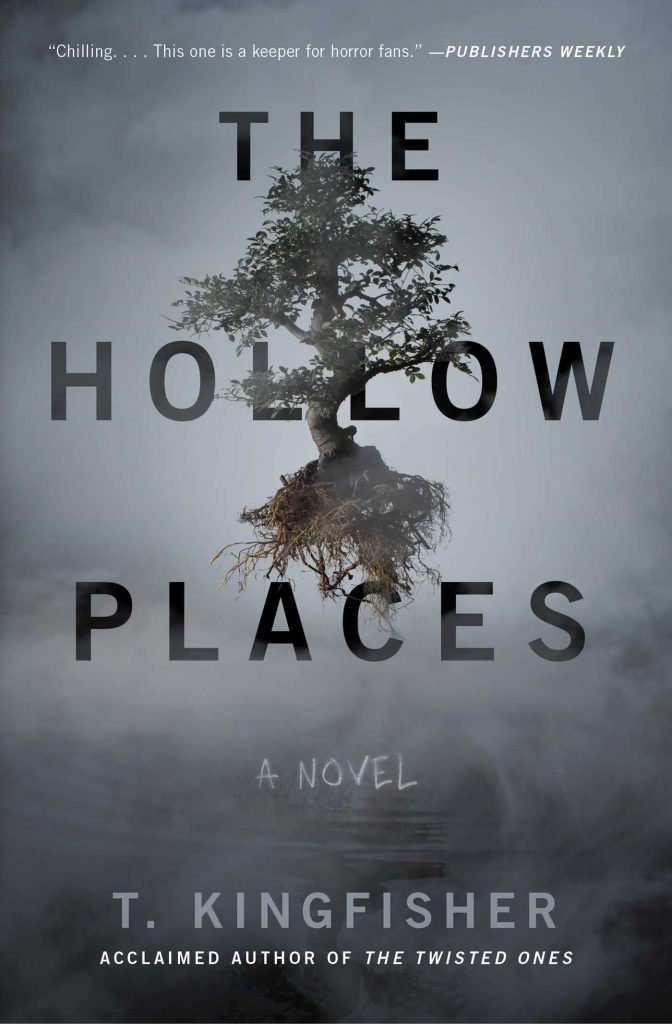
The Hollow Places by T. Kingfisher

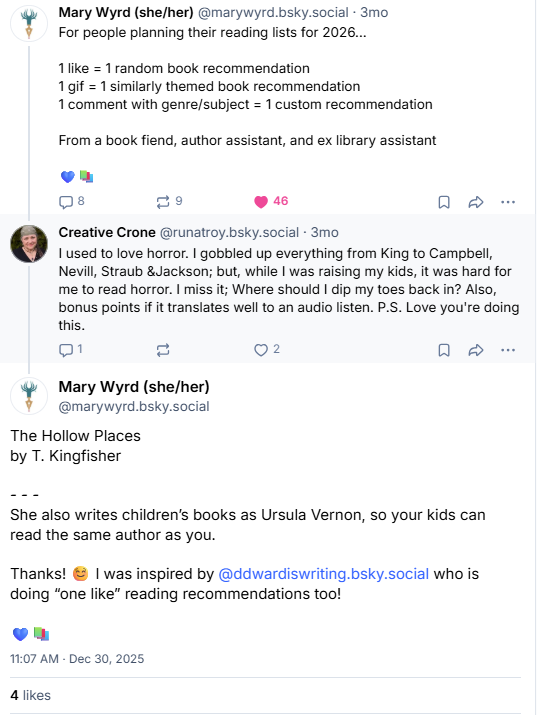
First horror novel I’ve read in a very long time and was recommended to me by @marywyrd.bsky.social (see photo). I love stories where the people are accidental heroes and this one fills the bill. The characters are so relatable and charming and you’re like, OMG don’t die! 

It centers on a recently divorce woman, Kara, who finds a portal to a terrifying, unstable dimension in her uncle’s museum of curiosities. That setting and Uncle Earl’s adorableness, helps bring comedy into this horror genre book so skillfully that my forage back into horror reading (I used to fancy myself a horror writer…until I had kids).

Add in some external complicated relationships (ex-husband, mother) and you’ll be nodding along with her desire to keep the crazy at bay. Little does she know it’s abutting her own bedroom. Kara’s sidekick Simon, the barista that works and lives next door, navigate this very weird other world together in regular-peeps bravery and fortitude. No superheroes here. Just two folx not wanting to die in a world that wants them dead (sound familiar?)

The setting both in the Museum of Natural Wonders, Curiosities and Taxidermy and the unnamed one they find behind a hole in the wall, is absolutely a character in itself and you may feel creeped out just by the eccentricity of Uncle Earl’s world and the other one filled with creepiness like none you’ve ever read before. 

The Hollow Places, for me, was darkly entertaining and full of unexpected laughter. When faced with the horrors of this world and the one on the other side of the hole in the wall have you wanting to scream and you laugh instead – good read, I say. Anything that horrific that kept me picking it up to finish is a winner – especially after decades of not reading horror. Good rec, Mary. Might have to check out more of Kingfisher’s work.  

As mentioned above, we’re still in high garden building and planting season here #OnTheCovenstead; but, there’s still plenty of reading being done. Currently I’m blazing through the memoir Making It: How Love, Kindness and Community Helped Me Repair My Life by Jay Blades of The Repair Shop fame. Do have to sometimes put it down and grieve for how so many of the countries that should know better are racist to the core. Yet, inspiration can be found in overcoming adversity, and Blades storytelling comes through like a chum giving you a chinwag at the pub. More on that next month! 


(*Walking the Path of the Elder Futhark is coming soon to the Creative Crone Shop)

The doors to Runa's Dream Academy are open:runatroy.com/index.php/20...#CreativeCrone #DreamAcademy #WitchSky #OccultSky #OnTheCovenstead

— Creative Crone (@runatroy.bsky.social) 2026-03-18T19:49:12.986Z
  • What the Witch Is Reading — May 2026
  • Rain, Hail, & Poetry
  • Brace For Impact Anniversary Sale!
  • What The Witch Is Reading – April 2026
  • Last Call for Magic In Your Cup: A Witch’s Guide To Sippable Spellcraft
© 2026 Runa Troy – Creative Crone | Powered by Minimalist Blog WordPress Theme