
This section of my blog is dedicated to spreading the love of reading and books and the people who make them happen. I would not be the Witch I am today without books. I owe an obscene amount of gratitude to all the makers of books out there. This is my way of giving back. I hope that something I pick up and review will guide you to acquire the next tome on your To Be Read stack.
This month’s What The Witch Is Reading features a diverse collection of titles. With each edition of this column, I mention my habit of exploring literature across various genres. I’ve found that delving into different styles enriches our understanding and broadens our perspectives on, well, life. And thereby the magic we make in it.
Each book presents an opportunity to engage with new ideas, and there’s something valuable to discover in every exploration. This month you’ll encounter authoritarian resistance, the importance of being a responsible ancestor, and challenging patriarchal norms. It’s a rich selection that invites deeper contemplation, dialogue, and spell work. I’m excited to share all the various voices within these books. I hope you find them as thought-provoking as I do.
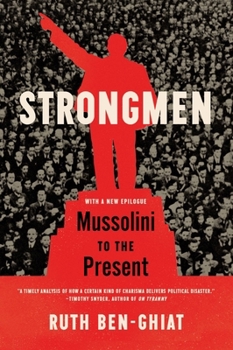
Strongmen: Mussolini to the Present by Ruth Ben-Ghiat
A mentor of mine listened to me howl about current politics one day over a virtual coffee date. They recommended this book because it not only explains how authoritarian leaders gain and keep power, it connects historical dictatorships to modern politics, and helps the reader recognize warning signs and defend democracy.
This book caught me right away when it listed that many of the autocrats from Amine to Trump and Erdogan, Gaddafi, and Putin all came to office through elections. It also highlighted that women aren’t normally the ones causing autocratic or fascist rule.
“Some readers may wonder why I do not discuss strong female leaders in modern history, such as Britain’s prime minister Margaret Thatcher or India’s prime minister Indira Gandhi. While some of these women may have had certain strongman traits (Thatcher’s nickname was “The Iron Lady”) or engaged in repressive actions against minority populations, none of them sought to destroy democracy, and so they are not addressed here.
And these guys are real pieces of work as Ben-Ghiat points out later.
“When US Secretary of State Condoleezza Rice visited Gaddafi in 2008, he insisted she dine in his private kitchen. He showed her a videotape he made of her – a montage of photos of her with Putin and other male leaders, set to a song, “Black Flower in the White House,” he had commissioned in her honor.”
As my nation continues to backtrack on social and justice issues, the examinations in this book made plain some of the idiocy we’re seeing today (think RFK Jr. and Kid Rock’s embarrassing reel on how manly and healthy they were–🤢), but Berlusconi seems, as Ben-Ghiat writes, inspired them. “The goal, in these and many other cases, was to demean professional women and make viewers laugh with him, and at them.”
Is there hope to get out from under these strong men? The book definitely details great ideas on how to combat these unhealthy leaders. The means to the end of any strongmen is the people. “At its core, though, resistance remains anchored in physical presence: people reclaiming public space and making a different nation visible and audible. In-person protest has crated the images and tactics that still inspire protestors today. … Around the world, one resistance action inspires others.”
However, it’s not going to be a fast switch. And we may want to start by tearing down anything and everything that has TFG’s name on it (and there are many).
“Undoing the effects of a leader’s oppressive presence and policies takes years, especially when his symbols, burial sites, and buildings live on… The strongman’s stadiums, highways, and airports, which his admirers see as proof that he brought the nation to greatness, cannot cover over the catastrophic loss that results from his rule. Expropriated assets, raided companies, interrupted schooling, disappeared parents, kidnapped children, and massacred communities leave voids that cannot be filled.”
Yes, Americans, she featured our current leader.
“The drive to accumulate and control bodies, territory, and wealth is a hallmark of strongman rule. The leader needs these possessions as much as he needs food and sleep. The rituals and pageantry of authoritarian rule, from rallies for the masses to the elite gatherings staged at private spaces like…Trump’s Mar-a-Lago resort in Florida, play to his bottomless need for control and adoration.”
“To oppose Authoritarians effectively, we must have a clear-eyed view of how they manage to get into power and stay there. The strongman brand of charisma, equal parts seduction and threat, attracts many followers by celebrating male authority. The autocrat bolsters patriarchal authority when it is seen as under threat…”
In short, hex the patriarchy (more on that later). But our country has a lot of shadow work, too in order to strengthen our democracy and heal the wounds currently being made, even as I write this and you read this.
“America has played an outsized role in the success of authoritarianism around the world, starting with the US banks and media outlets that supported Mussolini’s dictatorship in the 1920s. Although American backing of strongmen was most visible in the age of military coups, the US continues to prop up authoritarians. Lawyers and wealth managers help to keep them in power by securing the money they loot from their nations in offshore accounts.”
But the most chilling piece of evidence in this examination of Strongmen and the steps to recovering form it is founded in hope. She writes: “There are two paths people can take when faced with the proliferation of polarization and hatred in their societies. They can dig their trenches deeper, or they can reach across the lines to stop a new cycle of destruction, knowing solidarity, love, and dialogue are what the strongman most fears. History shows the importance of keeping hope and faith in humanity and supporting those who struggle for freedom in our own time. We can carry with us the stories of those who lived and died over a century of democracy’s destruction and resurrection. They are precious counsel for us today.”
If you have the tickets, I highly encourage you to read this. I was left with feeling that they mostly will self implode, but we as the people will need to keep the pressure up. I wrote my congressional people and told them to read this book, too.
Like Sun Tzu wrote in The Art of War, “If you know the enemy and know yourself, you need not fear the result of a hundred battles. If you know yourself but not the enemy, for every victory gained you will also suffer a defeat. If you know neither the enemy nor yourself, you will succumb in every battle.”
In the end, the book left me with this thought: We Witches tend to know ourselves well or are working on it. Knowing the enemy is maybe where the rest of us struggle. The enemy has shown themselves. Do we know them?

Stir: My Broken Brain and the meals That Brought Me Home by Jessica Fechtor
I picked up this book because the food nerd in me demanded it. This book was an audio ‘read’ for me. It’s language was beautiful and the writer weaved in food love and illness in a brilliant way. It’s largely a feel-good story, but there is one quote in the book I may have to have someone needlepoint some art:
“…felt the power of a recipe in a new way. How it takes you by the hand and tells you just what to do. A good recipe makes you brave.”
If you need a read that you feel like you’re rooting for the main character, Sitr will be a quick and delightful read. Apparently the actual hold-in-your-hand book had 27 recipes. My library download of this book didn’t host that. I may have to remedy that and buy a physical copy. ::rushes to put it on the list of book-store wish list::
Longpath: Becoming the Great Ancestors Our Future Needs; An Antidote for Short Termism by Ari Wallach
I liked this book’s main theme in that it really pushes folx to look beyond their own lifetime. In the author’s words there are distinct actons that need to happen in order for us to become Great Ancestors.
“Longpath has two critical pillars that are designed to combat the forces of short-termism, and to help you “garden” a brain that brings in a much bigger picture with every decision, even when those decisions lie deep beneath the surface of your consciousness. Those pillars are:
Transgenerational Empathy: A continual awareness of your place in a chain of being, wherein you reckon with your inherited history, find alignment in and with the present, and make adjustments to improve the future.
Futures Thinking and Telos: An expansive capacity to think about many different types of futures and an invitation to imagine the future you want.
For those of us who have deep empathy, Wallach contends that we are futurists in our own right. “That’s why empathy for the past has everything to do with the future. Transgenerational Empathy allows you to see what made you.” Transgenerational Empathy. If you’re an empathic person, that’s a heavy term. Long after returning the book to the library, I was still pondering the term Transgenerational Empathy throughout my day.
Mostly, the book defines that there needs to be a shift in not only how we learn, the author details, “There’s a lot of learning and realignment for us to do during our life spans and a finite amount of time to do it all in. Living an aligned life, comes with an acceptance that inevitable. One day, we won’t be alive, and this fact gives everything we do in our life meaning.”
One day, we won’t be alive. We have to care about what happens after. If we don’t are we even human?
The book’s spotlight on how current politics blocks our ability to be good ancestors, especially where the technology sector is concerned.
“Tech even created the ecosystem that enabled the manipulation of the US political system, as a 2018 report released by the Senate explained: “Social media have gone from being the natural infrastructure for sharing collective grievances and coordinating civic engagement, to being a computational tool for social control, manipulated by canny political consultants and available to politicians in democracies and dictatorships alike.”
Although I feel the book suffered from a bit of an advertising undercurrent throughout the text (the author teaches these tenets to organizations and leaders), and gives me pause to wholeheartedly recommend it, I liked that the book goes well beyond the Socratic view of examining life, but that an examined future is worth fighting for.
It did give me hope that there are people trying to get others to think about our grandchildren’s grandchildren, and act accordingly. For that, I was grateful to read it.
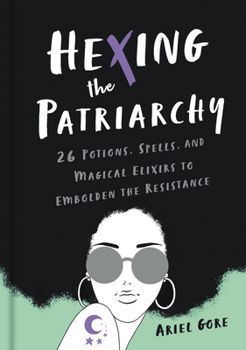
Hexing the Patriarchy: 26 Potions, Spells, and Magical Elixirs to Embolden The Resistance by Ariel Gore
This book has been in my TBR pile for too long. But it felt like the perfect brain cleanse after reading Ben-Ghiat’s Strongmen. And it was. As a former student of Gore (seriously if you have a chance to learn with her, do it), I have long loved the eclectic mix of people she has in her life and writes about. In this book, Gore brought out all the powerful witches and there’s 26 different spells to choose from, A to Z, from the most incredibly diverse and powerful group one could assemble as a, dare I say, Mega-coven.
Gore suggests that you start with the letters of your first name and work those, as to not be overwhelmed. But I can see how each and ever witch out there just might get through the whole dang alphabet. If I were to follow that guidance to do the spells of my name, we’d be looking at the following spells:
R – Reclaiming Power. Call on the goddess of transformation to do no harm and take no shit. (Every B’Witch I know could use a dose of this magic. A more powerful you is a more powerful ally.)
U – Unleashing Nemesis. Let the goddess of retribution and reparations explode in all her glorious pent-up fury. (The intro to this spell is all about Nazi Germany and I was like, holy shit, is this relevant, prophetic shit, Gore wrote.)
N – Never Erase. Raze the border walls to the ground: no person is “illegal.” (This entire section gave me chills and is so apropos given the collective fuckery we’re all dealing with right now.)
A – Ancestors. Hit up your dead relatives to help you smash the system. (Where our inheritance merges and how that mashes with our magic. Next layer ancestor veneration, readers.)
And there are 22 other sections to spell out the end of white supremacy and its older brother patriarchy. Pretty slay.
Gore weaved a special kind of magic in the book by using dozens of other practitioners from around the world in every representation. You can feel that powerful energy coming throughout each letter’s of the larger spell work. Imagine if every witch out there worked all 26 of these spells. From my words to the Universe’s desire. So it is. All this or better, witches.
I only have two concerns about this book. First is the inclusion of glitter in one of the workings. As a land-tender I am all too aware that commercially produced ‘glitter’ is harmful to the environment. However, it is easily substituted with colored sugar, salt, dried herbs, or mica. The second disappointment I had was that it took me so long to get to this one. I could have used this book when it first came out. Better late than never. Regardless, it’ll be well worn before too long.
See you for the next post on What The Witch Is Reading. Thanks for reading and comment if you have any questions, anecdotes, or requests.
As you can see, I read a little of everything. I’m always curious about what others are reading. What book are you working through right now? Let me know that, too!