A Couple of Books That Ask Who We Are
If you review the catalog of these posts, you’ll see I sometimes end up with a bit of a ‘theme’ when reading, even when not meaning to do so. This month’s book reviews are one such case. Who are you? Who are you as you see yourself? Who will you be in certain situations? Who will you become at the end?
These are the questions asked by the books I managed to get read amongst the ever-increasing need to hustle harder to make my small business stay afloat under the auspices of a disruptive, combatively nationalistic, and aggressive executive action that is the current traitorous administration of the US-ian government.
How we show up in the world under difficult circumstances seems to be the theme this month. One book is non-fiction; the other fiction. Both ask you to define who you are.
The Witch’s Name: Crafting Identities of Magical Power by Storm Faerywolf
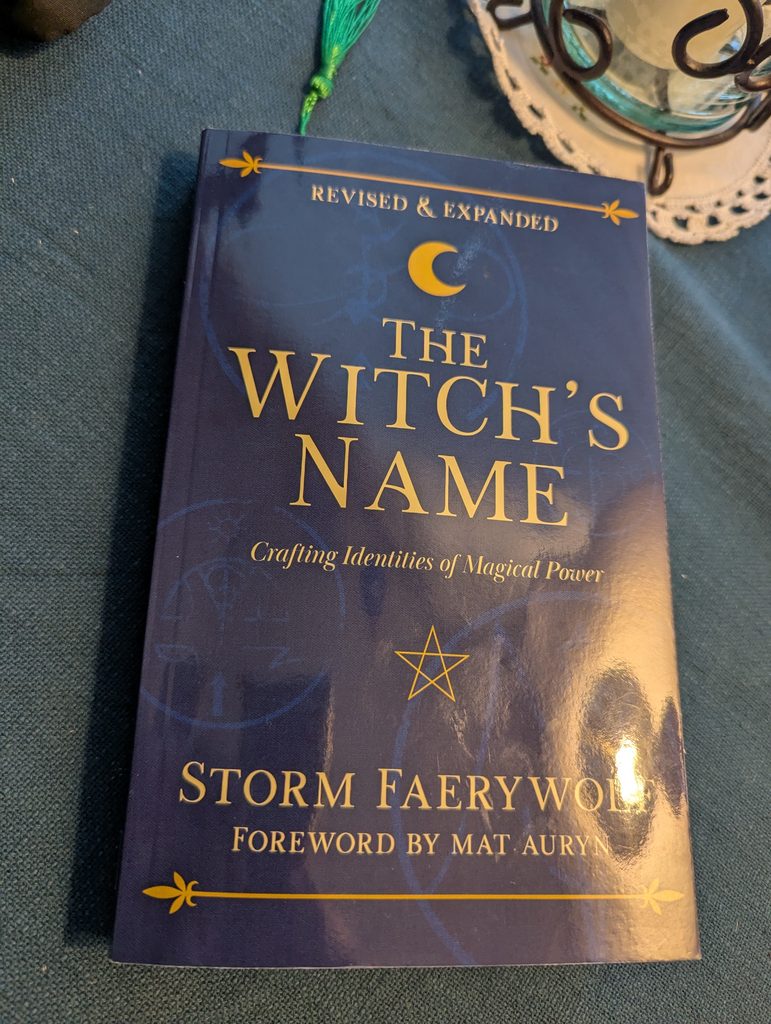
This book is a revised and expanded version of its former self and having read the first one back in 2022. I remember thinking that much of the flow of that one felt ‘restrained.’ Faerywolf takes down whatever reigns were on them in the last iteration and really fleshes out more in the new version. This version is still chock full of the ideas, prompts, rituals & spells. More importantly, it delivers a profound question to all of us: What does it mean to have a name?
The author states very early in the book, “The act of naming can restore to us a sense of power and control, especially when we have been feeling otherwise.” Given that, this isn’t a premise I think just for witches, although it is a common practice and ideal within the magical-practicing communities. Faerywolf lays out all the reasons a name has authority.
Yet, someone with the name Storm Faerywolf is clearly a passionate advocate for all the reasons one crafts an identity beginning with what the world calls you. And the academic in me loves the fact that this book is well researched. Faerywolf brings in perspectives from global cultures, history, as well as personal & interpersonal experiences. On a personal level, it made me smile to see Lois Borne’s magical name discussed in the book, too. Borne was an early mentor to me entertaining & responding to manically scrawled letters from a very quirky teenage and young adult, american epistemophile in the mid 80s to mid 90s. (I’d love to know if their estate still holds those letters?) Oh, Tanith you are missed.
Reading this expanded version, I’m still struck that many a new witch would like to have this book. It aptly explains why so many of us have elements, animals, ancestral, astrology, numerology, tarot, and such within our names. His tone is still inclusive, reflective, and in this expanded version, it felt more confident. In short, this could be looked upon as identity magic or recalling your power through title. Something witches, and surely Faerywolf, understand deep in our cores.
The expansion of the book includes new material on naming your coven or familiars. There is still the spellcraft, rituals, meditations, and journaling exercises that our community loves to have in our books. My favorite one in the book is the Elemental Balancing exercise. Faerywolf takes pains to make sure these are all inclusive and easily accessible to as many people as possible.
The author also includes stories about the grief that comes with claiming your identity magic, especially kindred’s reaction to a witch’s name. Highlighted is his own situation with his father’s reaction. In those stories are maps and instructions on how to mitigate for unexpected reactions. In the end, it’s your ‘poetic sigil’ and owning it is part of the growth of being a witch.
Faerywolf’s own lived experience is clear and present in the text and their perspective gives the reader a sprinkling of magical determination and “been there done that, ask me how I know” vibe to it. In short, the reader comes away with the idea that even if we inherit one name, we have it within our power to create a new one. The Witch’s Name clearly shows you how, and Faerywolf is a ready mentor and guide for you.
Like the W.C. Fields quote found within the text, “It ain’t what they call you, it’s what you answer to.” You decide what you answer to AND what people call you.
Favorite quote: “The process of finding a name can take some time, and you should be prepared to just strap in and enjoy the ride. Sometimes we will immediately know what our magical name is. Perhaps it is whispered to you in your childhood in the form of a fantasy or imaginary friend. Or maybe you were just always drawn to it, with no other tell-tale signs attached.”
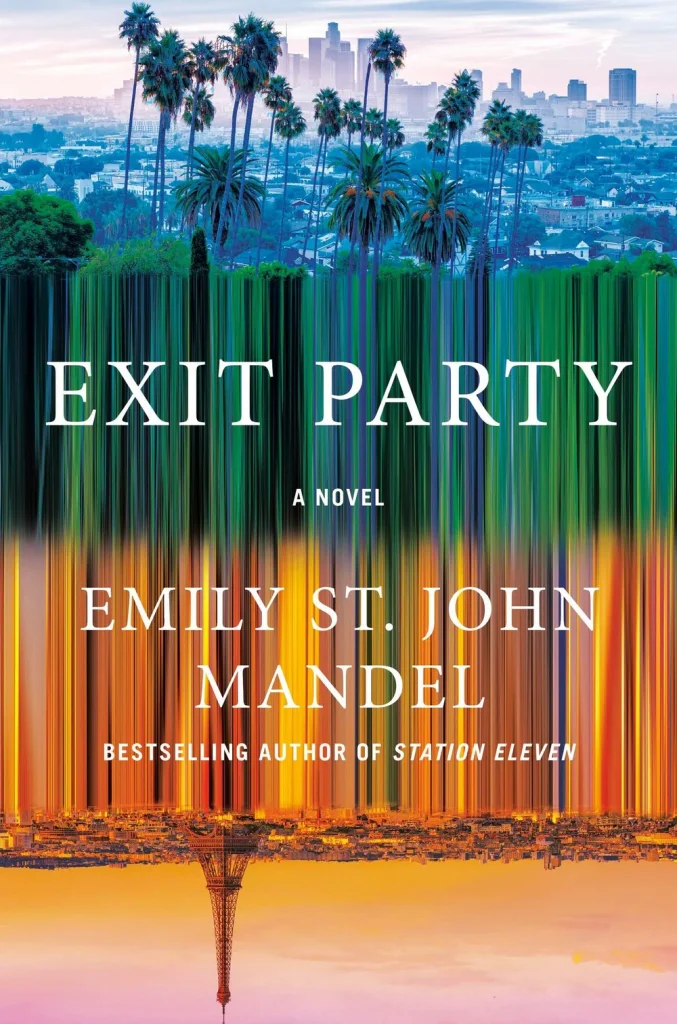
Exit Party, A Novel by Emily St. John Mandel
In winter, I tend to crave more fiction than non-fiction. I call them my ‘Hearth Reads,’ you know like Beach Reads but for winter. I get up early or stay up late with my book and my pup, next to the fire. Cozy reading time began a bit earlier this year because some of my fellow witches were very excited for me to read this particular novel. Exit Party by Emily St. John Mandel. The book deals with freedom, survival, surveillance, art, love, loss, and the nonsensical stuff that happens that we cannot explain.
The book begins with the United States at war with itself in 2031, but the tide is shifting. And a big hammer of a metaphor is presented to the reader. The first protagonist, Ari, is released from prison after eighteen years just as the Republic of California has been declared and the curfew in Los Angeles is lifted. Everyone in the city is celebrating.
Ari and her roommate, Gloria, go to a party where strange people and strange happenings take place. Alternate realities, timelines, and different versions of the same people are the foundation of this story. As is one particular piece of art and the connection to all the characters’ stories in this seventh novel by Mandel. Without giving spoilers, there is a piece of artwork that ties in all the different characters and timelines and the multiple dopplegangers.
It’s hard to miss the hit on the state of our country and its politics within this story – something I remember reading from the author’s 2020 book of Station Eleven (read before I began What The Witch Is Reading). But the characters drive the narrative in this story, a tactic that can cause some confusion for readers, but for which I found Mandel handled expertly, albeit sometimes the pace of the story left the reader with not enough descriptions – that whole telling and not showing thing that every writer may struggle with.
Exit Party will leave you with questions about your identity at 20 versus 60, or how you feel about the nation you were born in, and what it means when “home” doesn’t exist any longer. Also, Ohio will always suck regardless of which universe it is in. It’s clear that classic SciFi helped formulate Mandel’s writing style. I see PKD, LeGuinn, Vonnegut, and Bradbury influences in this story especially. But unlike SciFi films & tv, a mission to return to different realities is not the point of the story. The point is the people.
Favorite quotes: “I think if you live long enough,” Nico said, “you become a migrant from another timeline. There’s the world you learn to navigate as you enter adulthood, and then that world slips away from you by degrees, and after a while there’s nothing left of it, but you’re still here.”
Next Month
As mentioned above I’m deep in catching up on some of my fiction reading. I’m currently working through Why Fish Don’t Exist by Lulu Miller. I’m also reading We Will Rise Again a speculative fiction anthology on protest, resistance, and hope. My hope is that you get some time to get cozy with your TBR pile. Until then, Witches!