Runa Troy – Creative Crone

Practical Magic for Modern Seekers

Menu
  • Home
  • Creative Crone Shop
  • Courses & Consulting
  • Blog
  • ABOUT
  • Contact
    • Out & About With The Witch
    • Confidentiality & Security, Ethics & Terms
Menu

Category: Crone Dispatch

Animals on the Covenstead: White-Crowned Sparrow

Posted on June 12, 2026 by runa
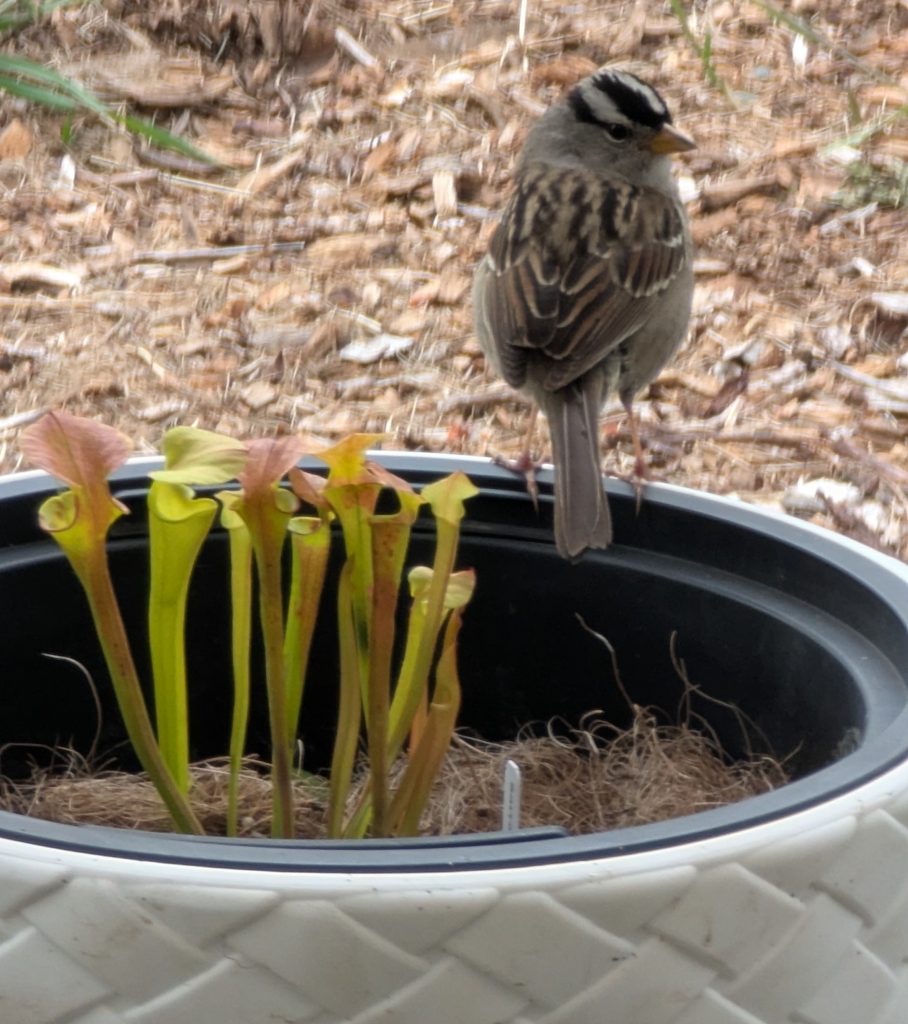
A white-crowned sparrow (aka Fanny) perches on a pitcher-plant flower pot. (Photo by Runa Troy)

I spend a lot of time with animals. As a Witch that identifies as an animist, my relationship with the Land includes animals. It is an important aspect in my life, as it builds so much joy, which fuels hope, and therefore resilience. Resilience breeds strength in my experience. The world needs strong witches right now, so – animal relationships breed strong witches. They also are often vehicles of messages and or lessons from the Universe. 

Some folx find it fascinating how creatures just appear when I’m about. My partner comments often about how I see the creatures faster than anyone they know. I’m no Snow White, but Villa Westwyk is home to not just tended creatures but many a wild animal, too. I wanted to share a new-ish relationship that’s sprouted this spring as our gardens begin to mature and the animal kingdom takes notice.

Today’s focus is Fanny, a white-crowned sparrow that moved into my Black Madonna garden – a garden that came about after some powerful dreams and a calling from the Creator Mother. I am calling her Fanny, because that was whispered in my ear as I wondered what to call her when I was communicating with her. But no doubt also Fanny because she often is sassy and shakes her tail feathers at me. Lastly in 2026 is the year of ‘F’ for naming animals here on our Covenstead. It’s an old farmer’s tradition to keep track of how old your animals are – first year of raising, say chickens, = A; 2nd year = b…and so on. I’m currently making a list for ‘G’ names for 2027’s new animals. hehe.
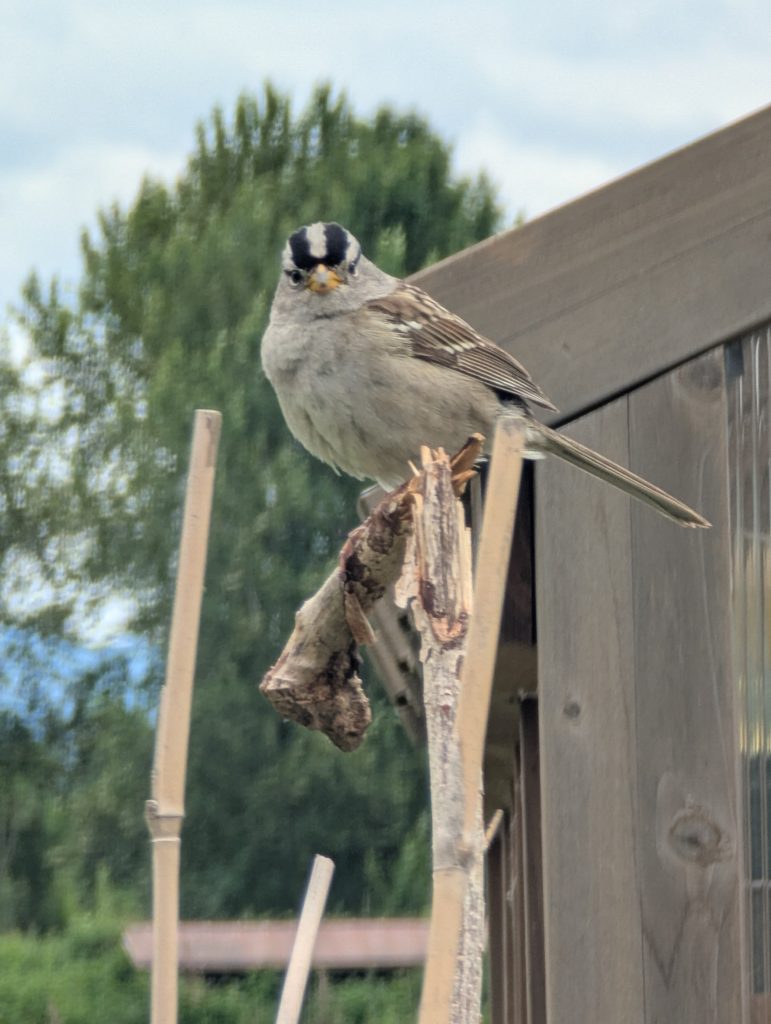
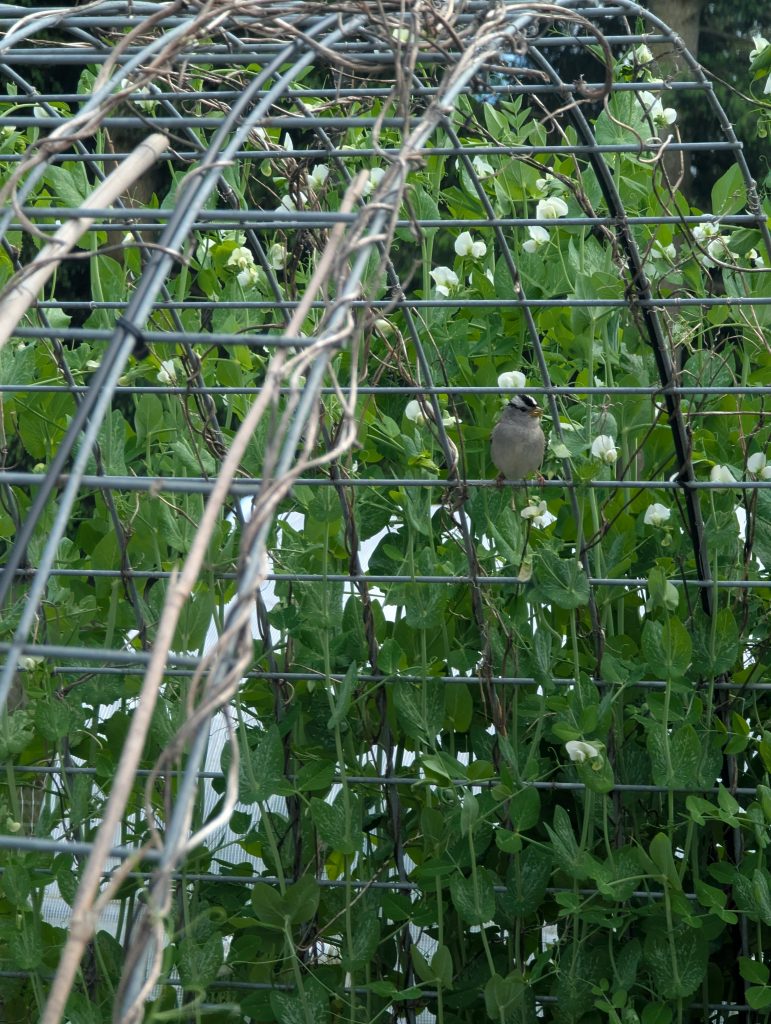
Fanny perches on the pea-garden trellis. We originally put this one in with it’s broken end as a perch for hummingbirds. Fanny had other ideas. (photo by Runa Troy)

Fanny showed up this year about the Spring equinox. She’s made a nest in the northern most dwarf tree in the Black Madonna Garden. Without delay they had a brood (I heard them chirping today), clamoring for ‘Freddie,’ Fanny’s partner, to feed them, since the males do most of the ‘cooking’ in the white-crowned sparrow kingdom. – oh, how I’d love to get a picture of their nest, but the conifer they are nesting in is THICK with branches and needles, and disturbing it is not my mission, but rather their success. 

Freddie’s song is so sweet to hear and dominates over Fanny’s softer song, and near incessant-chatter whilst she forages. You can always find where they are singing from because they perch up high so the whole Covenstead and beyond can hear. They are a delight to watch while I sit on my patio and look at Komo Kulshan or plan the next garden. Fanny, particularly is fearless and wants to know why I’m on her patio! 

Although white-crowned sparrows are mostly insect-eaters (according to my Sibley book), Fanny and Freddie have been gorging themselves and bringing up their new chicks with the leaves of my jungle of pea beds.  They prefer a well-rounded diet, clearly, and must get their greens. As long as they leave the flowers to turn into pea pods, we’ll continue to co-exist. Also, I can always plant more peas. 

Another interesting thing about this pair is supposedly they are not supposed to be breeding this time of year in our area. In fact the only time they are in our area according to most of the major ‘birding’ organizations (Cornell, Audubon, Nat Geo), they would be between breeding and migration times. But here they are. 

As that animist Witch, I know that nature is constantly teaching me, exchanging energy with me. Also, I recognize the Universe uses its residents to provide signs and messages to the rest of us. I think Fanny and her crew are here to teach me, to co-exist with me and the other humans and animals on the Covenstead. It’s easy knowing what lesson they bring to me. It’s a message about uniqueness, diversity, and finding home in unlikely places. Fanny knows and shows that just because someone else says that you should be here or there, or do this or that, doesn’t mean that’s what works for you. You and your kin can sing loud and proud from the highest greenhouse and beyond. You can raise your babies in a gothic garden and help from unlikely sources may just go ahead and move a bird waterer closer to your nest. 🪺⛲

Hope you’ll spend summer singing from the roof tops, eating your greens, and being happy, healthy, and surrounded by love and kin.  More photos below for the curious.
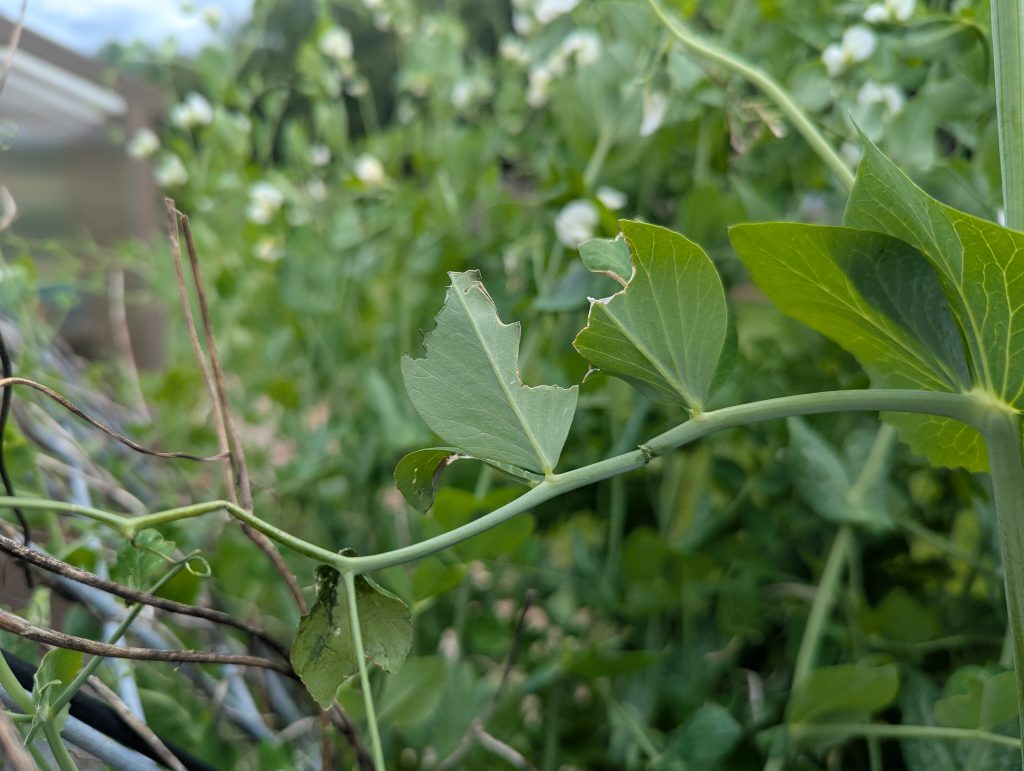
Evidence of Fanny & Freddie’s work on the pea trellis. (Photo by Runa Troy)

Hope you enjoyed this little taste of life of the Covenstead.  Creating a place where wildlife feels welcome is certainly a part of our grand master plan here at Villa Westwyk. This may or may not become a regular feature – I certainly could entertain it monthly. Let me know if you like stories like this and how you think nature gives you little glimpses into your higher self or nudges you down your path. 
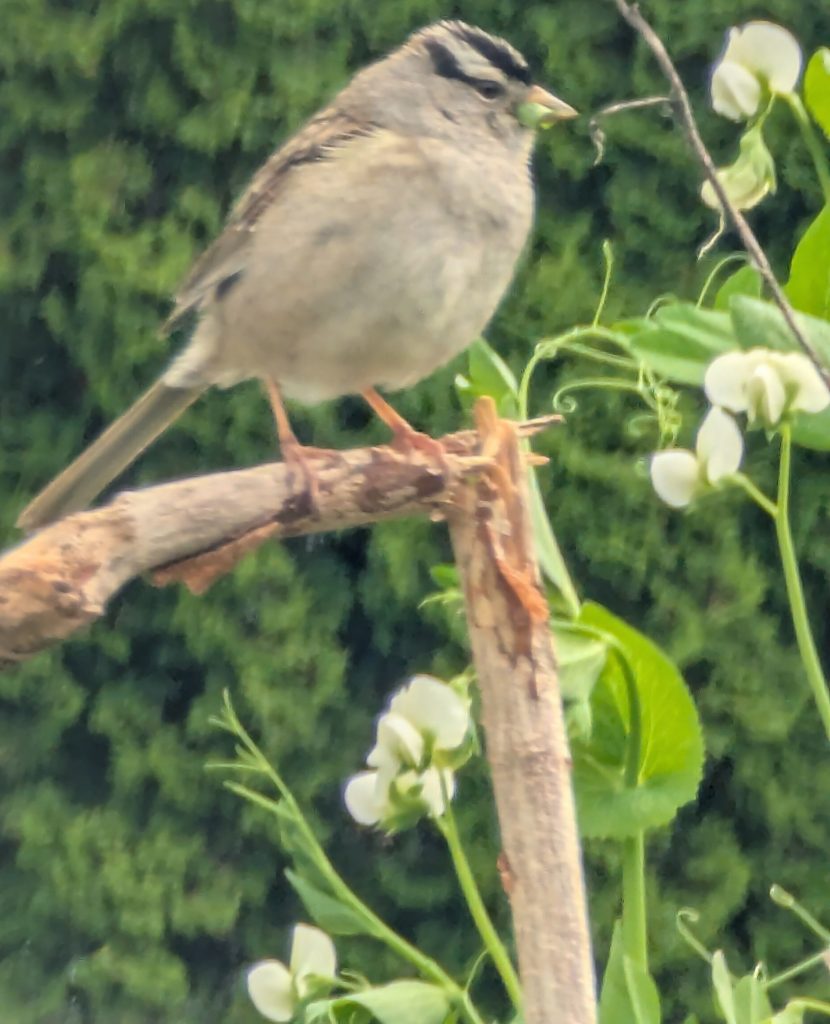
Caught with pea-leaves in her mouth. (Photo by Runa Troy)
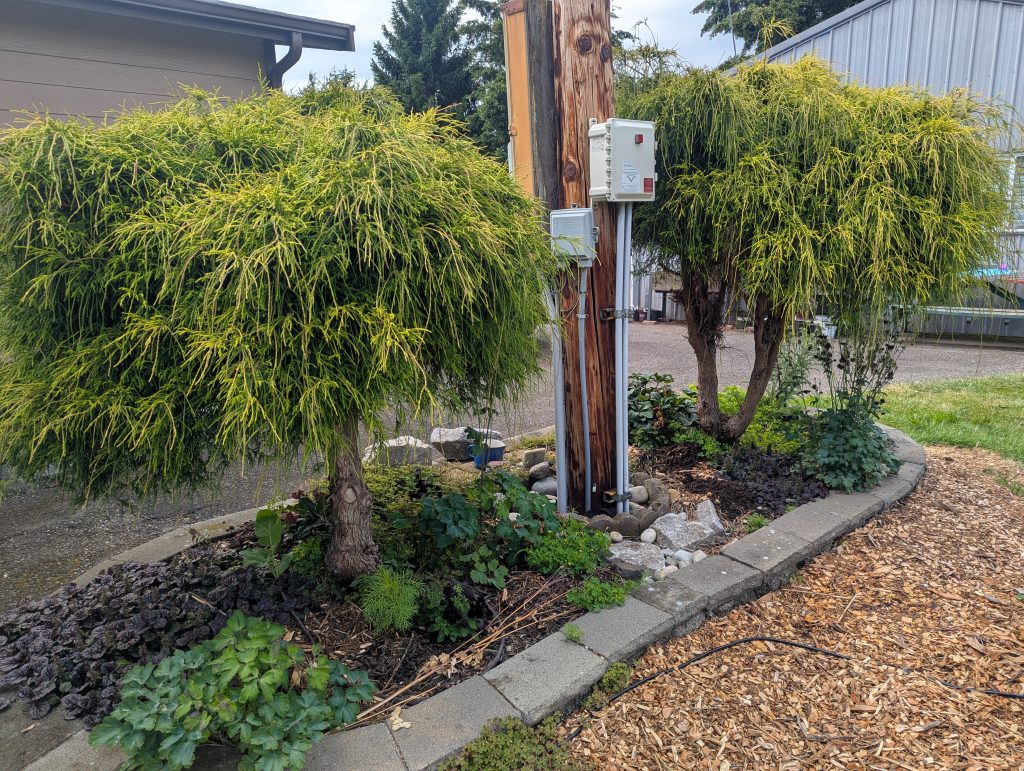
The Black Madonna Garden, dedicated to the Great Mother and my Slavic ancestors. The garden hosts black flowers and leaves per a dream I had years ago (It’s still a work in progress). The tree on the right is where the white-crown sparrow’s nest is. It’s a high-pedestrian-traffic area, but they don’t seem to mind. (Photo by Runa Troy)
A rare capture of “Freddie” since he’s mostly a stay-at-home Dad. (Photo by Runa Troy)

Pagan on Duty: Dog Tags, DEI, and Change

Posted on June 11, 2026 by runa
The author, military journalist, Germany, 1993.

When I joined the Army in 1992, my first introduction to military life was my drill instructor’s “we all wear green” speech. He was a Black man, a Vietnam veteran—sergeant first class—and the recruits looked up to him immediately. His desire for respectful interaction was surprising to us recruits who were expecting something a bit more comparative. Right from the get-go he was teaching us how to treat one another. Anti‑racism was clear from day one, the opposite of the stereotype Full Metal Jacket portrays.

Inclusivity wasn’t limited to my DI. At the time my training unit was one of the last all‑female battalions; an all‑male battalion trained in the adjacent quad. Don’t Ask, Don’t Tell was already rumbling and would become official policy months later, but the atmosphere felt, imperfect as it was, like a move toward a more equitable military. My lead DI was quietly authoritative, steadfast, and committed to intersectional inclusion. Near the end of training he told us that without women the military would be “much less than it is.” Current administrative rules about what can go on dog tags make the military less than it should be as well.

He stood up for me later in training when another DI teased me about my name. I learned he was pagan when we got our dog tags and discovered there wasn’t an officially recognized faith code for his beliefs. Dog tags indicate a service member’s faith so that traditions—like last rites—are honored. He listed “Catholic” on his tags because the imagery felt closest to his beliefs. I chose “Other.” One squadmate who was Wiccan chose “No Religious Preference.”

On Sundays, those listed as “Other” or “No Preference” often stayed in the barracks for chores—boot polishing, uniform pressing, barracks cleanup—while others attended religious services. Sometimes I went along just to get out of the barracks. It felt unfair that, because Fort Jackson lacked services for “Others,” we were assigned work while Christians received time off.

At my first duty station, friends in Personnel Services made me a contraband pair of dog tags. I remember feeling emotional when my buddy gave them to me: in all caps under my name, social, and blood type read “PAGAN.” I wore them proudly. Leadership knew, and—like Don’t Ask, Don’t Tell—didn’t make an issue of it. During my service, internal rank‑and‑file pressure, command surveys, and soldiers’ time were used to push against outdated policies restricting faith codes and non‑traditional partnership recognition. Minority religions were present across the force in my experience: another pagan practitioner was involved in family readiness programs, heathens performed blóts, and Wiccans held initiation circles.

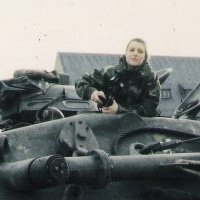
The author, assigned with UNPROFOR, the Balkans, June 1995

In 2001, Veterans Affairs adopted a new procedure and approved the addition of emblems of belief for other faith groups for military headstones, much by the hard work of Circle Sanctuary, a non-profit nature Spirituality Church, also known as their  Pentacle Quest. I would end my active enlistment time right about when it became official for Pagan and Earth-centered traditions to be an official religious preference on dog tags and service records (circa 2007). Between more women serving side by side with men, the inclusion of openly serving queer community members, and more faiths being recognized, it seemed like the Department of Defense was maturing and becoming a place of diversity, equity, and inclusion. Oh, right, DEI was part of our annual training, too.

Two decades after that adoption, servicemembers may again be forced to choose “Other” or “No Preference” because the inclusive coding system that guides chaplains and caregivers has been narrowed. That matters: chaplains are often the frontline support for faith practices, including in combat. The current U.S. Secretary of Defense used this policy change to roll back equity and equality, reflecting a broader push toward privileging one religion over others.

Civil‑rights and advocacy groups are challenging the policy. American Atheists filed a FOIA request, and the Military Religious Freedom Foundation is speaking out. Lawmakers, including the co‑chairs of the Congressional Freethought Caucus and a coalition of Utah legislators, have applied pressure and demanded answers.

You have a voice: contact your senators to urge them to require the Pentagon to recognize all belief systems (Paganism, Humanism, Atheism, etc.)—for example, by inserting a provision in the next National Defense Authorization Act or attaching a funding rider to defense appropriations to prevent enforcement of the restrictive system.

My rebellious dog tags spent decades as just dog tags—no rebellion needed—until now. Stored in my footlocker at Villa Westwyk, they remain a symbol of resistance and proof that change is possible and worth protecting.

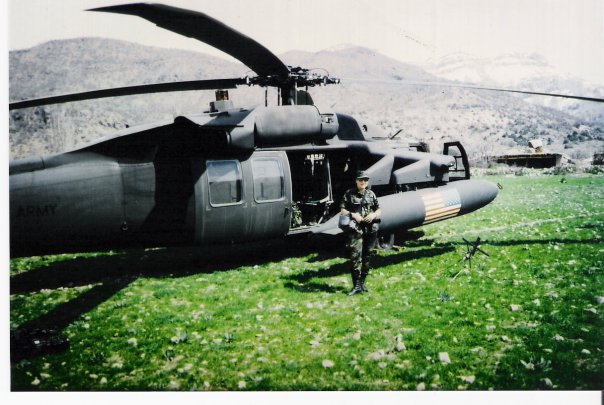
The author, military journalist, Zaku, Iraq, Spring 1994

Six Years of Sustainable Growth: A Witch’s Journey

Posted on April 7, 2026April 8, 2026 by runa
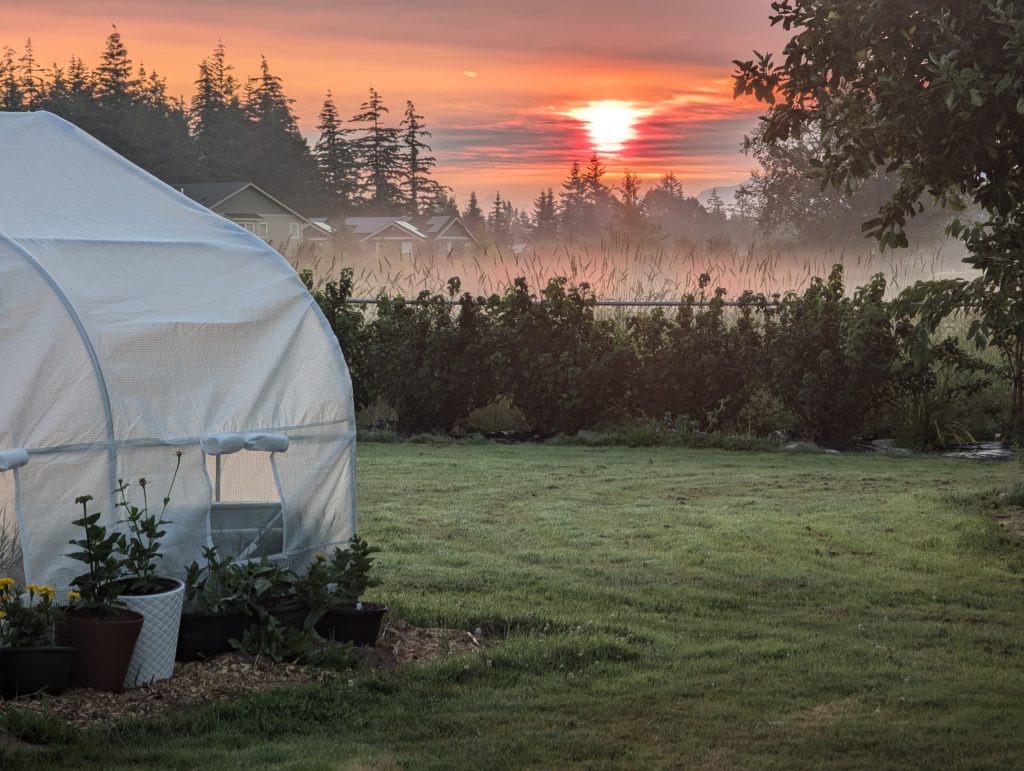
The sunrising on Villa Westwyk in the summer of 2025.

It’s high food-planting season. Over on Bluesky I’ve posted about the things we’re doing each day #OnTheCovenstead to live in concert with the Land. Part of that is growing our own food – obtaining a yield, as us permaculturists like to say. At the end of the farm-work day I’ll record what was done. I’ve been sharing the highlights – like I said on Bluesky (are we following each other?) – as the work to grow as much food as we can – for us, for our kindred, and for the community* – reaches a fevered pitch.

And then someone asked for photos of what I was talking about (thanks Pamelia!). This took me down such a long road to be able to snap some photos and share. It also had me thinking about sustainability, because, well, as a practicing permaculturalist Witch, I’m constantly thinking about that. Looking to snap some current photos, then had me looking at where we’ve been on this property. It’s been six years since we had a half-crocked idea to take two acres of abused land and create a covenstead that was ecologically sustainable for a magical life. 

I’ve blogged before about my love of small, slow solutions, a tenet of permaculture, because it allows you to make mistakes, adjust along the way, learn from those lessons, and create something stronger moving forward. The systems needed to mimic nature in order to live as a human being can be intense. Everything from composting, planting food forests, and rainwater harvesting takes time. A forest doesn’t shoot up overnight. Neither does a covenstead. Gradual lets you incrementally act in a manageable form. 

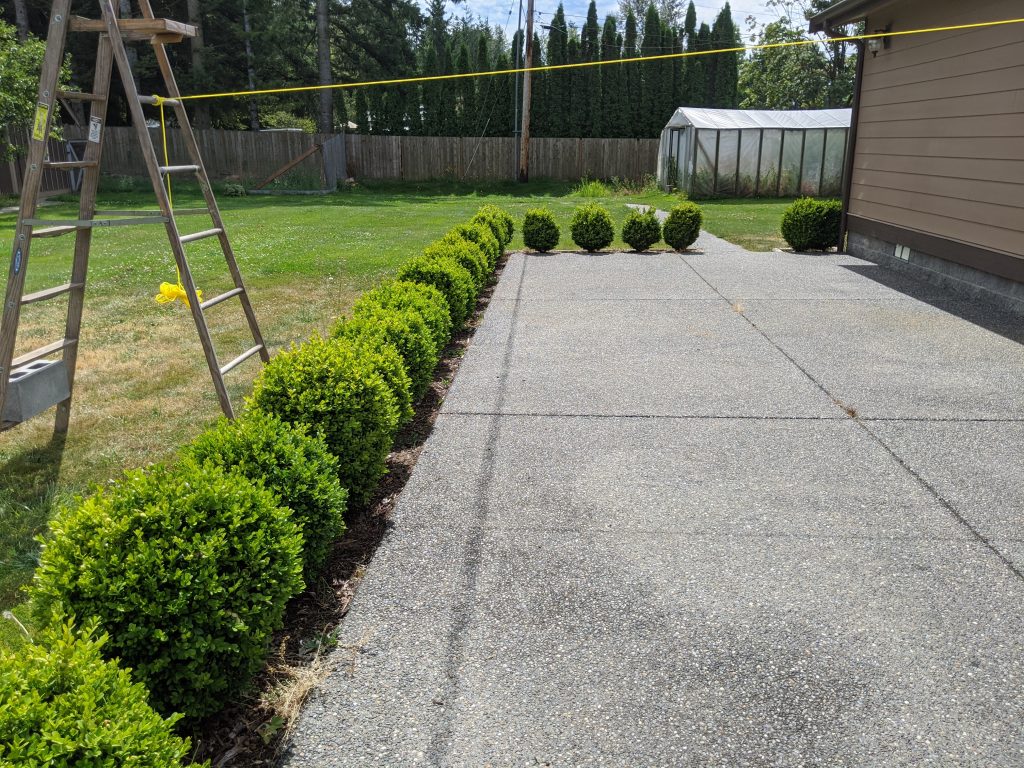
Let me lay it out in picture form – here’s where we started:

This shows the view from the north of our back patio along the eastern edge of our cottage. The former owners had shoved 18 boxwood bushes into this space and slugged a huge amount of glyphosate-based herbicides everywhere. If these were Oregon Boxwood, I would have repurposed them somewhere special on the property. But most began to die off even as I moved them to provide shelter for our poultry. In the background you can see the weather beaten cold frame that was here when we moved in. We used it until it was absolutely unsafe; but the beds remain and are now our root garden.
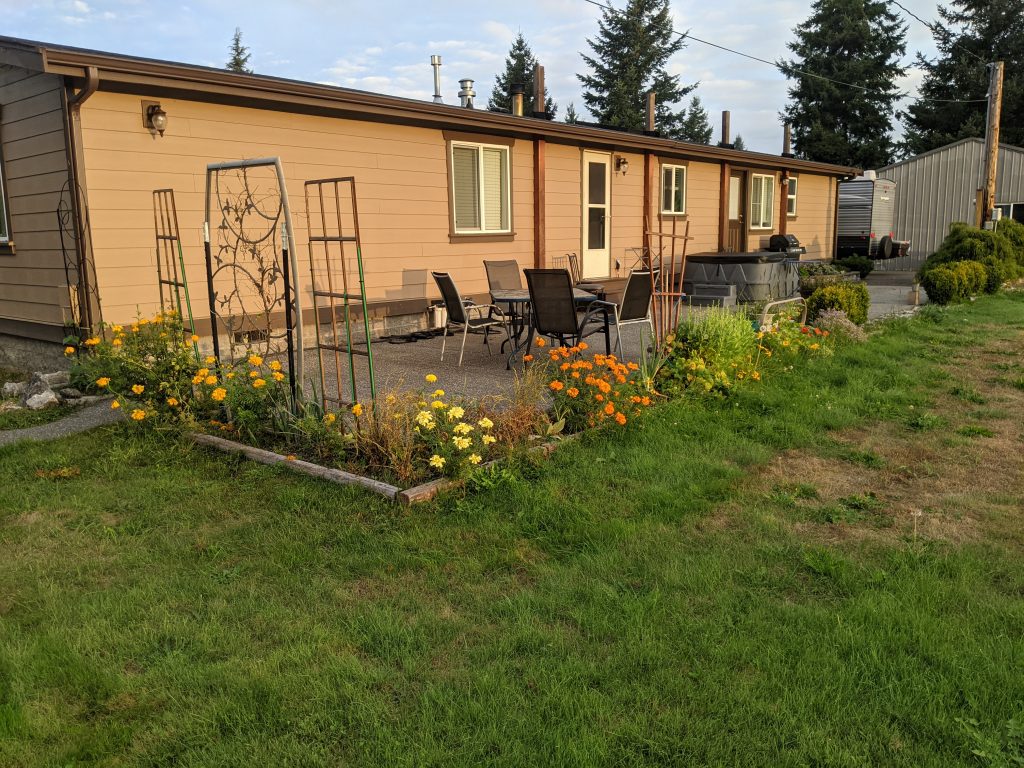
Looking north (the opposite view from above). This is the back of our small cottage in summer 2021 – a year in. This is where we would install a cover over the patio (the measurement plumb line you see in the photo above), the tomato tunnel, and the greenhouse. Future plans include a small geo dome in between the polytunnel and the greenhouse to host our hot tub and tropical plants year round.

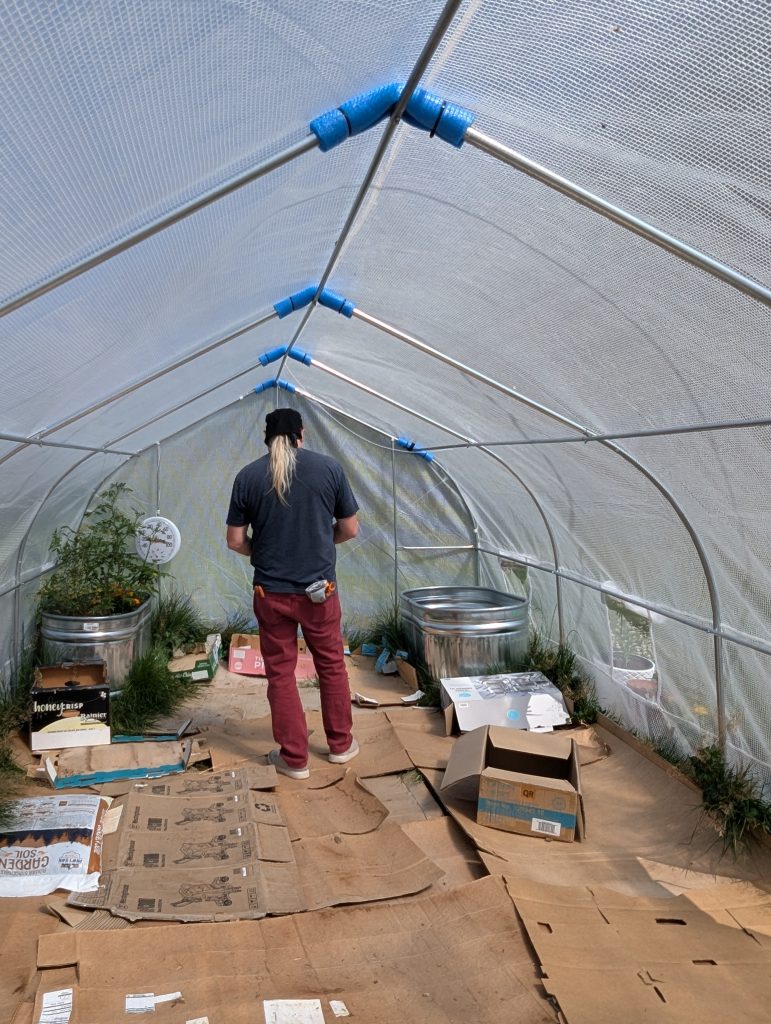
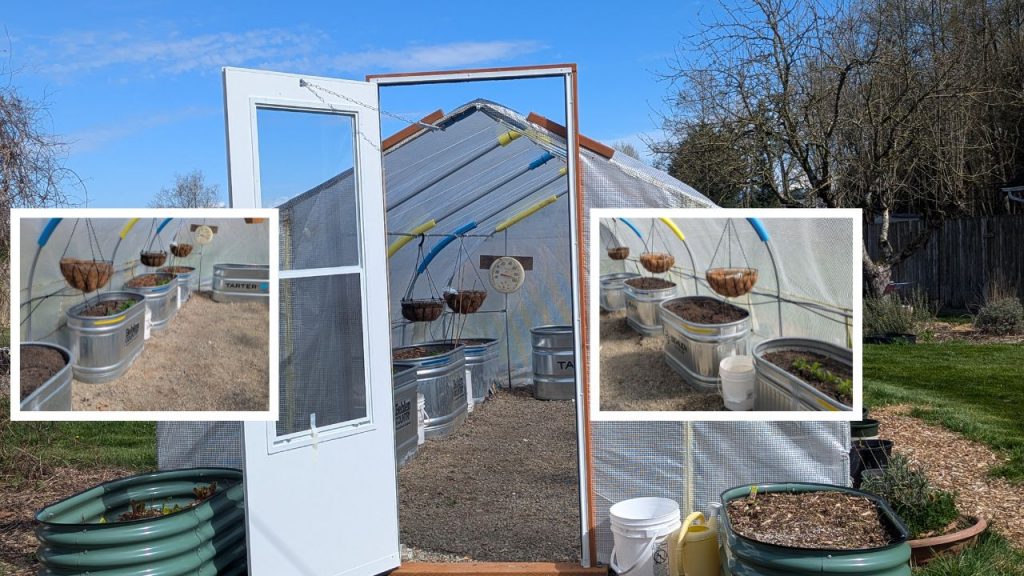
We installed the polytunnel in the fall of 2023. The photo below is Spring of 2024. Small, slow solutions in action.

Above you see us mid-cardboard applying. Done so to block vegetation, and at this point it looks very unorganized and messy. We inherited the four troughs in the corners as they were put down during installation to help anchor the tunnel to the ground. Winters here bring hurricane-speed wind gusts blowing off the Pacific Ocean (we’re six miles as the crows flies to the beach).
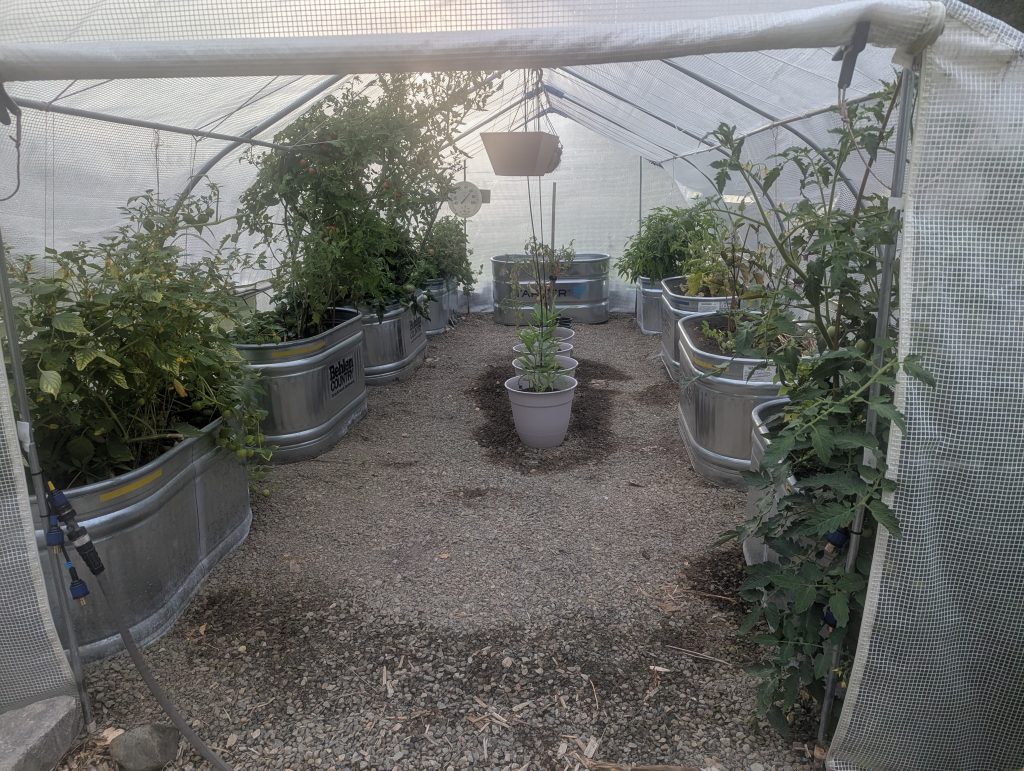
High growing season 2025. Tomatoes anyone?
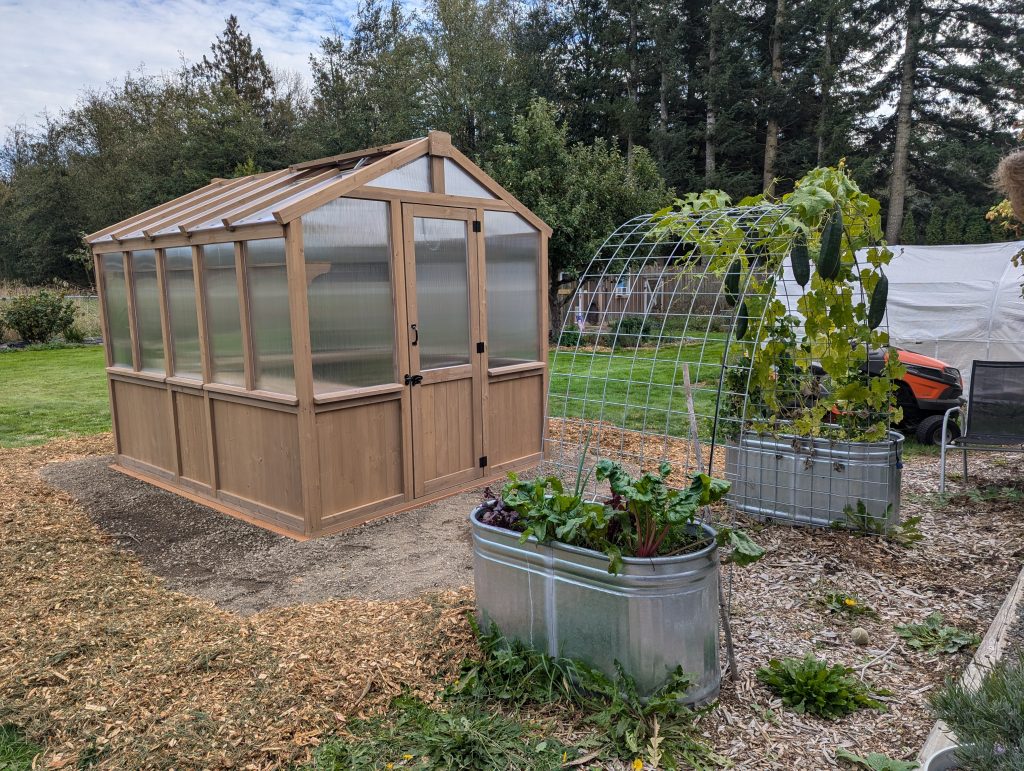
The small greenhouse was built in the fall of 2024 (buy things on clearance, friends).

Investing in the infrastructure of a new poly tunnel to replace the dilapidated one that was here when we moved into Villa Westwyk, took a bit of small-scale steps. Same with the greenhouse. Bit by bit we took planned and intentionally thought-out actions in order to reduce adding too much at once, and minimizing risk. Like Jessi Bloom wrote in “Practical Permaculture” it’s easier to fail spending $100 versus $1000.  If I’d planted all the trees I planted to today’s count (17), there’s a good chance I would have put them in the wrong place. It’s taken me some time to observe & interact with the environment here. As a witch, I also needed to get to know the Land and its needs, strengths, and where it needed extra special attention towards energetic things. Notably, this often leads to understanding the physical needs of the Land as well. Like, there is no way in heck there will ever be anything that grows in the southeast corner here. Why? Well, I had to learn that. (It’s keeping something else out – story for another blog post.)

Heck, do you know where the prevailing wind is where you live? Does it change seasonally? Which direction does your front door face? All of these things factor into how you implement affordable, scalable projects to live with the Land as much as possible. 

The same is true for our spiritual lives. As a Witch you cultivate power over time. Small repeated acts, lighting a candle daily, keeping a lunar magic calendar, or an intention journal, build a deeper connection than dramatic, infrequent rituals. Burning your magical candle at both ends does nothing but lead to burnout (why readers like myself take energetic cleansing seriously). A Witch cannot expect instant manifestations until you can feel the subtle shifts of energy. 

One of the key strengths of small slow solutions is their adaptability – whether it’s practicing the Craft or designing the landscape of the environment around you with generations to come in mind. As a Witch I aim to be a good ancestor. As a permaculturist I aim to provide for my great-great-great grandchildren. This led my thoughts to noting where this simple question of “Pictures?” how both as a Witch and a permaculturist, there is a harm-reduction mindset. Small, slow solutions make sure you have the space and time and energy to do things as kindly and considerately as possible. 

Incremental changes allow for continuous observation and adjustment. If a system fails or a spell underperforms, the consequences are limited, and lessons can be applied immediately. This iterative process builds a resilient system capable of responding to environmental, economic, social, or energetic changes. You don’t buy a ready-made altar, you curate it over time. A slowly built one becomes a living system, not just a collection of items. 

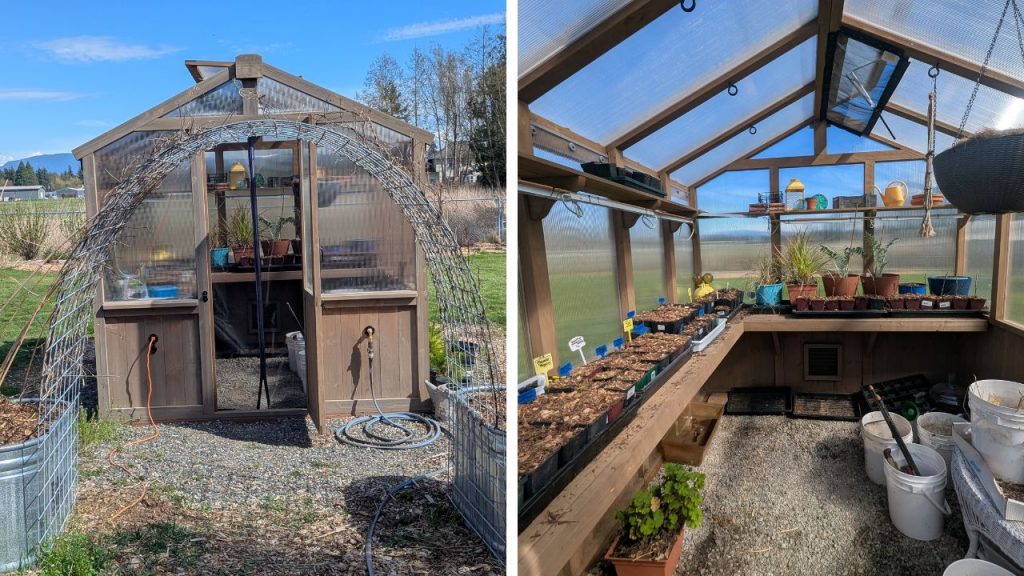
The greenhouse. April 2026. Full of overwinter plants and seed starts.

Small, slow solutions align closely with natural rhythms: the seasons, moon phases, plant growth. A Practice grounded in these cycles becomes more sustainable and intuitive, I’ve found and each year as I practice this becomes more and more concrete that magic and permaculture go together. A slower approach to your Craft creates space for reflection, which mirrors the interacting part of the permaculture tenet of observe & interact. I’m constantly asking myself why I want to do a spell? What are the potential outcomes (and dare I say consequences)? Is there a simpler or more aligned way to move forward? Like sometimes just having a conversation with someone is a whole lot faster than a cord-cutting spell. 

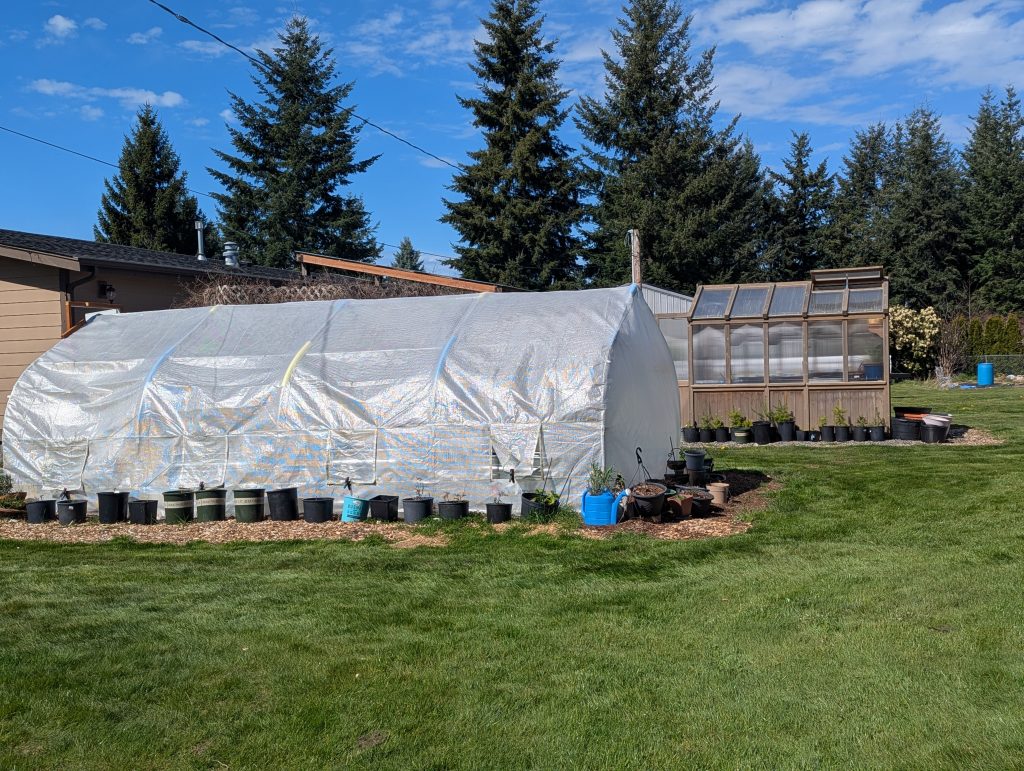
Villa Westwyk’s polytunnel (aka the Tomato Tunnel) as seen in April 2026.

Patience, observations, and intentional design are held up by small, slow solutions. Creating a garden or a magical practice that grows and adapts over time, creates a practical and resilient path forward. Magic is alive; just like the Land here at Villa Westwyk. Witchcraft is an ecosystem; not a transaction. The subtle shift in perspective can be very profound. It also opens the door for a Practice that fits into daily life. 

I’m not the same Witch I was six years ago. As the Land evolved, so did my Practice. Today my magic is deeper, I’m more skilled, and my intuition has never been stronger. 

Here’s to an abundant growing season – for both the Land & our Practice(s)!

Looking north along the east end of our cottage. The polytunnel and the greenhouse with its various plant starts all around, which include pine trees, strawberries, herbs, currant and berry bushes, and a few fruit trees.

* (I’m dropping off another 9 dozen eggs to the food bank this week). 

The doors to Runa's Dream Academy are open:runatroy.com/index.php/20...#CreativeCrone #DreamAcademy #WitchSky #OccultSky #OnTheCovenstead

— Creative Crone (@runatroy.bsky.social) 2026-03-18T19:49:12.986Z
  • Animals on the Covenstead: White-Crowned Sparrow
  • Pagan on Duty: Dog Tags, DEI, and Change
  • What the Witch Is Reading — May 2026
  • Rain, Hail, & Poetry
  • Brace For Impact Anniversary Sale!
© 2026 Runa Troy – Creative Crone | Powered by Minimalist Blog WordPress Theme