Runa Troy – Creative Crone

Practical Magic for Modern Seekers

Menu
  • Home
  • Creative Crone Shop
  • Courses & Consulting
  • Blog
  • ABOUT
  • Contact
    • Out & About With The Witch
    • Terms & Conditions
Menu

Category: PermieWitch

Getting Stung To Day Dream

Posted on July 19, 2024September 11, 2024 by runa

Unraveling the Messages from the Universe

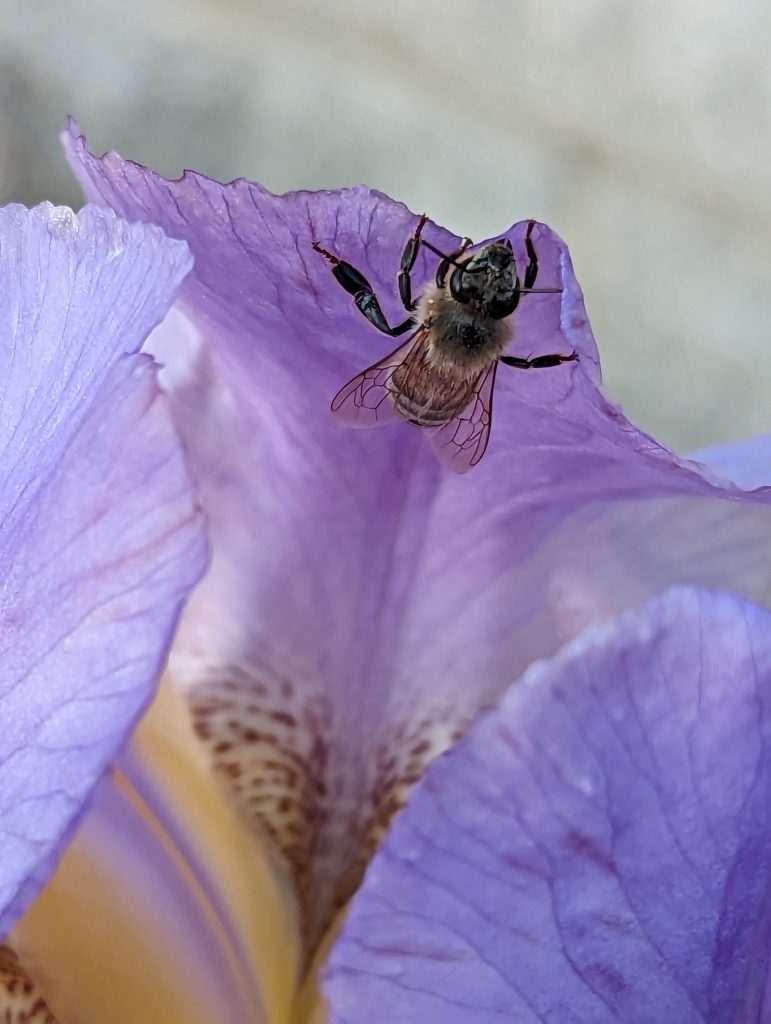
This week, I was stung by an unidentified flying insect. I wasn’t tromping through the land, or harvesting late, or weeding. I was just sitting having an evening snack and drink with kindred.  From the description of those who witnessed the attack, it was as tiny barely a fingernail width, colored mainly black with a pointed lower abdomen and a narrow waist called a petiole. That description matches a western honey bee, that accidentally flew into my elbow and felt I was attacking it. The jury is still out as to what it was that stung me, but it certainly got my attention.

At the moment that it happened, I felt like I was in a weird dream state. Things were so pleasant and then in an instant they were not. For days, my elbow looked like it was missing because of the swelling and hives. I’ll live, and I’m much better. But the discomfort lasts all week. As I treated my sting site, I recalled the weird dream state that happened in the previous years as well. My body and my energy were on high alert, which often brings in my witchy brain asap. This was worth noting and would lead me down an interesting daydreaming path. Like the wasp sting awakened this creative, intuitive, meditative channel of communication between myself and the Universe.

Each year that I have lived here at Villa Westwyk I have been stung. I don’t have an anaphylactic response, but I always get swelling, pain, hives, fatigue, and in some instances, it triggers an asthma attack. To be fair, as a Witch who works closely with the Land, it is a hazard of the job. Because I apply permaculture principles to my Witchcraft practice, I noticed that behavior, as one of its key tenets is to observe and interact. Well, I’m watching me get stung once a year, every year since residing here. And I think I know what’s happening.

Each incident has involved a different flying wasp or bee each time. The first was a bald-faced hornet. They look like the mean thing they are. They are black and white with an almost skeletal appearance. They can be super aggressive. Their sting is very painful. Being stung by a bald-faced hornet was one of the worst stings I’ve experienced, partly because the bugger hit me more than once. I was weeding a section of Land that had been crying out for healing – removing invasive species – and I must have disturbed a nest. I did not return to that section of Land until the following season. The attack site – my wrist and put me on my ass for a few days with my allergic response. It hurt so badly, I had to ice the sting site like once an hour when awake. Sleeping was hard because it just throbbed, burned, ached, and itched incessantly and restfulness was nearly impossible. I did compresses, tinctures, teas, and all kinds of anti-inflammatory treatments. I give bald-faced hornets a wide berth still today. 

The second growing season here I was stung by a bumblebee. That one hurt my feelings the most. I love the chonky bumblebees as they bungee jump from lavender stem to lavender stem. The physical recovery from that was not too bad, and the result was the setting of the rule that all harvesting has to be done before bee hour (around 10 a.m.). But it still wasn’t a cakewalk. Again, I was super sensitive the rest of the season when one of those very loud bumbles bobbed into view. I would immediately leave the area if one was about. I didn’t scream or cry or make a scene. Just a quick about-face away from wherever it was grazing.

Last year the sting came from the asshole of pollinators – the yellowjacket. Yes, yellowjackets are accidental pollinators as they fly from spot to spot in the garden eating the insects you hate to have in your garden like caterpillars and harmful flies. Yellow jackets eat a lot of the insects that like to harm fruit trees, so I want to give them a chance. But even so, they can be triggered to sting quickly, thereby achieving its asshole pollinator label. Yes, yes, even as an animist there are energies in this world I cannot abide. The yellow jacket has been on that list my entire life. Growing up we called yellow jackets sweat bees because they were always about when you were sweating outside in the heat. However, true sweat bees don’t sting and are sometimes called fairy wasps. But, the yellow jacket? Their sting has an intense pain level. 

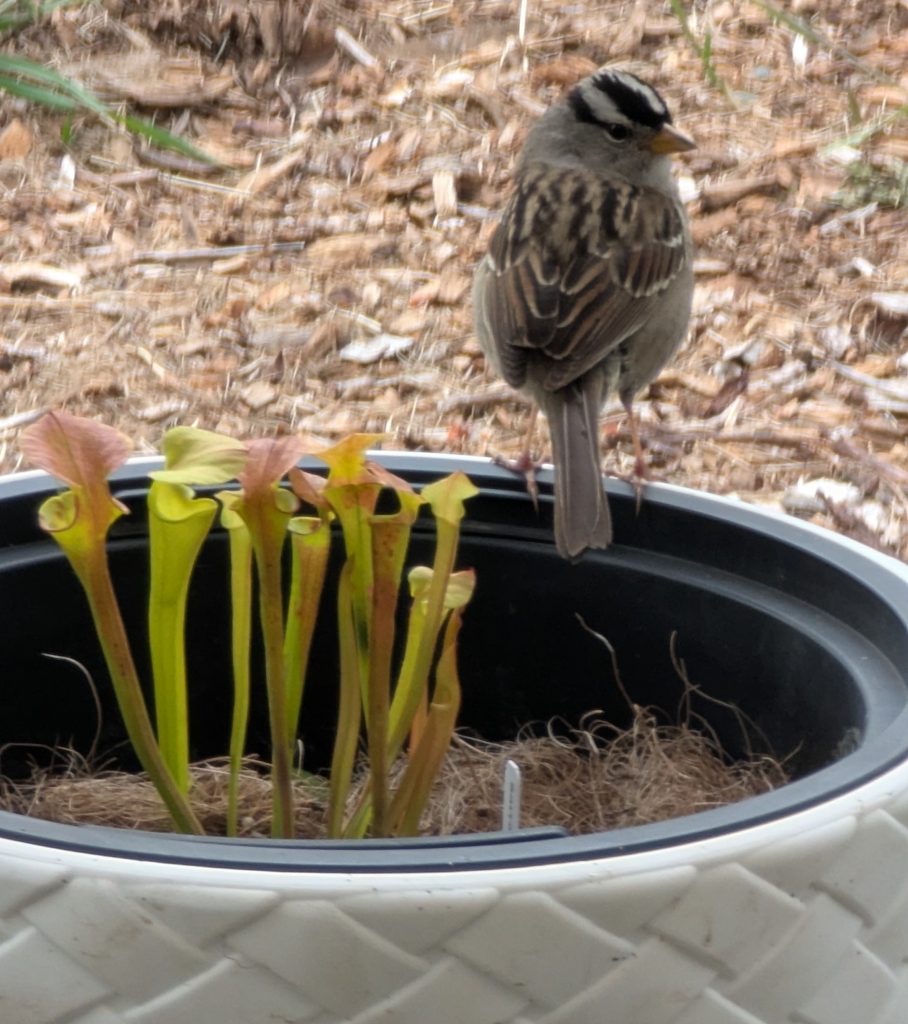
In the summer of 2023, the whole of the covenstead was infested with yellow jackets. Mr. Troy was stung several times as he played pest control serviceman to root out the massive hive under one of the pine trees not too far from our house. One of our dogs is deathly allergic to insect venom, having been hospitalized early in her life from a bee sting. Yellow jackets, like bald-faced hornets, can sting multiple times and they run in packs. Eradicating such sneaky hives is therefore a must. But not before those little assholes left their mark on both the humans living here. The lesson there was to pay attention more carefully to spaces the yellow jackets are drawn to and to design our landscaping in a manner that helps assist their natural predators – mainly birds like the Western tanagers. We have also heavily planted repelling plants all around the house especially. Plants like lavender, mint, lemongrass, marigolds, and thyme are ones that yellowjackets avoid. Next year we’ll be setting up a predatory pitcher plant bed to also help curb not only the yellowjackets but biting flies. When using our space during wasp season, we keep the yellow jackets occupied with a small offering of ripe watermelon or sliced cucumber placed in a different area from where you’re enjoying the outdoors. Their attention will be on the offering and not on your BBQ chicken and salad.

It’s clearly a trend these annual stings I’m receiving. I can’t help but think this is some kind of message from the Land, the Universe, my beloved dead, Spirit, or all of them. Four years, four stings. Like a fire drill for my spiritual life. I feel like the Universe is grabbing me by the elbow and trying to get my attention. Each incident has made me slow down, prioritize self-care, and remember that life isn’t all about work. After this latest wasp sting, I knew there was so much more to what was going on. Enter my dreamwork practice to the rescue. Dream messages don’t just come at night, Witches. They can come whenever we can switch our brain into that space of receiving messages. Given that understanding, what do these wasp stings annually mean?

In my Dreamwork, wasps, especially, denote social connections – family, friends, coworkers, and even the collective community. Have you seen how wasps work together? Even solitary wasps use other flora and fauna to survive. Looking at where I was stung to lends other clues. The wrist, the shoulder, my neck, and my elbow. The wrist may denote flexibility, adaptability, and certainly connection. But it’s also a super vulnerable part of our anatomy. Raise your hand if you have carpal tunnel, or if the worst part of doing planks is the pain in your wrists. 

The shoulder much like the wrist connects the arm to the body. It also may represent responsibilities ala “carrying the world on her shoulders.” It can symbolize comfort or support. And shoulder can also be about pushing forward – think a football player – or not giving in on the sidewalk to people who don’t move to provide egress. Whereas signs or dream elements that incorporate the neck can mean there’s a throat chakra issue, or an ancestral wound involving the neck (if you know anything about the Witch wound, this is not surprising). Again, the neck connects the head and body and some of the most critical nerves and circulatory systems members are in the neck. It’s the thoroughfare of life in your body.

The elbow is the motivator of hard work when we look at its potential symbolism. Give it some elbow grease, or you must elbow your way to the top – it gives that kind of vibes. It is also a connector between the upper arm and the lower arm. An insect sting on the elbow as a message in dreams or a sign from the Universe tells me that prioritizing pointed connections. An insect sting on my neck says to prioritize critical connections. The responsibility of right relationship is mine to shoulder. And it is critical that I do so in a vulnerable way. 

It might take me a few years to get the message – noted. I’m pretty sure I got it and what I have to do next – besides all the physical mitigation noted above. It’s time for me to spend some time being capricious and pensive. To observe if my connections, my relationships, and my community may need some pointed ‘medicine.’ Perhaps I need to work harder at these connections and take responsibility for where I am not doing so. 

I certainly know that I’m not waiting for next summer for another sting to get to work on these nudges from Divine.

Preparing Animals for Winter While Writing A Book

Posted on November 15, 2022November 15, 2022 by runa
This is what we’re working towards here at Villa Westwyk. Right now it’s a dream and in a box in the big barn.

Our weather station here at Villa Westwyk measured a balmy 82 degrees F on October 14. Two days later we got our first frost and we haven’t seen anything above 50 degrees in weeks. The Average temperature for the last month is 38 degrees. The last two winters we did not see freezing temperatures until on or near the Winter Solstice. Sure technically, winter isn’t here until the Winter Solstice, but we’re certainly feeling it already. We weren’t quite ready for winter here. That can be a problem for a Permie Witch. 

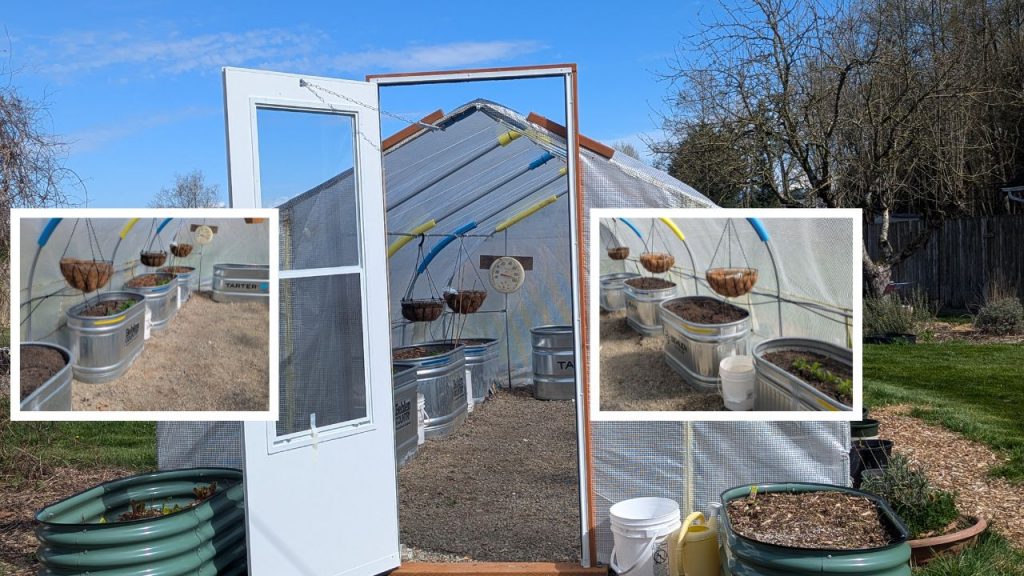
We had plans to set up a poly tunnel to enclose our laying chickens in their tractor coop, but that hasn’t happened yet and this morning it was 22 degrees. When the rains return the temps will be warmer, but chickens aren’t fans of the rain like the ducks and geese are. So the tunnel gives them a respite from the rain as well and lets them get more exercise, otherwise they are prone to just sit in the coop all day, which means I have to muck it more often. Also in the polytunnel we can do a deep litter method and get all that good composted material come spring for putting on our raspberries, blueberries, black currant bushes, and more. Material management is part of so much of what I do as a Permie Witch, to include “making” it like with the deep-litter method during winter with my poultry. 

And since we’ve just gotten the freezing temperatures and there’s been no rainfall, our seasonal streams and ponds that help support our ducks and geese are bone dry. I caught them just sitting in the river bed waiting for the water. It was so pitiful. No running steam means the Permie Witch has to go out extra and make sure the water fowl have extra water. When they can’t bathe because pools and troughs just freeze, they drink even more water. Having extra barn chores is not where I want to be since I’m under contract to write a book right now. Even though I know those outdoor breaks are good for a writer who spends so much time sitting at a desk.

But here’s the thing, the animals are prepared. It’s the Witch who is not. The animals already have systems in place to set themselves up for winter success. The ducks and chickens have slowed their egg laying to conserve daily energy. They’re plumped up cold-weather feathers that arrived shortly after the Autumn equinox are doing the job of keeping them well insulated. The geese are so hardy, they will likely laugh at us (honk-honk) when we do get around to setting up that poly tunnel. Lastly, we’ve culled the number of geese we have so their winter home is more spacious, but are happy to lay beneath the arbor or against the barn. 

My chickens don’t need a heat lamp. They don’t need to be closed up air-tight (yikes! That’s like asking for illness!). I’m sure they would love to have the polytunnel just to get out of the rain (or snow), but it’s not necessary. Trees and bushes around the property do that for them as well. 

Even when the weather is inclement, my animal partners on this covenstead do what they need to do to survive and even thrive. No Permie Witch required. 

I’ll continue to improve systems and infrastructure to make sure my livestock have only one bad day in their life, including through winter. But I don’t need to pressure myself about this project or that project, since small, slow solutions and nature’s ability to survive do a lot of that work for me. So now I can work on getting the Witch ready for winter, which is mostly all about shifting my perspective. I’ve got a book to write. Pond creation and polytunnel construction can wait until the sun is higher in the sky and we’re not having to put on snow suits just to feed and water the animals. Oh, and the word count reaches 60,000 words. 😉

Putting The Permie Witch Garden To Bed

Posted on November 1, 2022 by runa
Originally this was going on IG, so the orientation was weird. Thank you for your forgiveness.

One of my Patrons asked me about putting my garden to bed as a Permie Witch. It looks a bit different than what perhaps a Master Gardener from your local Ag extension might do. I’m still trying to grow things all winter, whether that’s garlic, winter greens, over-wintering root veggies, or just feeding the soil.

Watch the above video and you’ll see lots of weeds and plants left to die off naturally and spread its seed (cilantro, I’m looking at you). But all this vegetation provides a network for the mushrooms, which create a healthy soil system, as well as is a bio and dynamic accumulator which feeds the soil in other ways.

Villa Westwyk, my covenstead, is in the Pacific Northwest. As I walk this path and do so from the perspective of a Crone Witch, I’ve learned that the chaos in nature is actually full of the primal fire of creation. And in permaculture you’re mimicking the chaos of nature. Like the more rigid gardening that one may find landscapers doing, I’m still moving materials. I’m covering soil to prevent erosion, and laying compost over plants I hope to tend throughout winter and into early spring, and I’m pulling weeds (where necessary).

One day this space may look more master garden-esque because all the systems to support it will be in place. But, that permaculture tenet of #SmallSlowSolutions comes into play here. This space was already used as a garden by the prior owners of this property. Although it had gone fallow, we knew that a garden could grow there, and until we could determine where at Villa Westwyk we would prefer to grow food (raised beds and poly tunnels, hello!), we could start here. After three years of growing food in this space, we’ve determined that half the space needs to be a pond for water management and livestock quality of life. If we had built raised beds or other infrastructure just to turn it into a pond, how much labor and resources would have been potentially wasted because we didn’t use the other principles of permaculture to our planning, especially #ObserveAndInteract, #UseAndValueRenewables, and #DesignFromPatternToDetails? The answer is: Too Much! Instead we are now preparing the ground for pond construction – coming soon!

There was broken glass, weeds, trash, and just a whole lot of negative energy here when we moved it. I think it looks fabulous now.

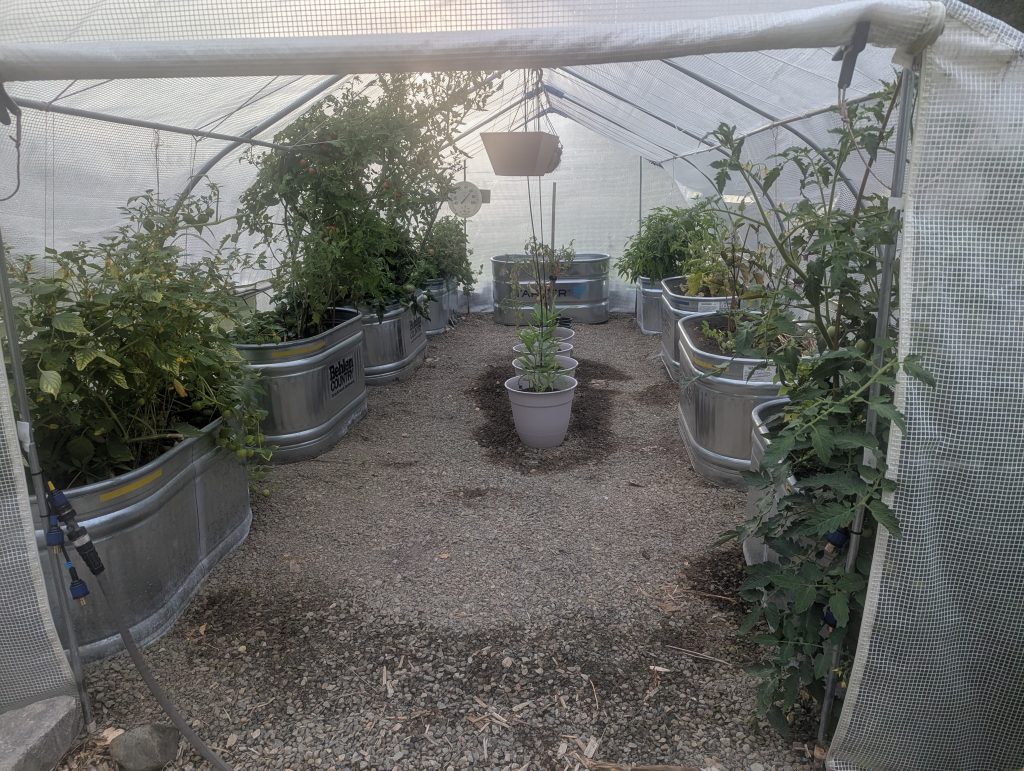
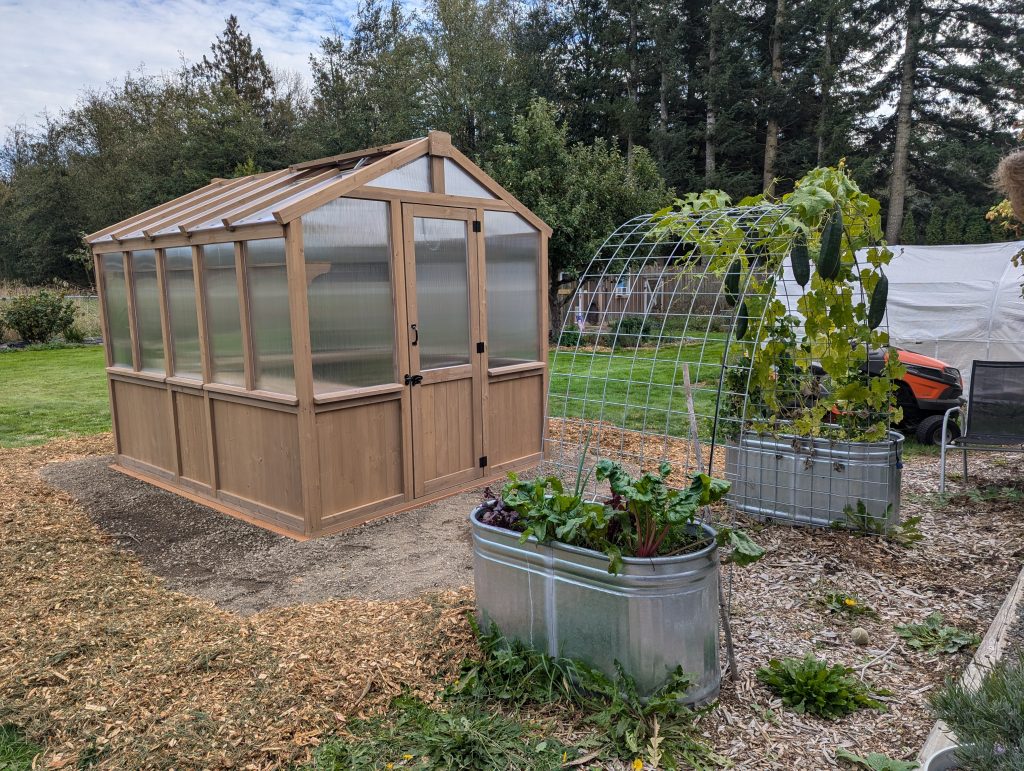
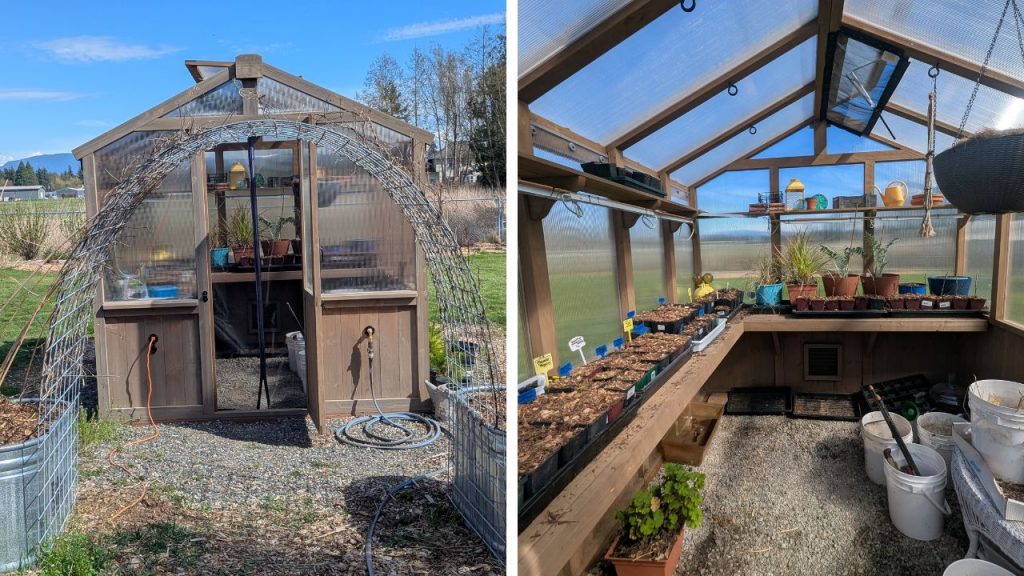
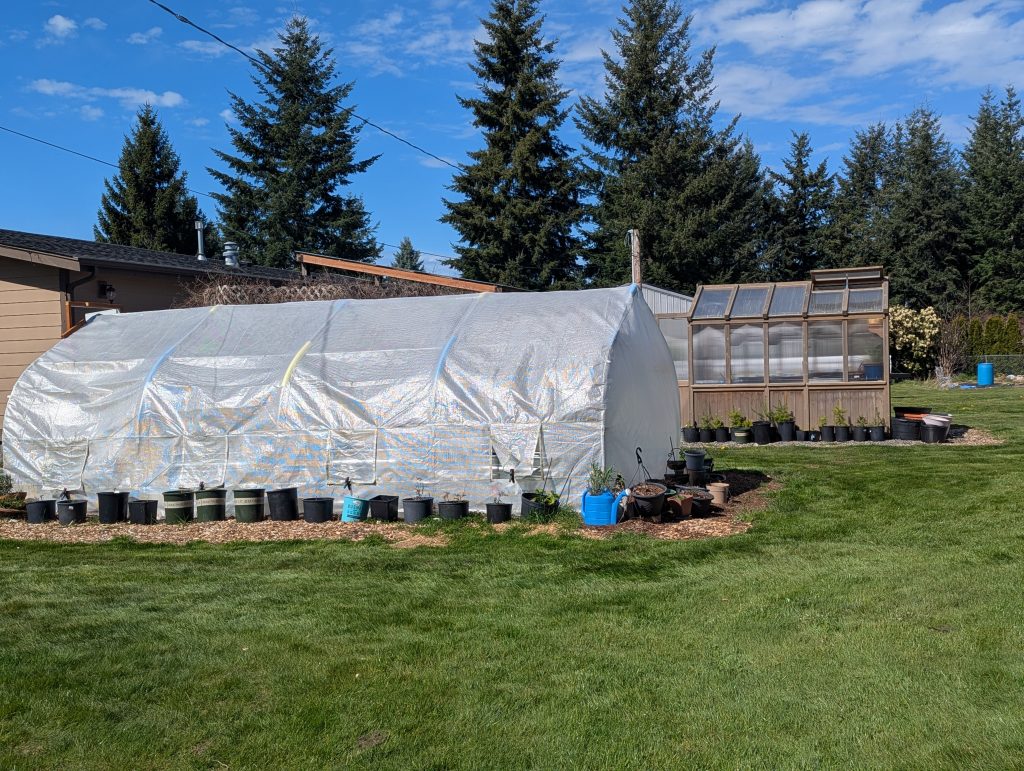
Moving from the garden to our cold frame/hot house/season extender, which again was in a wild state as I will continue to grow food in this space all winter long. As of this writing, I’m still harvesting tomatoes and peppers inside that space. Again, this structure was here when we moved in and was full of pig weed and thistle. We renovated it and reinforced the structure where we could, but it’s not far from its usefulness and we do have plans to turn this into a chicken coop/yard space. A larger poly tunnel will be placed elsewhere on the property, potential near our new raspberry beds. But we’re not there yet. A good poly tunnel is a huge investment. In the interim, we will continue using this space until its absolutely not safe. But right now, can’t you see how the marigolds are thrilled? We also learned more things about growing cucumbers in a poly tunnel and that squash really don’t like it. #SelfRegulation #AcceptFeedback #ObtainAYield

So that’s what’s happening for the Permie Witch this month. I’m prepping to grow where I can, moving materials, and covering vegetation to make pond making easier as we get closer to breaking ground on that project. If you have any questions about the above, please feel free to ask me in the comments below. Have a great November!

Protected: At The Witch’s Table: Self-Care Shakshuka featuring Duck Eggs (Full Hunter’s Moon in Aries Brunch)

Posted on October 7, 2022October 10, 2022 by runa

This content is password-protected. To view it, please enter the password below.

Protected: At The Witch’s Table: Gratitude Squash Hash (Full Hunter’s Moon In Aries)

Posted on October 7, 2022October 8, 2022 by runa

This content is password-protected. To view it, please enter the password below.

Protected: At The Witch’s Table: Apple Cider Mimosa (Full Hunter’s Moon in Aries Brunch)

Posted on October 7, 2022October 8, 2022 by runa

This content is password-protected. To view it, please enter the password below.

Planning Your Witches Thanksgiving

Posted on September 15, 2022September 29, 2022 by runa
Wishes for a Festive Mabon from my home to yours

Witches Thanksgiving is coming. Also known as Mabon (MAY-bn), or the Autumn Equinox. It is the second harvest. It’s a big one, too, for those living close to the land and growing food. Although I can harvest a little bit every day beginning about the full moon after the vernal equinox, each harvest sabbath (Lughnasah, Mabon, and Samhain) simply means new crops are coming in at each harvest. The first harvest is typically grain and berries. The second harvest is fruit and corn. And the third harvest is everything else, including squash (jack o’lantern pumpkins!), tomatoes, peppers, culling of the herds, etc. 

If you’re wanting to have a gathering of your Witch sisters and brothers, this is a wonderful time to do so. So much food is in season. And the weather, at least here in the Pacific Northwest, is still nice enough to gather around a fire circle outside. 

Most gathering of witches means potluck of some sort. There’s always the witch that will bring the wine and party favors, another who’s got the sweet treats covered, and another who brings the appetizers. If you’re hosting, the entree will fall to you, along with one or two sides or a salad, as well as making sure your space is welcoming. Maybe some post-meal concoction to sip by the fire whilst you tell stories of your year thus far. You decide how much you take on. Just don’t take on too much, please. Hosts as well as guests should be enjoying themselves. This is a celebration of our gratitude. Our connections are likely at the top of that giving-thanks list. Roast the stuffed turkey, but let everyone else do the rest. However, if you just love creating wonderful food for friends and family, do what you think you can handle without stressing. 

Other things to make your Witches Thanksgiving festive are doing things like gourd candles (maybe make enough to allow your guests to take one home), corn dollies, or having the activity of making a scarecrow for the pumpkin patch or front gate, or pressing apples and pears into cider (as might be the case here at Villa Westwyk). Maybe one of your guests would like to do some divination for everyone for the season ahead. Or maybe you watch the new Halloween flick that was just released. Take your inspiration from the landscape around you, the energy of the group, and go forth and have lots of Witchy Fun. 

Today I put together a Mabon menu to hopefully inspire, instruct, and initiate you into this upcoming season. Inspired by what’s growing here at Villa Westwyk or available nearby (e.g. sablefish), each category should have you covered no matter which part of the potluck you want to cover. As well, there’s a fire circle ritual to help you welcome in Autumn and prepare yourselves for winter. 

First you need to set the mood: and that’s certainly good fun. Decorate your space. Many of my seasonal decorations are actually wards. (More on that here on the blog soon!) Refresh your altar for autumn. If you have a fire circle where you’ll be hosting the ritual, make sure there’s enough seating and table space for everyone. Make sure there’s blankets for everyone to stay comfortable. Again, if you’re hosting, ask your guests where they may like to help. A good guest will ask, as well.  

The menu below is by no means the only menu for your Witches Thanksgiving. Again, take your inspiration from what is available to you and your kindred. This is just what will be on the menu at Villa Westwyk this year. Be sure you understand any food preferences and allergies from your guests before using this menu or creating your own. 

Please note to access the links of these recipes, you’re going to need a passcode. It’s easy:  Mabon2022

Villa Westwyk Mabon Menu:

Grilled Sunflower Head with Chimichurri sauce

Welcome Autumn Punch

Cream of Wild Mushroom Soup

Fall Harvest Salad

Grilled Sablefish collars with garlic confit

Elote Corn on the Cob

Herb buttered grilled Winter Squash Rings

Chocolate Zucchini Bread with Whipped Cream and Brandied Cherry sauce

The Ritual

Gratitude is at the center of Thanksgiving. So the ritual is focused on that. And it’s focused on the fire element, which is necessary to help us survive the upcoming winter season.

Here’s what you’ll need for this activity:

A spot to gather around a fire

Candles or torches that mark the four directions

Small slips of paper and pens or pencils for each guest

A small altar with Autumnal decor

Cleansing herbs (rosemary, sage, mugwort, lavender, etc. – you choose your adventure here)

If you don’t have a fire pit available to you, feel free to gather around a table with a centerpiece of lots of candles. Plan on one candle representing each guest, so 7 guests = 7 candles. And please, for Freyja’s sake, please follow candle safety. You’ll also need a fire-proof container (cauldron).


This is a very casual ritual and more about pulling out the recognition of all the abundance in our lives – there’s more than you think. Doing this little exercise, if you’d prefer that word over ritual, helps you and your guests ground down in gratitude around the fire. I set up the tiki torches around the fire circle to mark the four directions ahead of time. If your tradition calls for casting a circle, feel free to do that. But it’s not necessary for this. 

There’s a small altar, mostly hosting all the symbols of Autumn: squash, apples, colored leaves, anything that makes it festive for you. Perhaps offerings for the land spirits or your particular deities. For me it’s offerings to Skaði, the goddess of the Hunt (an autumn activity) and Winter and Tyr, the sky god. Appropriate because of the planetary movement of the equinox. As always, you do you, Witch. 

Remember, a table with candles and cauldron works, too!

In the center is the fire pit, which I’m sure the Viking will have made larger than necessary. Before going around the circle (sunwise, aka clockwise) some cleansing herbs are added to the fire. The host may do this, or everyone can take a little bit of the herbs and toss them into the fire. Again, candles and a cauldron around a patio table works well, too.  Our warm, rainless summers these last 5 years or so here in the PNW means fire rituals often are simply tabletop affairs as fire bans for safety are necessary. All good. This is an opportunity for the host to thank their guests and invite them to consider what they are grateful for. To help your guests get in the mindset of expressing their gratitude, you may ask them to consider three things they are thankful for at Mabon. 

Often I’ll ask them to consider their journey since last Autumn to highlight what abundance and blessings they’ve encountered, especially where their personal growth is concerned. What personal quality are you thankful for? What non-human thing are you thankful for? What other person are you thankful for? As the MC, really ask them to explore the why. Why are you grateful for your work ethic, for instance? “Well, Runa, it helped me finish X project before the equinox…” This is a conversation, to a degree. And a time of reflection. As one guest speaks to their gratitude, the others are invited to fire scry or just meditate on the flames. 

After the gratitude expressions are complete, this is when your guests will put the one thing they want to leave behind as this new season begins. Starting clockwise again, have the person approach the fire (carefully) and toss their completed release note into the flame, saying “I release what does not serve me.” They do not have to say what the thing is that they are releasing. That is between them, the fire and, if appropriate, their gods. If one of your Witch guests wants to announce what they are releasing, that is fine, too. 

End the ritual officially by offering blessings to your guests and again your gratitude for them in your life, for their contributions to the circle, etc. Close your circle here, if you so choose. 

Afterwards, it is a great time to pull out a nightcap of some sort. This can be anything like some hot tea and honey, maybe hot cocoa, or here on our covenstead, it will likely be some Cassis (black currant liqueur) or apple cider that we brewed. Then simply hangout by the fire and visit with your kindred. Make plans for a winter gathering now during this conversation, if you like. Play guitar or ukulele. Sing acapella. Laugh. Connect. 

Be sure to extinguish all flames before leaving the area. Practice good candle and fire safety. Because Samhain is coming and we want to be able to celebrate the Witches New Year together, too. Stay tuned as I’ll be offering the same kind of post for that Witches Sabbat as well. 

How do you celebrate Mabon the Witches Thanksgiving? What of the above might you adopt for your celebration? 

Spider Season Witchcraft

Posted on September 7, 2022September 18, 2022 by runa

Keeping Arachnids at Bay on the Covenstead

CW: Spiders

It’s September in the Pacific Northwest, or Spider Season as it’s more locally known. Literally spiders show up everywhere. Now, we’re not as bad as some places in Australia, but funnels, webs, and strings of baby spiders in flight are everywhere. Sunrise & Sunset chores here on the covenstead if viewed from the outside looking in, appears as if we’re practicing some unknown form of martial arts as we try to avoid and untangle ourselves from the ever-present webs. Do not leave the house without a hat right now.

Keeping critters off our temporary clothesline is easy with this Witch’s Brew!

As we live closer to the land here, the prevalence of creepy crawlies is a bit higher. So how do we keep our sanctuary, our home, from being infested? Witchcraft to the rescue! Specifically herbalism and the principles of Permaculture.

Like many Witches, I try my best to live in harmony with all the creatures. Spiders found inside the house here at Villa Westwyk, are escorted outside, unless they show up at the base of the toilet at 0333 hrs when The Viking is half asleep, or if they scurry down one of their seemingly invisible threads while I’m in the shower. A Crone has to have some boundaries! But this happens rarely, even in the PNW Spider Season, because I have a secret weapon: bay.

Bay leaves, bay oil, and even a properly placed bay tree helps keep the spiders at bay, along with a few other pesky insects we don’t want in our homes. Also, I welcome them in my pastures, gardens, and green house. Heck, two of them have my house looking like I already decorated for Halloween. But inside, and certain places outdoors, like my clothesline, potting shed, and barn walkways, are off limits. They are welcome anywhere else.

Granted, doing your weekly cobweb dust in the house does do wonders to make spiders feel your private abode is inhospitable. But there will always be spiders about, even in the cleanest and protected homes and cars. Spiders do good work getting rid of other even more annoying bugs like flies, beetles, and even other spiders. But I prefer that my carnivorous plants (venus fly trap, etc.) do that job, which I highly recommend. If you’re in Western Washington, you may source them from Predatory Perennials.

For more than a decade, I’ve been relying on natural insect repellents and plantings. (I’ll do another blog post down the road on why certain plants on the covenstead are where they are.) Bay oil is my go-to primary in this regard. It is an essential oil of Bay, made from those same little leaves you put in your stews and such, Laurus Nobilis, or Sweet Bay as it’s known, can be like an invisible fence to spiders, and often ants, too. I spray it on my outdoor clothes line, which always seems to attract the little arachnids. But under the full moon in August and September, I repeat this ritual to help keep the spiders at bay (haha, pun intended). When we lived on our sailboat, this happened monthly because spiders just LOVE sailboats. They seem to love RVs, as well. So this little recipe and full moon working has come in handy, a lot. I can tell you that it works. I’m sharing it here in case you just might want to add it to your witchy repertoire, regardless if you’re in the PNW or not.

Now before we get to the recipe, allow me to let you know that it’s important that whatever you’re putting on this may react poorly to it. For that reason, be sure to test a small, inconspicuous spot before you apply this spray to any material. I’ve not had any problems, but I also don’t spray it directly on anything, but rather via a micro cloth that absorbs the concoction. But I’m also mostly putting this on natural materials Additionally, I talk to the spirits of the land, or specifically to spiders, in this case, and tell them why I need them to respect this space. And I offer them alternative areas, where I think they will have a bit of sun, a bit of shade, and lots of good hunting (hint hint: anywhere but here).

Escorting an evictee to the garden

Yes, my neighbors have caught me talking to the spiders. I normally have my polarized shades on and my big straw hat and pay them no mind. But this talking is important because I have livestock, which can really draw flies if you are not practicing regenerative agriculture. But because I don’t shoo down the Orb Weaver’s giant web between the tree and the fence, but rather walk around it, I think the spiders are really doing their job to help keep the flies down to what anyone without 9 geese, 10 chickens, and 11 ducks would experience in their homes. I am sure to mention that to them, how much I appreciate their work. It is important! Also, I noted that many a yellow jacket were in their webs, too. And that’s a bonus as well, especially since the long, cool summer diminished the number of praying mantis that hatched around the covenstead. In short, you need to establish an energetic exchange with these critters. CoExist, baby. I am very careful of my language here, as with any Craft working. For me, I imagine I’m talking to the children of Loki when addressing the spiders. If you want to be clear, be sure to write down what you’re asking first to check yourself before moving forward. Like with the Good Neighbors I avoid apologies or expressions of debt or gratitude (sorry, thank you, no bueno). But the bottom line is that all the creatures that reside here at Villa Westwyk see the work that The Viking and I are doing. They attach their webs to the trees we’ve planted. They revel in the scent of the flowers and bushes we are planting. They see the care with which we raise our livestock. That positive energy extends throughout our four fences.

Lastly, if you cannot get your hands on bay oil, a part of this ritual includes bay leaves, which are helpful, too. However, you can substitute or combine any of the following oils: lemon verbena, lemon essential oil, lemongrass (you get the picture that spiders hate lemon, eh?), peppermint, citronella, or tea tree. But bay just kicks the most spidery butts here.

There are few poisonous spiders here in Western Washington. If you live in an area that has more dangerous varieties of arachnids, please be cautious with this witchy rite. Understand what you’re up against, before you take the time to spray this brew about your home. Also I make no claim how this works against scorpions, but if you try, it, I’d be interested in your results! Comments make my day.

Spider Season Lodgers 2022

Alright, here’s how to make the spray:

Spider Season Spray

Equipment:

Spray bottle (a brown glass one is best, but as you can see from my photo, whatever you have available works!)

Ingredients:

40 drops of essential oil of bay

4 ounces of distilled water

4 ounces of 190-proof alcohol

1 tablespoon white vinegar

Instructions:

Mix the oil, water, alcohol, and vinegar into the bottle. Close tightly and shake to mix.

Typical Use: Spray on a micro cloth and wipe on areas you want to deter spiders.

Tip: when you wipe down the inside of drawers, cabinets or closets with this, it helps make those areas smell so good!

CoExist With Spiders Ritual:

Equipment:

Spider Season Spray

Microcloth

A handful of bay leaves crushed

A broom if you need to sweep away actual cobwebs

Instructions:

I choose to do this on the full moon in August and September, as the relationship between myself and the spiders is heightened. But honestly, you could do it any time. Because I do this annually, these lunations in the late summer help me come back to this over and over again. As I mentioned, it’ makes sense to do this now in this space because it’s Spider Season. Witches in the Southern Hemisphere might find this more helpful on the full moons in February and March.

  1. The day before the ritual, I give “notice” to the Spider and the general spirits of the land. I tell them how certain spaces (as mentioned above) need to be free of intrusion, and a space is waiting for them in the (pick your spot). Also, test your inconspicuous spot.
  2. On the day, first ground and center yourself. Then clean and declutter any area you want to spray this herbal ward. As you clean – especially if you’re going to be dispatching webs and egg sacs – repeat your reasoning for this working and remember to be careful with your language. Example: “Spiders, spiders Here and there, Do not fret But you can bet There’s better parts You should depart To spin your place Beyond this (sacred) space.” I often will carry a spider to a more desired location. I know this can be tough for some, but find yourself a Green Witch, perhaps that can help you with this part if it’s difficult for you.
  3. Then moisten your cloth and wipe down the areas (after you’ve tested thoroughly) e.g. your front entry way. Be sure that you are not stingy, but that it is well “oiled” in the area.
  4. If you are creating a spider-free zone in an entry way, take your crushed bay leaves and sprinkle them in front of the threshold. Feel free to repeat your request and offer of place beyond this sacred space. (Note: you will find whole bay leaves in every cupboard and drawer that I have. Guess what gets replaced each late summer in my kitchen? Yep. Those bay leaves.)
  5. Repeat at the next full moon.

I hope you have found this helpful. If you decide to actually make a ritual of it as described above, please let me know how it goes for you. As with everything in the craft: your mileage may vary. I am simply sharing my experience and knowledge.

Flipping Off The System

Posted on August 9, 2022August 9, 2022 by runa

A Lesson in Onions & Worth

The 12 Tenets of Permaculture

In the last week or so I’ve harvested enough onions and garlic to use in our meals for months and months.  The red onion harvest alone should keep us in red onions for nine months. I look at these harvests as a big screw-you to the horrendous systems we have created on this planet. Growing my own food has been a constant rebellion for me against Earth-damaging capitalism. It also is a double fisted flip-off to the patriarchy, which continues to try to keep women from an autonomous existence or doing the things that bring us joy. Yes, friends, growing your own food is a big fuck you to the establishment. 

However, I’m also finding that some of the ways I have felt pressured to establish the worth of these efforts I’m ready to give the middle finger to as well. Over the years I have been growing food (more than 20), I’ve kept track in one way or another of our harvest totals. I say “our” harvest, but it’s mostly just this lone crone doing the #PermieWitch work around #VillaWestwyk. This spring, I found I was resisting the kinds of metrics found in pages of spreadsheets: how much lettuce did I just harvest? How many eggs has our flock produced for us? And what’s the break down between chickens, ducks, and geese? How much meat have I bartered for homemade sourdough bread? Blah, Blah, Blah! 

Part of my Onion Harvest

I know there’s abundance here. Who else do I need to prove it to? My spouse? Not even. I’m fortunate that my Writing Witch, Permie Witch, Green Witch, and the like are all fully supported by my partner. His father grew up on a farm. He knows how hard it is to grow food. Do I need to prove it to my community? This crone does not care if they think the 80 pounds of potatoes I grew last year (this year’s totals TBD) is a waste of my time. But being able to understand just how much I have produced is important. Of course I had to put my little rabble rousing ways on that, too. Let’s take a look at my Star System. No, we’re not talking astrology; however, my Taurus midheaven and North Node are all about Earth Healing.

For about a decade now I’ve referred to meals I’ve made containing ingredients from our gardens and pastures by a star count. Homegrown onions on the plate? One star. Freshly harvested potatoes on the plate? Another star. Greens from our hot house on the plate? You guessed it, another star. 

When this season it just gave me ZERO joy to worry about measuring, marking, and doing all that data work, I went back to the end result and the satisfaction that it brings. When I know or can share that there is at least one thing, if not many things on the plate for our meals that was grown or raised right here in this little 2-acre parcel – that, my friends, is just pure and utter delight and satisfaction. Consuming the stars on my plate – again one for each thing that is homegrown/made and ½ a star for those I bartered or procured from farming neighbors – is some of the regular joy and balance in my life. And again, as I’m fat and happy, I’m flipping off the establishment.

If you follow me on instagram, I regularly post photos of my meals and how many stars there are on our plates. Those metrics make me happy and smile. It tangibly shows the percentage of food I’m growing/raising is making an impact as opposed to data on a spreadsheet. For instance, breakfast this morning contained our eggs, zucchini, green beans, and chard. Four stars. Yum. 

Oftentimes, I verbally make note how much these items may have cost at our local market while eating this farm-to-table meal with my meal guests (in this COVID-19 World, that’s mostly The Viking). But then my Viking asked me how much the entire Onion harvest would cost us at the local farmer’s market. It took me a minute to do the arithmetic and I did have to do some measuring and whatnot, but the results were surprising. I conservatively estimated that my red onion harvest will shave approximately $130 off our grocery bill over the next six to nine months. Again, that’s conservative. If Whole Foods was selling it, it would probably be closer to $230. Ha! Plus I don’t have to worry about recalls because of listeria or any of that nonsense, which is worth even more money. I grow my veggies organically. They are fertilized with compost and seaweed tea. Pests are dealt with naturally (our slug and snail population has gone down so much, thank you ducks), in part due to our permaculture approach. That’s $130 in our savings and that’s not counting the sweet onions and garlic I harvested, too. 

I’ll take it. 

That simple question from my Aquarian hubby – who is so good at looking at situations from a different perspective – totally changed my perception about the work I’ve been doing. I started thinking about how so much of this late-stage capitalism is just fucking up our planet. How it devalues such cottage revenue as a vegetable garden or small-holding livestock. In short, there isn’t a societal value placed on the work that I do to feed my family and friends.  It’s looked at as a hobby. Whatever dude. Sweat your butt off in the summer trying to ensure a tomato harvest, or move your animals to higher ground during a flood event, or even just have a planter of strawberries on your patio, and talk to me about how it’s not valuable. 

However there is value. Part of that value is in the sustainability that we practice and are working hard to increase. And you can’t really put a price tag on that. Healing the Earth is priceless. Saving the planet one row of onions at a time is pretty fucking cool, though. 

This realization of value I recognized quickly fell within the Apply Self Regulation and Accept Feedback tenet of Permaculture (#SelfRegulate #AcceptFeedback). The lesson here came from myself first in that simple spreadsheet calculations were not bringing me joy. Is there food on our plate that we produced? Win. The other feedback came from The Viking. He saw the value in another way, not just the #ObtainAYield, another of the 12 tenets of Permaculture we’re applying to our lifestyle here at Villa Westwyk. That segues into the  Design From Patterns To Details tenet. Onions grow well here. They are low labor and work as pest control (#IntegrateDontSegregate) around my Brassicas. Surround your broccoli with onions. The pests will be way less. Also, when you cut an onion you grew yourself, the tears are worth it. 😉

A lot of the capitalist world may look at my daily life as less than, but I understand the Magic that is being created by focusing on healing the Earth (and meanwhile myself and my family – #EatYourselfWell) and working with her is more valuable than metrics and a paycheck. But, honestly, I am creating value and abundance, even if the patriarchy and capitalism can’t see it. I see it. Therefore, I’ll continue to rebel in my own way.

How about you? Are you growing food? Even herbs? Where can you increase your own food security? Please let me know in the comments below. 

I would like to acknowledge that Villa Westwyk resides on the ancestral homelands of the Coast Salish Peoples, who have lived in the Salish Sea basin, throughout the San Juan Islands and the North Cascades watershed, from time immemorial. I hold the deepest respect and gratitude for our Indigenous neighbors, the Lummi Nation and Nooksack Tribe, for their enduring care and protection of our shared lands and waterways.

Kitchen Witchery meets Permaculture For The Fur Babies

Posted on May 19, 2022May 19, 2022 by runa

In honor of National Pet Rescue Day – DIY Magic Pet Food

Ms.SnickleFritz & Granny Shadow have bespoke food. Lucky Familiars.

May 20 is National Pet Rescue Day. My current ‘Puppers,’ as The Viking and I call them, are rescues. I’ve always preferred to adopt rescues than purchase my pet because I find they are just so loyal and loving. The added benefit that an animal in need is being cared for is a bonus. I’m not about to get into puppy mills and all that nonsense, or the fact that there are likely just as many feral cats in your neighborhood as there are people. Rescues are a kinder way for the animals and our planet. This Witch is all about kinder to animals and the planet.

Enter Kitchen Witchery and Permaculture to solve a problem. In Permaculture, you Design from Patterns to Details and the pattern was non sustainable food for my familiars. The details of what would make it sustainable begin to emerge.

These Witch’s Familiars, our canine yin and yang, are getting up there in age and now have special dietary requirements. Currently they both have medicated kibble. On top of the kibble we put a wet food, because they’ve made it clear the kibble alone is not very satisfying. Kind of how we have to put cinnamon and fruit on our oatmeal to actually eat it. Also much of the nonmedicated kibble is mostly water and does not have the protein that most canines need.

After finding that most of the softer foods out there are so full of things that my puppers do not need, are horribly expensive, and produce so much waste in its packaging, I needed something more economical, sustainable, and that the furkids would enjoy. About this time last year I started experimenting with making my own canned dog food. The idea to even explore that came to me because I often will make a big batch of stew or soup and I either need to preserve the leftovers, or was finding at least one pint would be used to augment Ms. Snicklefritz and Granny Shadow’s dinner. Much like how I approach the food that The Viking and I consume, I really wanted to know what my dogs were eating. I recognized that the best way to do that was to make it myself. The additional opportunity to make the food a ritual and infuse it with Magic, well, I couldn’t resist that.

Lamb, kale, carrots, and a small bit of sweet potato made this batch of dog food for my pups.

The intentions I put into each batch are all about protection, health, and, of course, love. I’m sharing this, as mentioned in the title, in honor of National Pet Rescue Day and in hopes that it might inspire you to look a little closer into your own food as well as that of your own familiar. As a Permie Witch, doing this follows the permaculture principle of Producing No Waste. Every part of our resources gets used. It is to a lesser degree aligning with two other of the permaculture principles: Obtain A Yield, and Creatively Use & Respond to Change. A weaker argument could be made for the tenet of Use & Value Renewables. As we begin the growing, hatching, and birthing season here at Villa Westwyk, we eat with the seasons here as much as possible. It’s a slow change, which also is within the permaculture lifestyle: Choose Small, Slow Solutions. Needless to say, we’re all in here at the covenstead with this “chore,” which is really a ritual and spell. This is about the moment when my youngest, Dragon Son, would say, “you feel me?”

I basically take a left over chicken carcass, stew bone, or even the remnants of a whole fish, bring it to a boil, then simmer several hours. You just need enough water to cover the carcass…don’t go crazy unless you plan to make soup or such soon, or can the broth (that’s what I do). I make broth in a pasta maker, that way the carcass and the meat still on it is easily drained, cooled, and picked through. Sometimes I will refrigerate the broth overnight before continuing with the pet food batch, so I can skim the fat off and use an appropriate proportion with it to cook the veggies in. But you could use oil, butter, bacon drippings, whatever you have on hand.

This is where my protein to make the pet food comes in, so you could buy store bought, but the bone broth provides so many nutrients and is a superbly economical way to acquire pet food. If you want to go full-on Midgardening Witchery, you’ll can the extra broth for the human pets in your life. 😉 My 9 half-pint batches start normally with about 1 1/2 cups to 2 cups of protein. y last batch the protein portion was about 2 cups; I let the protein amount drive the rest of the recipe. If you homeschool, this is a great exercise in fractions and parts of the whole. 😉

I cook up the bite-size veggies with a little bit of fat, add the meat plucked from the bones, make a roux, add the broth, let it cook down a bit and can it up. Alternatively, you may freeze it at this point, or if you can use your batch up within a week’s time, you can keep it in the refrigerator.

If you know how to make biscuits and gravy, or any kind of a roux, this recipe will likely be easy for you. The below recipe makes about 9 half-pint mason jars. If you want to make pint or quart, do the appropriate math. 😉

Equipment:

Broth pot (stew pot with a colander in it, like a pasta cooker)

Cauldron (Dutch oven pot)

Pressure Canner with Jars/Rings/Lids or Freezer containers

Ingredients:

1 part Protein (leftover chicken carcass, ham bone, lamb leg bone, etc.)

1/4 part Fat (bacon drippings, schmaltz)

1 part Veggies (cats and dogs need their veggies, too)

1 part Something to help meld it together (sweet potato, beans, potato, brown rice, etc.)

~ 2 tablespoons to 1/4 cup Flour

~ 2 cups Broth (double if making quart batches)

Salt (optional)

This batch includes rabbit, chicken, broccoli, and garbanzo beans.

Instructions:

  1. Make your broth. Put soup bones, poultry carcass, etc. in a pot covered with water. You’re only going to need about 2 cups tops to make a batch of pet food (I do 7-9 half pints at a time). But make as much as you like. If what you’re making broth with was unseasoned (not often on my covenstead) feel free to add a pinch or two of salt. Salt is good for your animals, too. But just like us, too much is not good either to taste or for their bodies.
  2. Once broth is made, remove the bones and separate any meat/skin/giblets out to include in the pet food. As you do this, put the intention of keeping the sick away from your beloved familiars. You are separating the good stuff versus the discard. Set the meat aside and discard the bones. If you’re going to can your pet food, this is where you’ll need to sanitize your jars, lids, and rings and inspect your pressure canner.
  3. Into your cauldron, add a bit of fat (butter, schmaltz, bacon drippings, oil) and heat on medium heat. Sauté the chopped up vegetables until tender. I put the veggies in saying, “Here’s to my familiar’s health.” Simple, but effective. Each time I stir the veggies I say it again, “Here’s to my familiar’s health.”
  4. Once the veggies are tender, add back in the meat you plucked from the bone(s), and sauté with the veggies until warmed (about one to two minutes). If you have things like potatoes or beans in your batch, give them a squish with your cooking spoon to help thicken things up in the next step. Mashing the ingredients in is optional, but my somewhat toothless wonders love it this way (just like aging people, pets sometimes lose teeth as they age). I do a simple stir three times clockwise (aka sunwise), putting a whole lotta love for these furkids into the cauldron’s contents.
  5. Depending on how full your pot is, you’re going to need between 2 tablespoons to 1/4 cup of flour. You are making a roux with the veggies and meat. Sprinkle the flour on the protein and veggies envisioning the flour as extra protection and mix it all in and let it cook for about two minutes.
  6. Add in your broth, and simmer until reduced somewhat. You know what wet pet food consistency looks like. You’re looking to get the same. Depending on the size of your batch, this can take five to 20 minutes. My 9 half-pint-jar-batch takes about seven minutes. If you’re filling a canner or freezing quart size containers, then it will go closer to 20 minutes.
  7. At this point you can package up your food and freeze, but if you’re going to pressure can, I always use half-pint (aka jelly) jars and can get up to 9 jars in my canner. Follow the manufacturers instructions for your personal pressure canner. Can the pet food at 11 pounds pressure for 15 minutes for half pint; 25 minutes for pint; 35 minutes for quart (for you folx with more pets or large pets, quart size might work best).
  8. Label your food with the ingredients & date and watch your pets gobble it up. Honestly, this is food that humans could eat, too. So, if you don’t label it, no one will be harmed. LOL. Regardless, you know whether man or beast, they are going to dig it. If I’m feeling particularly Witchy, I might put an appropriate sigil on the jar.
  9. When there’s only one jar left, be sure to make another batch. I also set aside one jar to always have in the pantry to bring abundance for my familiars: food, water, shelter, and love. If you do this “cupboard Magic” be sure to rotate the abundance anchor (your extra jar) so that the food doesn’t go bad. That’s some negative energy there. These will last in your cupboard easily for up to six months.

I hope that this helps you amp up your self sufficiency and self reliance, as well as brings a little Magic for your familiars/pets. Also, please join me in the Adopt Don’t Shop philosophy. And please give to your favorite animal advocate nonprofit. The Viking and I support the ASPCA regularly and have been known to gift animal rescue donations in honor of our loved ones.

Please let me know if you have any questions in the comments. May this recipe bless you and your pets. Now go snuggle your familiar. 😉

  • 1
  • 2
  • Next

Writing Witch

My book with Llewellyn Worldwide: Magic In Your Cup: A Witch’s Guide To Sippable Spellcraft. Available everywhere books sold!
© 2026 Runa Troy – Creative Crone | Powered by Minimalist Blog WordPress Theme