Runa Troy – Creative Crone

Practical Magic for Modern Seekers

Menu
  • Home
  • Creative Crone Shop
  • Courses & Consulting
  • Blog
  • ABOUT
  • Contact
    • Out & About With The Witch
    • Confidentiality & Security, Ethics & Terms
Menu

Tag: A Bookish Witch

What The Witch Is Reading – July 2026

Posted on July 21, 2026July 21, 2026 by runa

A TBR pile that is a personal apprenticeship
This section of my blog is dedicated to spreading the love of reading and books and the people who make them happen. I would not be the Witch I am today without books. I owe an obscene amount of gratitude to all the makers of books out there. This is my way of giving back. I hope that something I pick up and review will guide you to acquire the next tome on your To Be Read stack.

Life here #OnTheCovenstead is warm, alive, and productive. I also noticed that the last high growing season my book intake dipped. Yet the quality of what time I do have for reading feels more intentional. Even the way I process a text seems to change in-season. When I’m out tending the Land there is a more natural space for thought, and if a book is in my hands, it tends to remain active in my mind. 

This particular volume fits within my ongoing personal apprenticeship in mediumship. I’m interested not only in mediumship as a practice, but in the people who do it, their temperaments, their modes of perception, how they receive or deliver what they describe, and how all of that evolves as personal practice deepens. Over the coming months, I’ll be sharing more titles as part of my series of posts for WTWIR, but this book is not the beginning of that thread. Fear not, there are other subjects and genres in the upcoming TBR pile, to include parenting, tech-world current events, and, of course, fiction. 

You may remember that in November 2025 I reviewed two books centered on those who speak with beloved dead and those who navigate “the other side.” At the time, I didn’t fully understand why those narratives kept pulling me in. I’m realizing now that my interest is less random than it looks. Despite having rarely encountered medium-focused work in my everyday life, I can see how my own history – being a “spooky kid,” (the kind who spoke to presences that others couldn’t see) has always left me oriented toward Spirit. It now feels clearer that I wasn’t only curious; I was being led toward information, teachers, and models that could support my own development. 

I took more time with this one than usual because I was also answering questions I’d been carrying personally. And while this review is offered from my lived experience of inquiry, it’s still written for the prospective reader. I want you to approach the text knowing why it mattered to me and what kind of questions it may help you explore as well. Again, please know that mediumship won’t be the only territory we’ll travel within What The Witch Is Reading. There will be other topics and reading directions ahead in future. 


What the Dead Taught Me About Living Well by Rebecca Rosen
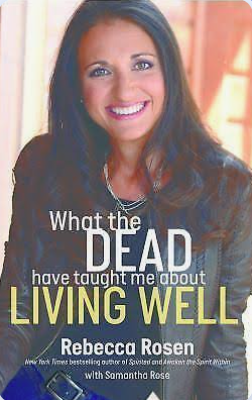
Based on the many years of Rosen’s career as a medium, the book is part spiritual memoir and part practical life guidance (like how the dead help her navigate hired help who were stealing from her). Through a series of reflections attributed to “spirits” and her own experiences, especially around mortality, meditation, and “glimpses at the Other Side,” Rosen argues that living well is less bout achieving perfection and more about returning to compassion, trust, and self-worth. 

A central message begins early: spirits view the living with kindness for what life demands, and they urge readers to stop pursuing perfection. Rosen connects this idea to a broader reframing of life goals: before each person is born, she suggests, we set ambitious plans, then we’re simply not meant to complete everything. This them becomes an actionable spiritual practice. Instead of striving endlessly, Rosen encourages surrendering the “do it all” impulse and trusting that your “Team Spirit” support system helps bring balance in “divine timing.” The emphasis is not on passivity, but on replacing frantic overreach with grounded affirmation: “Today I did my best, and I’ve done enough.” 

Even the short gratitude statement, “I have a body; I am a soul. I am grateful to be alive,” reinforces her view that well-being starts with relationship – gratitude for life and a steadiness within it. 

She blends emotional and spiritual self-understanding with health and behavior. She frames addictive or compulsive patterns, food, shopping, technology, drugs, entertainment, sex, excessive exercise, and overworking as signs of being disconnected form one’s power. In her view, when people repeatedly encounter the same difficulties or feel stuck in relationships or circumstances that leave them “Sacrificing, settling, or accepting less than (they are) worth,” that pattern can reflect an ongoing loss of personal power. 

She goes further by linking emotional powerlessness to physical manifestations, suggesting health issues may mirror an inner state of disconnection ala pain, depression, or disease. This is one of the book’s more provocative through-lines. For Rosen, spiritual clarity can be felt not only in thoughts and choices, but in the body. 

To support that shift, the author offers introspective questions that operate like a guided audit of the mind, body, and spirit. She asks the reader what a given event is trying to teach them, whether it’s connected to worth or self-value, or if the person is ‘playing small’ or giving power away. If the answer is yes, her remedy is to move from ‘less than’ to ‘worthmore.’ She discusses a fear barrier to power, providing exercises to ask your younger self who taught them they weren’t powerful or deserving and whether anyone taught them their needs should always come second.

The book pairs this with affirmations designed to rewire the felt sense of safety around strength (“I am innate and powerful…). Her writing repeatedly returns to practices that make power feel embodied, such as doing what makes one feel “strong, vibrant,” and physically powerful (e.g. yoga, walks, clean eating). In this way, the book’s spirituality is meant to be lived in everyday habits, not just believed in.

The theme of abundance expands the same philosophy into money and receiving. Rosen frames abundance as something practiced and protected by releasing fear of not having enough, separating past financial narratives from present reality, and letting go of inherited limiting beliefs – including multiple “I release” affirmations to try. She emphasizes that self-worth isn’t defined by a bank account, but also comes with responsibility and generosity, especially where spiritual talents are concerned. 

Underlying many chapters in the book, Rosen argues for connection rather than isolation. While she acknowledges that humans come into the world alone and leave it alone, she says Spirit and spirits repeatedly show her that people are connected to something larger than themselves – communities, species, and “an unseen force of bright, limitless love,” which can be named in many ways (Universe, Divine, gods or goddesses, higher consciousness). 

For me the book’s spiritual comfort is both relational and immediate: you’re not stranded, but rather supported. Rosen sums this tone up in grounded, daily guidance, “You are your own energy source, so take steps daily to recharge, which brings the book back from cosmic reassurance to practical emotional maintenance. 

What ultimately makes What the Dead Taught Me About Living Well compelling is how Rosen ties her metaphysical ideas to simple daily reframes, like stop demanding perfection, return to gratitude, be in the now, and live from worth rather than fear (that last one I may have tattooed on my arm 😉 ). 

She uses spiritual language not as decoration, but a living spell for the reader to use to trust the balance of your inner guides (what she refers to as Team Spirit), to return to a life of appreciation and thankfulness as a kind of offering, grounding the spirit in reverence, and to finally reclaim your personal power that fear has been stealing. In her telling, worth isn’t an idea you chase. It’s a doorway you walk through, until you live from “worthmore” instead of the dull pull of scarcity and shame. 

Like any good magical book it invites you to practice, to shift energy, and to remember – again and again – that you are held, guided and connected by Spirit and spirits.
What the Witch Is Reading — May 2026

Posted on May 28, 2026 by runa
This section of my blog is dedicated to spreading the love of reading and books and the people who make them happen. I would not be the Witch I am today without books. I owe an obscene amount of gratitude to all the makers of books out there. This is my way of giving back. I hope that something I pick up and review will guide you to acquire the next tome on your To Be Read stack.

This month has been busy with spirit-work seminars, kin-keeping, garden-building, and the affects of Jupiter return energy (more on that later), so book reading time has been at a premium. Regardless, still have three titles to share with you. What have you been reading? Tell me, please in the comments!

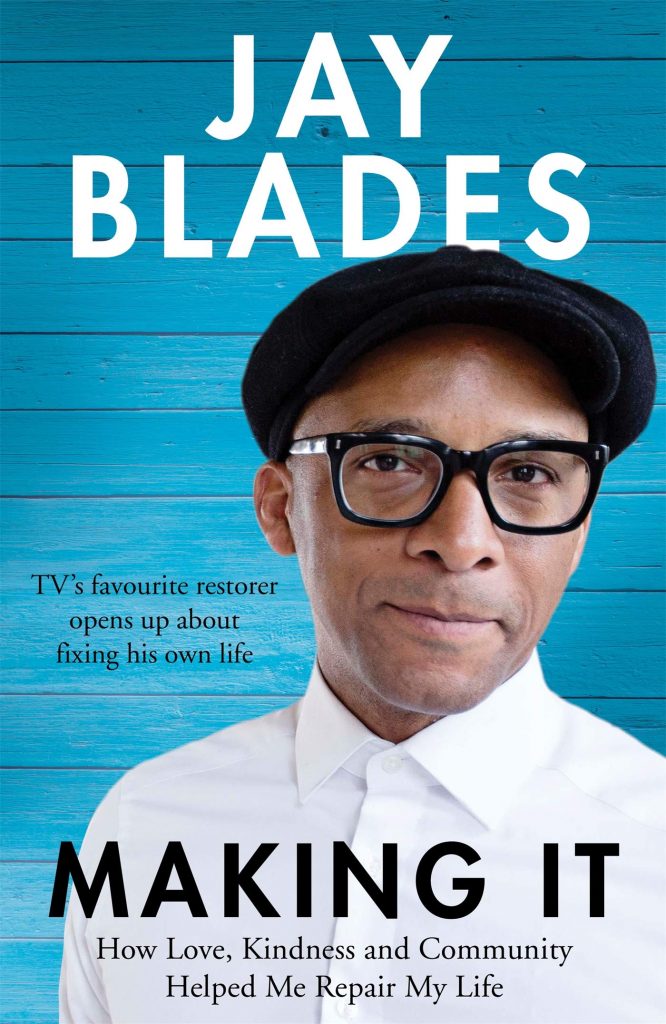
Making It: How Love, Kindness and Community Helped Me Repair My Life

By Jay Blades

I once had a friend who told me that the one thing he appreciated about me was that I made his life look good. Yeah, it wasn’t a compliment, but I felt that sentiment while reading Making It. Gratitude. Yet, hope has seemingly always powered Mr. Blades through his life. And it gave me gratitude and hope reading this. 

I also have a whole new perspective on the person many of us may have first met through the cozy show The Repair Shop. As a couple, my partner and I love treasure hunting in thrift stores, garage sales, and curb-side garbage picking.  So I deeply appreciate Blades and by default also The Repair Shop for saving what was important to the last generation. To me, this feels dutiful and appreciative for the those who came before. 

But like the layers of dirt and slapshod paint that Blades has removed from countless pieces of furniture, there’s more to this man than what one tv show portrays. I respect him even more having read this memoir, especially given all the bullshit he’s been through – As an American, to hear that Britain is just as bad as the United States in regards to young black men is bitter. Why did I think the UK was more progressive? 

Regardless, the memoir is certainly inspiring and the call for anti-racism, expressing emotion from men, especially in interpersonal relationships, as well as de-stigmatizing mental illness and behavioral health treatment, is threaded throughout his personal story. By the last chapter, I was left with the reassurance that if you just keep trying, keep showing up, the Universe makes sure the opportunities come forward. You just have to keep trying. You can’t give up. 

Well worth the read, or a listen if you’re into audio books.

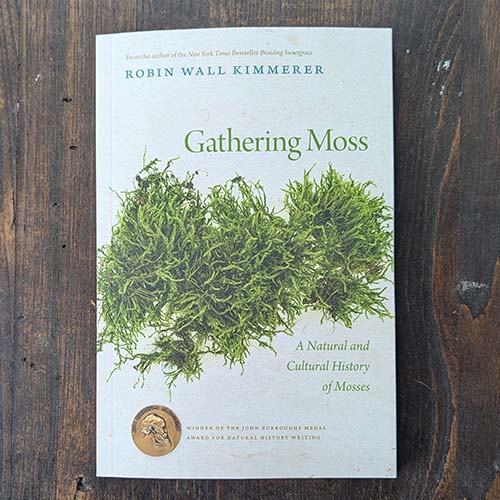
Gathering Moss: A Natural & Cultural History of Mosses

By Robin Wall Kimmerer

Up front, I need to tell you that I love listening to Professor Kimmerer while working the Land. So this book was definitely an audio listen. But, like all her books, I’ll listen, and then I’ll get the book for reference for my shelves. Each essay in Gathering Moss is peppered with wisdom inspired by the author’s indigenous worldview and of different types of mosses. They break down the science into stories and that’s some of my favorite reading. Kimmerer looks at mosses in this book not just scientifically but shows us the spirit within the moss, too. The fact that a PNW university helped publish this book is just a bonus for the collective culture of the Land where I reside as well. I’m shoving this book into my insurance companies face when they say I need to remove moss from my roof. It’s a capitalistic lie. I think I’ll take an Environmental and Forest Biology professor’s word for it and not yours. 

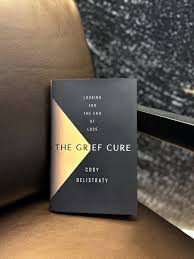
The Grief Cure: Looking for the End of Loss

By Cody Delistraty

Checked this one out of the library, because I’ve been doing a personal exploration of loss and grief, especially in the context of the culture of the United States. This book fit the bill, since the writer of this book explored an array of perspectives, actions, and events to deal with their grief, from trying to figure out if they had a disorder over their grief to trying to expand neural pathways with psychedelics. It’s clear this book was born of deep feelings. And reading it you will likely have lots of feelings about the author’s journey. I certainly did. 

The author was desperate to find the end of the feelings of loss they endured after their mother’s death. All of us have endured some sort of loss that produced grief, and the author’s situation is clearly relatable. They tried therapy, talked to AI, did mushroom therapy, laughter therapy (which made him have to force laugh in a very public place), visited shamans, did bibliotherapy (which I didn’t  know was a thing, but might check into it), etc. They wrote, “There is a difference, too, between closure on the one hand and memorials and rituals on the other. Memorials and rituals, I think, are healthy and helpful. It is the belief, however, that they signal the end to grief and reflection that can prove shortsighted.” As a person who has always side-eyed western funerals, this comparison between closure and grief’s end made so much sense. Portions of the book feel a bit too self-centered on the author, but moments like that kept me reading. 

Much that hampered the author’s journey with the grief over the loss of his mother, is our own society. Our own hang-ups, societies dictation, or even how loss and death presented itself in our lives. They write: “What a society chooses to grieve is ultimately its way of “posing the question of who ‘we’ are,” writes the philosopher Juidth Butler. “By asking whose lives are considered valuable, whose lives are mourned, and whose lives are considered ungrievable.” Yet Delistraty concludes quickly through half of the actions, therapies, and coping mechanisms, that: “In death and grief, there may be no singular truth at all, only what we tell ourselves.”

One of the interesting things is that the author themselves recommended text within the prose about other books on death and grief we should read. This includes: Mrs. Death Misses Death by poet Salena Godden; R.K. Narayan’s The Guide, which sound like more fodder for this Scorpio Stellium’s relationship with loss and death. Like the author of this grief exploration, it’s not how grief affects us, but what we do with it. “How easy it is to be engulfed by grief, drowned in it. To retain the positive memories is to be its master. To some extent that is the great experiment of life: to not become your loss, to alchemize it into wisdom.” 

What The Witch Is Reading – February 2026

Posted on February 1, 2026January 27, 2026 by runa

This section of my blog is dedicated to spreading the love of reading and books and the people who make them happen. I would not be the Witch I am today without books. I owe an obscene amount of gratitude to all the makers of books out there. This is my way of giving back. I hope that something I pick up and review will guide you to acquire the next tome on your To Be Read stack.


Reading in the winter is one of the things I most enjoy. Snuggling up in my reading chair with my puppers, next to the fire and sipping tea whilst I work my way through a book is heavenly. As I mentioned in my last post, most of my reading has been dedicated to recent research I’m doing for an ongoing project while still doing my Witch Work and running a permaculture Covenstead. Those books won’t appear here as to not give the project away before it’s ready for its public. But I’m always reading. Since my last post, I have finished two books (I’m reading a total of 4 right now – what? I like variety!)

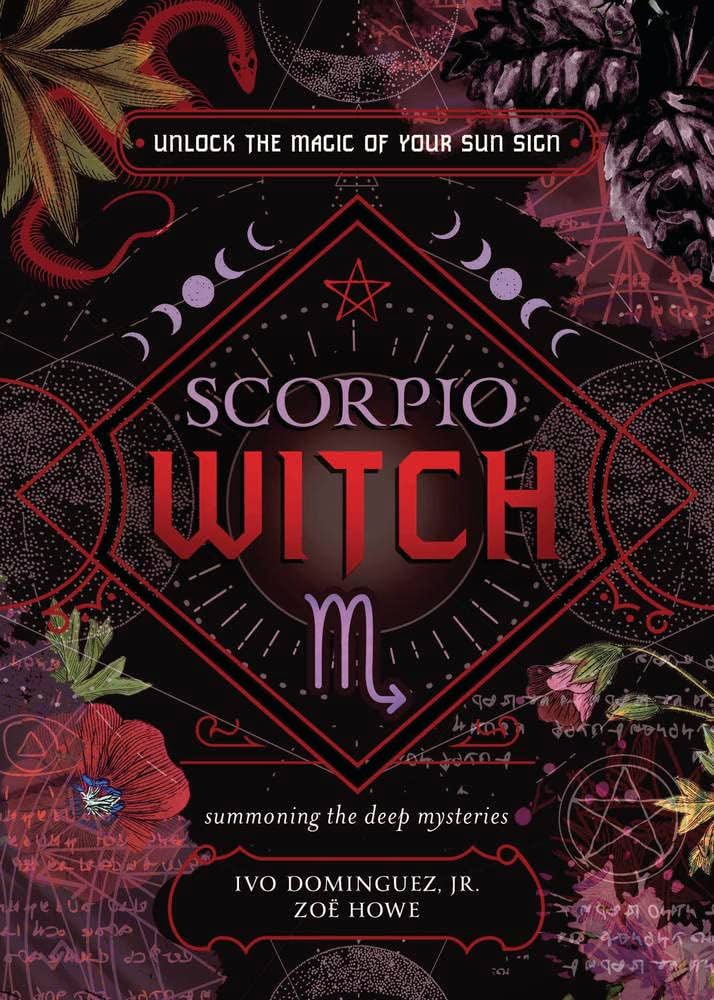
Scorpio Witch by Ivo Dominguez, Jr. and Zoë Howe

I would not call myself an astrologer. I only started deepening my astrology knowledge back in 2017, with a big increase in my application of it in my daily life and magical practice beginning during the pandemic. But even knowing enough to be dangerous allowed me to enjoy this book and learn more and solidify some of the knowledge that I have about the impact of a Scorpio Sun, which yours truly is. 

I saw myself in so much of the content for connecting more deeply with the Scorpionic aspects of holding this sun sign. I know what the stereotypes are – and Dominguez and Howe go beyond and provide great tips to lean into that power. This is done through clean, no-nonsense writing and the play off of Dominguez’s more professorial tone and Howe’s more rock-n-roll takes on things plays a nice yin and yang in the text. The reader is left more grounded yet invited to shake their Witch’s rattle. 

Howe details early that Scorpios are those lone wolf witches who are perfectly content with being a solitary practitioner, “…unless a very special group presents itself.” She continues the expose on Scorpio suns with, “… magical work is sacred and we, the Zodiac’s least trusting sign, have to feel certain before we allow ourselves to be vulnerable in the presence of others.” ON POINT, readers! 

The book also explores the different moon signs that a Scorpio sun might have and how you can use the sway of the lunar energy to balance the light and shadow within that Scorpio sun. 

Dominguez also explores the rising signs, so going into reading this, knowing your big three is a plus, but early in the book there are directions on how to find your sun, moon, and rising. The anointing oil instructions he provided in the book is dead-on Scorpio scent love. I’ve already created it and use it in my daily meditations when preparing my sacred space. 

The part of the book that I will return to often – this is a reference book to be sure, but not dry and stale, but something that will teach you over and over again – is the exercises, spells, and rituals included – many by other writers who hold that Scorpio Sun in their chart.

I would, however, like to purchase a copy where they didn’t use the script font in the section titled “Postcard from a Scorpio Witch” by Lisa Jade. Utterly difficult to read and feels inaccessible depending on the reader’s mood, lighting, and eyesight. But the way it presents definitely feels like someone writing you a postcard – or letter even as it’s a few pages long. So the design choice made sense. But, maybe a clearer script font would be more appropriate?

However, I’m already awaiting the arrival of two more in this astro-witch series. When they get to the top of the TBR pile, you’ll hear from me on those books, too.

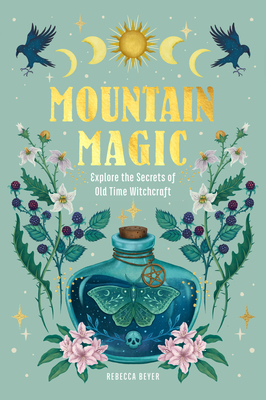
Mountain Magic: Explore the Secrets of Old Time Witchcraft by Rebecca Beyer

In 2025, along with reclaiming spirit work, I also had the goal of learning more about the cultural and societal influences on my ancestors. These goals continue through 2026, and if you’ve not explored your ancestors’ lives as we recall them, I highly encourage it. 

My path to explore these ancestral influences led me to Mountain Magic. It was on a stand right by the cash register, so maybe a spontaneous purchase, but also someone nudging me on my elbow, saying, “read this.” A good few branches of my family tree begin and branch from Appalachia USA. Beyer’s knowledge of that is fairly well rounded. As I mentioned last month, Wild Witchcraft, also by Beyer, sits on my shelf and I referenced it in Magic In Your Cup. Beyer loves research, as I do, and so getting a second book by her didn’t take much thinking. 

Like so many Craft books, this one hosts all kinds of working recipes. The ones in this book were inspired or done by generations of Appalachian folk magic. There’s some things in the mix of what is presented in this book that may make even the most devoted of Witches raise an eyebrow. But again, this is an education in how our beloved dead perhaps saw and ‘worked’ the world. It was nice to see validation of the materia magica that continues in my own practice naturally, but new ones to try, especially as I try to work with Beloved Dead in my spirit work. 

One interesting thing happened whilst I was reading this book. I had just finished the section on using Witchballs for Protection. Now in my lineage, witchballs were decorative, often hollow, glass spheres hung in windows to do the same things the Appalachia Witchballs did – trap evil, spells, and ill fortune, protecting the household. In other cultures they can be called spirit balls or friendship balls. Again, I had just finished that section when my partner and I were off on errands. Part of that was dropping off a donation to a thrift charity shop. When we drop, we often pause to shop, too. Treasure hunting is one of our favorite pastimes. What did I find? But a huge, six-inch diameter Witchball featuring all my favorite colors, with a motive of waves through the center. I’m heavy in the water element in my Natal chart, and it was like my ancestors said, “Here, you need more wards. We found this for you and now you know more about how to employ it.” 

Another thing is that I found the same Abracadabra energy in Mountain Witch that also appears in Scorpio Witch. Given that Abracadabra has been part of magic for millenia is encouraging to see it worked from different Practitioners perspectives. Absolutely they use similar tools, but employed slightly different – something that is not unusual within different paths of the Craft. Beyer folk magic; Dominguez with a more Witch/Wicca/Pagan viewpoint. Both powerful magic speaks to different paths and sympathies. And that synchronicity was electric to discover in this month’s readings.  

Up Next:

I am reading more research I can’t reveal yet; but, you know I’m not just reading one book at a time. I picked up two books at my local library – both a little more secular subjects, but I followed my intuition again for book selection. The books are: 

Strongmen: Mussolini to the Present by Ruth Ben-Ghiat, and 

The Pursuits of Philosophy: An Introduction to the Life and Thought of David Hume by Annette C. Baier. 

I’m in the midst of writing a fiction short story, so heady non-fiction is the way to read for me now. However, sudden urges to hit the used book store may bring a different work to the next Bookish Witch post.

See you for the next post on What The Witch Is Reading. Thanks for reading and comment if you have any questions, anecdotes, or requests.


As you can see, I read a little of everything. I’m always curious about what others are reading. What book are you working through right now? Let me know that, too!

The doors to Runa's Dream Academy are open:runatroy.com/index.php/20...#CreativeCrone #DreamAcademy #WitchSky #OccultSky #OnTheCovenstead

— Creative Crone (@runatroy.bsky.social) 2026-03-18T19:49:12.986Z
  • What The Witch Is Reading – July 2026
  • What The Witch Is Reading — June 2026
  • Animals on the Covenstead: White-Crowned Sparrow
  • Pagan on Duty: Dog Tags, DEI, and Change
  • What the Witch Is Reading — May 2026
© 2026 Runa Troy – Creative Crone | Powered by Minimalist Blog WordPress Theme