Runa Troy – Creative Crone

Practical Magic for Modern Seekers

Menu
  • Home
  • Creative Crone Shop
  • Courses & Consulting
  • Blog
  • ABOUT
  • Contact
    • Out & About With The Witch
    • Confidentiality & Security, Ethics & Terms
Menu

Tag: What The Witch Is Reading

What The Witch Is Reading – September 2026

Posted on September 29, 2026October 1, 2026 by runa
This section of my blog is dedicated to spreading the love of reading and books and the people who make them happen. I would not be the Witch I am today without books. I owe an obscene amount of gratitude to all the makers of books out there. This is my way of giving back. I hope that something I pick up and review will guide you to acquire the next tome on your To Be Read stack.

Poetry is Food; Food is Poetry

There are books that become comfort reads. These are books you return to in order to either be comforted or inspired. I have a comfort read for just about every genre out there. Some of these books I have carried with me for decades, like Starhawk’s Truth or Dare: Encounters with Power, Authority, and Mystery. Or Stephen King’s Misery. Or Jonathan Evison’s West of Here. Or, even, Caitlin R. Kiernan’s The Drowning Girl. 

I do appreciate that the titles that are my comfort reads aren’t necessarily the most well known. But they are the most well known for me and how they changed my perspective or held my imagination, or exposed me to different landscapes and realms is more why any of us turn to comfort reads. 

I read poetry fairly frequently. But I didn’t have a comfort read for the poetry category. I do now. 

Pablo Neruda’s book The Sea and the Bells (translated by William O’Daly) has firmly joined the comfort-reads list. There’s something so intimate about this collection of poems that hit me right in the solar plexus. When you’re reading poetry and you are nodding your head, and mumbling, “yes, yes, yes” the writer has your attention not just when you’re reading, but it floats with you the rest of the day. 
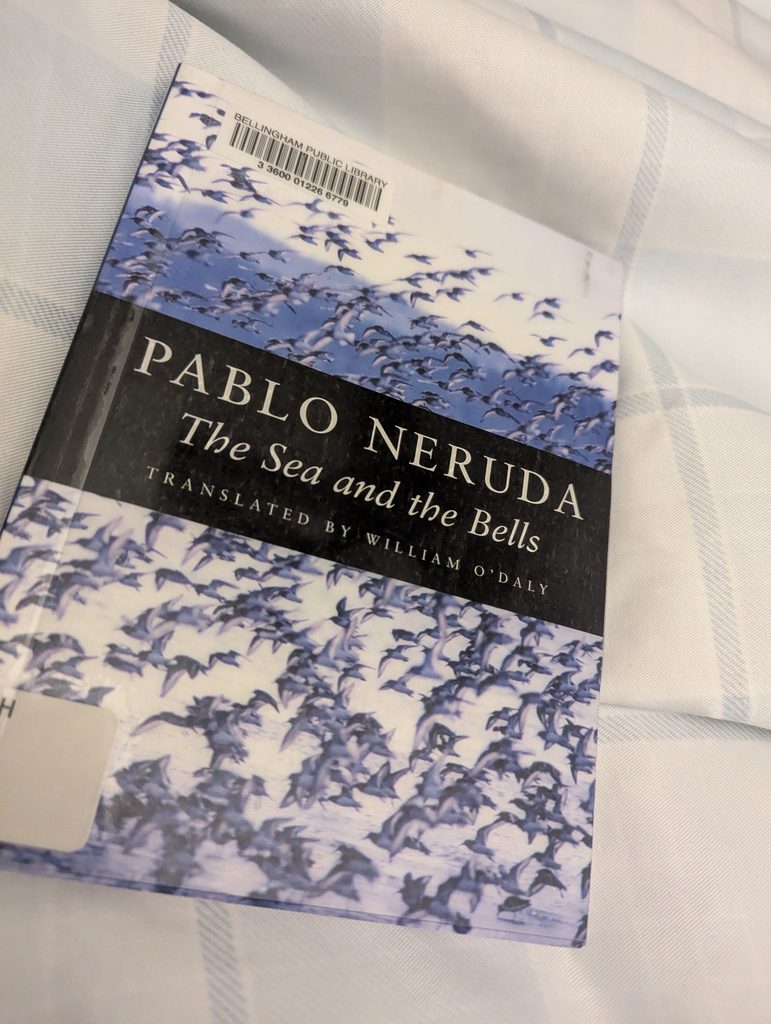
This was The Sea and the Bells for me. Also, because I feel like I understand Neruda’s desire to retreat from the noise of society. His love for nature, his wife, dreaming by the seaside is a heartsong for me personally. As the title suggests, the sea figures prominently in this book. As is the job of any poet to place us in the world as they see it – I could hear the crashing waves, the ringing of the various bells that dot the seaside. I could feel the love he had for the Land, his wife, and his country.

The fact that this is one of eight books of poems that Neruda worked on along with his memoir within the last year of his life, makes me feel the words are an urgent message from Neruda. He would die before that happened. His widow, Matilde, which figures prominently in his work had them published. And the world should be grateful for that, I believe. I am grateful for that. 

Yet the volume is filled with this undercurrent of sad acceptance. Neruda was already sick when he wrote some of these poems. Ask anyone who has read this collection and they will tell you that the closing poem, ‘Finale,’ is devastating. Need to cry? Read that poem. 

However, I am so enamored with ‘Salud!’ It is a salute to being kind in the face of terrible things, but being honest about it. It’s a nod and a chin wag to humanity’s truth that we all walk a path or have a story which the crowd about us has no idea about. It also makes me think about my elders and how they would always greet people along the street as they passed, as is the custom in Chile, where Neruda was born. In today’s world of long work commutes or remote working this kind of custom seems to have long past, but there was a story in this custom Neruda niggled under it and showed us, like any good writer does, the spiral of positive and negative all around a simple greeting. 

This book displays each poem with the original Spanish on one side of the page, and the English translation opposite. Reading the Spanish version out loud and then re-reading the poem in English was an exercise in understanding for me, and I highly recommend if you read this volume, you try it that way, too. 

I checked this one out from the library and now am on the hunt for my own copy to rest on my ‘comfort reads’ shelf. Neruda’s poetry feels like an old friend I can visit any time, so it deserves a spot there. 

Grow Food For Free: The Sustainable, Zero-cost, Low-effort Way to a Bountiful Harvest by Huw Richards

This was an audio book for me, since Richards has a YouTube channel that I’ve long watched. His growing area in Wales is much like it is here in the PNW, and I’m always interested in how other people grow food. Richards has a deep permaculture background, too. The fact that the book is read by the author in his engaging Welsh accent was a bonus for me. It seemed to be a sound bath for some of my ancestors, as well. 
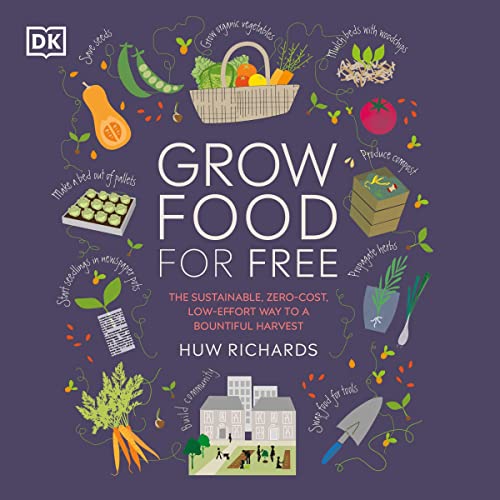
The books beginnings came as the author set himself a challenge to grow his own fruit and veg for a year. He succeeded and shares his tips, tricks, and tactics to fill your belly with homegrown food in this book. 

He details some ways about sourcing materials, seed saving, composting, pest control, and even how he likes to eat some of the food (he’s a major beetroot fan). Some of the ways he sourced materials may be problematic for some readers/gardeners, mainly being cheered on with your goal to grow food. When I first started to turn what spaces I had into bringing in fresh food, there was confusion. Why would I want to grow basil when I can get it from the store. If you’ve eaten a strawberry straight from the garden or a tomato, or carrots, you understand. 

Richards’ book focuses a lot about how friends, family, and neighbors all contributed to his challenge. Get yourself supporters like that and it will be a lot easier. Time is money, as we all know. Being able to delegate some of that sourcing helps these free food-growing a real possibility. If you do it solo, it will likely be harder. 

The best thing about this book is that he really spends a lot of time talking about compost, and honestly, as a long time food-grower and permaculturist, this is the basis of any good food-growing efforts. For beginning gardeners you really need to understand this, and this book is great for that audience. Experienced gardeners may find that ‘there’s nothing new here.’ 

One word of caution to his tip to create inexpensive raised beds with old tires or pallets. As for pallets, this is definitely a low-cost gardening solution. Just make sure the wood is untreated. It should not be stamped with MB, which indicates it was treated with methyl bromide – a toxic chemical pesticide. Don’t use a pallet that has chemical stains on it. Skip painted or colored pallets, too. Look for HT or KD stamps on the pallets which indicate that the wood was safely treated. 

Tires and the black plastic leach toxins into the soil and the roots of your plant take them up. You can grow non-edibles in tires, but I would paint them with an acrylic paint before employing them. That’s a whole other ask of your low-cost materials, however, and may be unapproachable for beginning gardeners. Instead, I would say, get on your local buy-nothing or craigslist free section. People give away raised beds and garden containers near daily – certainly seasonally. Don’t use tires to grow your food, friends. Just don’t. Even if you line it as Richards suggested with black visqueen before adding dirt. The tires 

Next Month:

Queering The Runes: Reclaiming Ancestral Wisdom in Rune Magic & Mythology by Siri Vincent Plouff

This book has been in my TBR pile since it was released. I’m embarrassed it took me this long to get to it. But we all know the TBR pile is there to keep us reading. If there’s a book on Runes, you know I’m going to read it, as Runes have been my to-go-to divination tool and magic-making partner for decades. I’m always interested in how others approach it. 

The Witch’s Name: Crafting Identities of Magical Power by Storm Faerywolf. Again another long-time TBR pile resident. I’m particularly interested in the sections on the history and mythology of spiritual names according to various cultures. 

See you next month. 
What The Witch Is Reading – August 2026

Posted on August 21, 2026September 29, 2026 by runa

Hunt, Gather, Books!

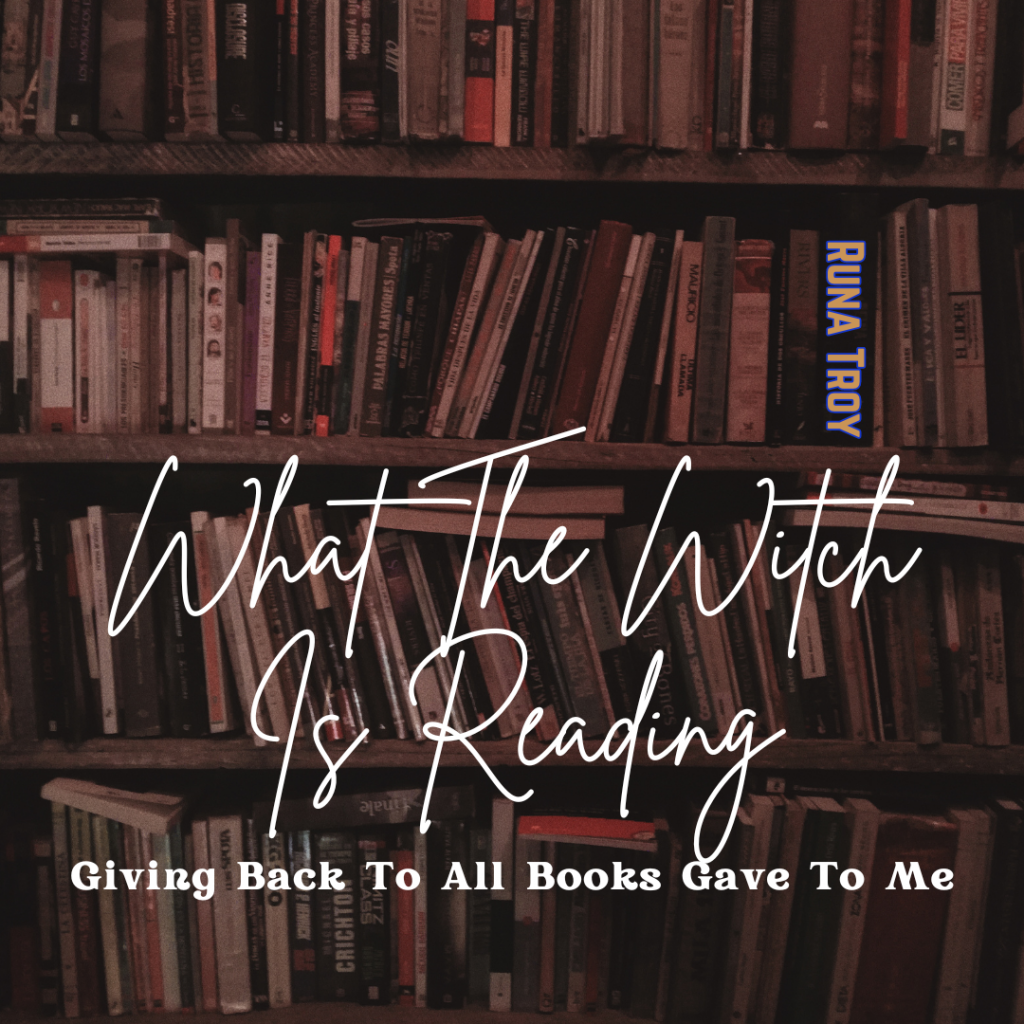
A background image of overflowing bookshelves, including a book by Runa Troy, with the words: What The Witch Is Reading - giving back to all books gave to me - it's a marker photo to alert readers this is a regular series
This section of my blog is dedicated to spreading the love of reading and books and the people who make them happen. I would not be the Witch I am today without books. I owe an obscene amount of gratitude to all the makers of books out there. This is my way of giving back. I hope that something I pick up and review will guide you to acquire the next tome on your To Be Read stack.

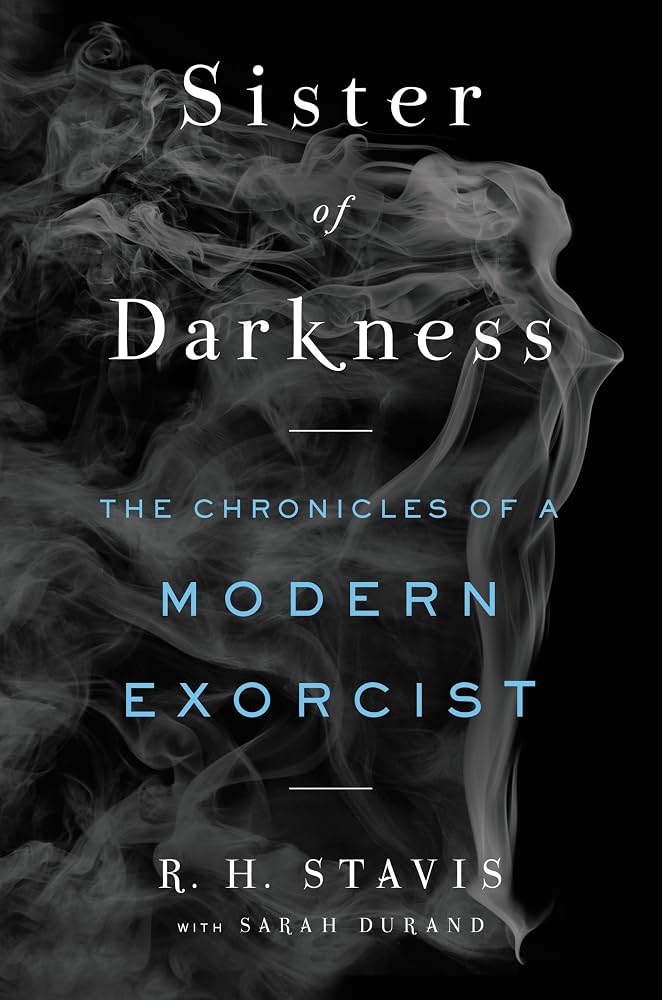
Sister of Darkness: The Chronicles of a Modern Exorcist by R.H. Stavis with Sarah Durand

The cover of the book Sister of Darkness: The Chronicles of a Modern Exorcist by R.H. Stavis with Sarah Durand

This book was recommended to me by my Spirit Work mentor, because I described for them in something that I was experiencing when I was practicing mediumship. Because of this, I read it quickly and then, re-read it again. 

Stavis is a horror screenwriter and a secular exorcist. She clears a range of dark forces from people of all backgrounds, including hollywood elites, athletes, and anyone who needs her help. In the book I was personally taken with her stories about seeing invisible entities as a child, but learning to ignore them because of disbelief and punishment. However, adulthood comes for us all, and Stavis had to accept and hone her gift, mostly on her own. 

Through stories of the exorcisms she performs, emotions seem to be the biggest factor in what creates the possession or attachment of these negative forces. Stavis does refer to them as demons and there isn’t just one kind of demon, which she details throughout the book. Whether its a Clive, Wraith, Trickster, Collector (shudder), Furbies, Realm Walkers, Poofs, or Sandman, Stavis takes you on an underworld tour in a open, witty, and unashamed way, without seeming cocky. 

The weird thing is it all makes sense when you close the book. Want to shake up your book club next month? Pick this one up and watch the conversations erupt into the paranormal. 

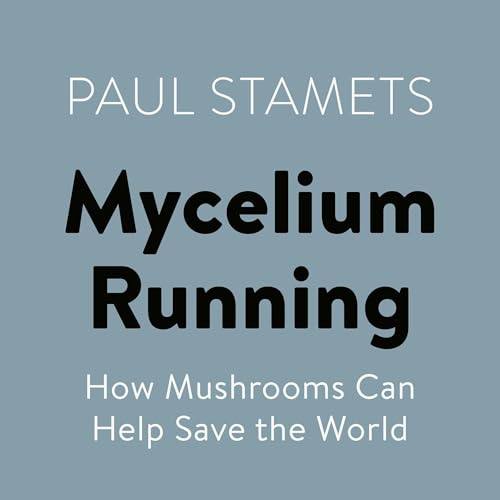
Mycelium Running: How Mushrooms Can Help Save the World by Paul Stamets

THE COVER OF THE BOOK, MYCELIUM RUNNING, HOW MUSHROOMS CAN HELP SAVE THE WORLD BY PAUL STAMETS

The biggest takeaway from this book is that I NEED to get his book Growing Gourmet and Medicinal Mushrooms the next time my book piggy bank is full again. 

The connection Stamets has with mushrooms is what I would call divine. He doesn’t say it in the book, but the language, stories, and presentation showed me a more animistic worldview If you garden or grow food, reading this book will blow your mind when you learn everything about fungi. 

A good core of the book – almost manual like – is about how mushrooms restore ecology out of balance. If you farm, forest, clean up pollution, or just like eating chanterelles, this is a near expansive mushroom-tech encyclopedia on everything fungi. Nothing in the book has not been experienced by the author, too, so the stories behind the information, the practical applications, and recommendations all come from Stamet’s lived experience, with all the scientific footnotes included. More reading, yay!

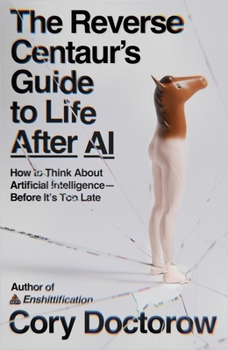
The Reverse Centaur’s Guide to Life After AI: How to Think About Artificial Intelligence Before It’s Too Late by Cory Doctorow

The cover of the book THE REVERSE CENTAUR'S GUIDE TO LIFE AFTER AI BY CORY DOCTOROW, AUTHOR OF ENSHITTIFICATION

You don’t have to be a Tech Witch to read this book. There is more to AI than most of us realize, and Doctorow breaks it down into accessible chunks for even those among us that are tech-noobs. There is some tie in back to his book Enshittification, and if you haven’t read that, I would recommend reading that first before this, because you have a better establishing view of the corporate influence all of it. 

Doctorow does not provide all doom and gloom regarding AI in this book and presents some very useful ideas that can be applied to how we apply any of our energies, not just Large Model Machine Learning capabilities. If AI is frightening to you, there’s some definite hell-yeah moments that bring hope into a potentially scary future with this tech. The key he presents in the book revolves around open-source, ethically generated, low-energy models, AI might be a good partner for humanity. 

However, as this book brings to light, the problem is what it always is, money. Tech companies are now what they call “growth” companies and are worth more than standard corporations. This means that Meta or Google use AI to convince investors to bring more money because they are just expanding, in other words, growing. Because billions of dollars are not enough. Which will bring an AI crash, he wrote, “Remember: the reason the ai bubble exists is that companies want to prove that they have high growth potential, in order to secure high profit to earnings rations, which will let them buy businesses and hire key employees with stock, rather than cash.” 

If you, like me, have already digested a bunch of Doctorow’s work, including his podcasts and blog posts, this solidifies all he’s been saying about AI into one quickly read volume. If you’ve read nothing about Artificial Intelligence, this one has a deep focus on the money, the good, the bad, and the ugly, but also some hopeful likelihoods that we can all contribute to (like pulling any stock – e.g. retirement savings – out of anything heavily invested in AI). In the end, they will come back to humans doing things because none of it is sustainable. It is not inevitable. 

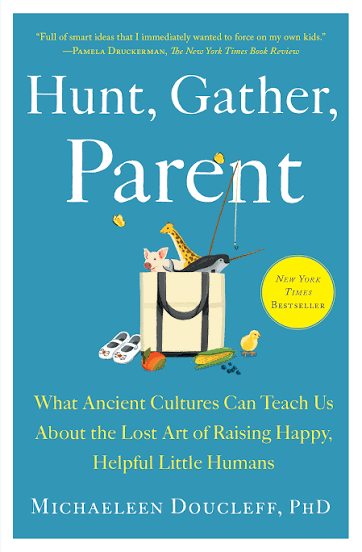
Hunt, Gather, Parent: What Ancient Cultures Can Teach Us About the Lost Art of Raising Happy, Helpful Little Humans by Michaeleen Doucleff

THE COVER OF HUNT, GATHER, PARENT BY MICHAELEEN DOUCLEFF

Why would a Crone pick up a book like this? Because there’s a grandchild in my life now and I know that how I raised my kids probably isn’t the best way, despite feeling like I did a passable job given each kid and the circumstances of the world and my own life while being a mom. 

I loved that the author – a PhD and former NPR reporter investigated how the rest of the world parents their children because there weren’t enough studies that explained why Western parents raise their children so differently to the rest of the world and why we do it. What she discovered was that there is a better way and we’ve been duped into believing we’re helping our kids by doing it this way. 

She visits a Mayan village in the Yucatan Peninsula, Inuit families above the Artic Circle, and Hadzabe families in Tanzania. These cultures do not have the same problems with children that we do in the West. She discovers that there is a Universal Parenting Method around the world that does not exist in the USA for certain. This parenting style is built on cooperation, not control. There is no fear, but rather trust, and the kids in these parts of the world are loyal helpers to their entire community, not just their family. There’s no bribing, chore charts (a favorite tactic I employed, ugh), and a deeply ingrained focus on emotional intelligence and being calm while teaching and instructing. There is no anxious kids in these cultures and in many others like their are here in America. 

Now, there’s no “you’re doing it wrong” slung at the reader, just evidence of Doucleff’s own struggles and comparing her lived experience and need for knowledge and new tactics so that she didn’t hate being a parent – and if you’re a parent and reading this, you know there are times where it is the hardest thing ever. Regardless you have to show up. Doucleff bolsters her interviews and investigations with these far-flung cultures with information and studies from mental health professionals, psychologists, neuroscientists, anthropologists, and sociologists. 

How consumerism has ruined families is pretty evident in this book, too.  It scratched an itch I had about how I had been feeling about making time with my Grand Witchling more about them accompanying me in my life and learning from the everyday things I do as opposed to activities being kid-focused. She’s on Team Gigi & Pop-pop. Western parents are in a current crisis of making the child run the ship. This book redirects how being the adult helps a child’s emotional intelligence development. One of the things I was always cognizant of in my own parenting experience is that I wasn’t raising children, I was raising adults, and the autonomy tips in this book lean that way as well. Autonomy is different than independence or individualism and is something the rest of the world understands in its parenting, but western parents could learn lots from just this point in the book. In the end, parents set the schedule and tone and only interfere when safety is an issue or to teach cultural values. 

Ask yourself if you’re a U.S. parent – what cultural values are you teaching your kids beyond consumerism? If you are teaching them helpfulness, teamwork, and ways to explore without entitlement, you’re ahead of this book. But if you are constantly giving verbal instructions, your kids and you are stressed out. Learning to ask questions instead of giving commands is a big part of this book – The questions are not to give the kid a choice – that stresses the kid out often, too. But those questions are to make them think about what their actions do in the context of the rest of the world, e.g. consideration of others (including parents).

My only issue with this book is there is some lines of questioning the author suggests that border on shaming a child. Again, I think if you apply being calm and peaceful and never raising your voice, they can come off a bit more introspective for the kid, but I would caution any parent or grandparent about this part. 

Yet the good of the book outweighed some of the questionable and I’d hand this book out to any new parent or parent-to-be. And of course, I’d give to grandparents, too.

What The Witch Is Reading – July 2026

Posted on July 21, 2026July 21, 2026 by runa

A TBR pile that is a personal apprenticeship

This section of my blog is dedicated to spreading the love of reading and books and the people who make them happen. I would not be the Witch I am today without books. I owe an obscene amount of gratitude to all the makers of books out there. This is my way of giving back. I hope that something I pick up and review will guide you to acquire the next tome on your To Be Read stack.

Life here #OnTheCovenstead is warm, alive, and productive. I also noticed that the last high growing season my book intake dipped. Yet the quality of what time I do have for reading feels more intentional. Even the way I process a text seems to change in-season. When I’m out tending the Land there is a more natural space for thought, and if a book is in my hands, it tends to remain active in my mind. 

This particular volume fits within my ongoing personal apprenticeship in mediumship. I’m interested not only in mediumship as a practice, but in the people who do it, their temperaments, their modes of perception, how they receive or deliver what they describe, and how all of that evolves as personal practice deepens. Over the coming months, I’ll be sharing more titles as part of my series of posts for WTWIR, but this book is not the beginning of that thread. Fear not, there are other subjects and genres in the upcoming TBR pile, to include parenting, tech-world current events, and, of course, fiction. 

You may remember that in November 2025 I reviewed two books centered on those who speak with beloved dead and those who navigate “the other side.” At the time, I didn’t fully understand why those narratives kept pulling me in. I’m realizing now that my interest is less random than it looks. Despite having rarely encountered medium-focused work in my everyday life, I can see how my own history – being a “spooky kid,” (the kind who spoke to presences that others couldn’t see) has always left me oriented toward Spirit. It now feels clearer that I wasn’t only curious; I was being led toward information, teachers, and models that could support my own development. 

I took more time with this one than usual because I was also answering questions I’d been carrying personally. And while this review is offered from my lived experience of inquiry, it’s still written for the prospective reader. I want you to approach the text knowing why it mattered to me and what kind of questions it may help you explore as well. Again, please know that mediumship won’t be the only territory we’ll travel within What The Witch Is Reading. There will be other topics and reading directions ahead in future. 


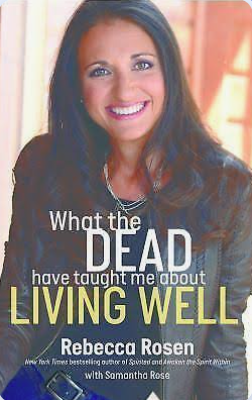
What the Dead Taught Me About Living Well by Rebecca Rosen

Based on the many years of Rosen’s career as a medium, the book is part spiritual memoir and part practical life guidance (like how the dead help her navigate hired help who were stealing from her). Through a series of reflections attributed to “spirits” and her own experiences, especially around mortality, meditation, and “glimpses at the Other Side,” Rosen argues that living well is less bout achieving perfection and more about returning to compassion, trust, and self-worth. 

A central message begins early: spirits view the living with kindness for what life demands, and they urge readers to stop pursuing perfection. Rosen connects this idea to a broader reframing of life goals: before each person is born, she suggests, we set ambitious plans, then we’re simply not meant to complete everything. This them becomes an actionable spiritual practice. Instead of striving endlessly, Rosen encourages surrendering the “do it all” impulse and trusting that your “Team Spirit” support system helps bring balance in “divine timing.” The emphasis is not on passivity, but on replacing frantic overreach with grounded affirmation: “Today I did my best, and I’ve done enough.” 

Even the short gratitude statement, “I have a body; I am a soul. I am grateful to be alive,” reinforces her view that well-being starts with relationship – gratitude for life and a steadiness within it. 

She blends emotional and spiritual self-understanding with health and behavior. She frames addictive or compulsive patterns, food, shopping, technology, drugs, entertainment, sex, excessive exercise, and overworking as signs of being disconnected form one’s power. In her view, when people repeatedly encounter the same difficulties or feel stuck in relationships or circumstances that leave them “Sacrificing, settling, or accepting less than (they are) worth,” that pattern can reflect an ongoing loss of personal power. 

She goes further by linking emotional powerlessness to physical manifestations, suggesting health issues may mirror an inner state of disconnection ala pain, depression, or disease. This is one of the book’s more provocative through-lines. For Rosen, spiritual clarity can be felt not only in thoughts and choices, but in the body. 

To support that shift, the author offers introspective questions that operate like a guided audit of the mind, body, and spirit. She asks the reader what a given event is trying to teach them, whether it’s connected to worth or self-value, or if the person is ‘playing small’ or giving power away. If the answer is yes, her remedy is to move from ‘less than’ to ‘worthmore.’ She discusses a fear barrier to power, providing exercises to ask your younger self who taught them they weren’t powerful or deserving and whether anyone taught them their needs should always come second.

The book pairs this with affirmations designed to rewire the felt sense of safety around strength (“I am innate and powerful…). Her writing repeatedly returns to practices that make power feel embodied, such as doing what makes one feel “strong, vibrant,” and physically powerful (e.g. yoga, walks, clean eating). In this way, the book’s spirituality is meant to be lived in everyday habits, not just believed in.

The theme of abundance expands the same philosophy into money and receiving. Rosen frames abundance as something practiced and protected by releasing fear of not having enough, separating past financial narratives from present reality, and letting go of inherited limiting beliefs – including multiple “I release” affirmations to try. She emphasizes that self-worth isn’t defined by a bank account, but also comes with responsibility and generosity, especially where spiritual talents are concerned. 

Underlying many chapters in the book, Rosen argues for connection rather than isolation. While she acknowledges that humans come into the world alone and leave it alone, she says Spirit and spirits repeatedly show her that people are connected to something larger than themselves – communities, species, and “an unseen force of bright, limitless love,” which can be named in many ways (Universe, Divine, gods or goddesses, higher consciousness). 

For me the book’s spiritual comfort is both relational and immediate: you’re not stranded, but rather supported. Rosen sums this tone up in grounded, daily guidance, “You are your own energy source, so take steps daily to recharge, which brings the book back from cosmic reassurance to practical emotional maintenance. 

What ultimately makes What the Dead Taught Me About Living Well compelling is how Rosen ties her metaphysical ideas to simple daily reframes, like stop demanding perfection, return to gratitude, be in the now, and live from worth rather than fear (that last one I may have tattooed on my arm 😉 ). 

She uses spiritual language not as decoration, but a living spell for the reader to use to trust the balance of your inner guides (what she refers to as Team Spirit), to return to a life of appreciation and thankfulness as a kind of offering, grounding the spirit in reverence, and to finally reclaim your personal power that fear has been stealing. In her telling, worth isn’t an idea you chase. It’s a doorway you walk through, until you live from “worthmore” instead of the dull pull of scarcity and shame. 

Like any good magical book it invites you to practice, to shift energy, and to remember – again and again – that you are held, guided and connected by Spirit and spirits.

What The Witch Is Reading — June 2026

Posted on June 25, 2026 by runa
This section of my blog is dedicated to spreading the love of reading and books and the people who make them happen. I would not be the Witch I am today without books. I owe an obscene amount of gratitude to all the makers of books out there. This is my way of giving back. I hope that something I pick up and review will guide you to acquire the next tome on your To Be Read stack.

It’s that time of year when my reading tends to be seed packets and permaculture reference books. It’s high growing season. I’ve also been catching up on my podcasts. Here’s a few that I listen to with consistency if you’re curious:

Throughline (an NPR podcast)

Bonfire Babble Podcast

A Magical World with Sterling (Moon)

Food Matters Live Podcast

The Witch Wave

And the latest and juicy one: Chaos and Cunning

Always looking for recommendations for others, so comment if you have one you think I might like!

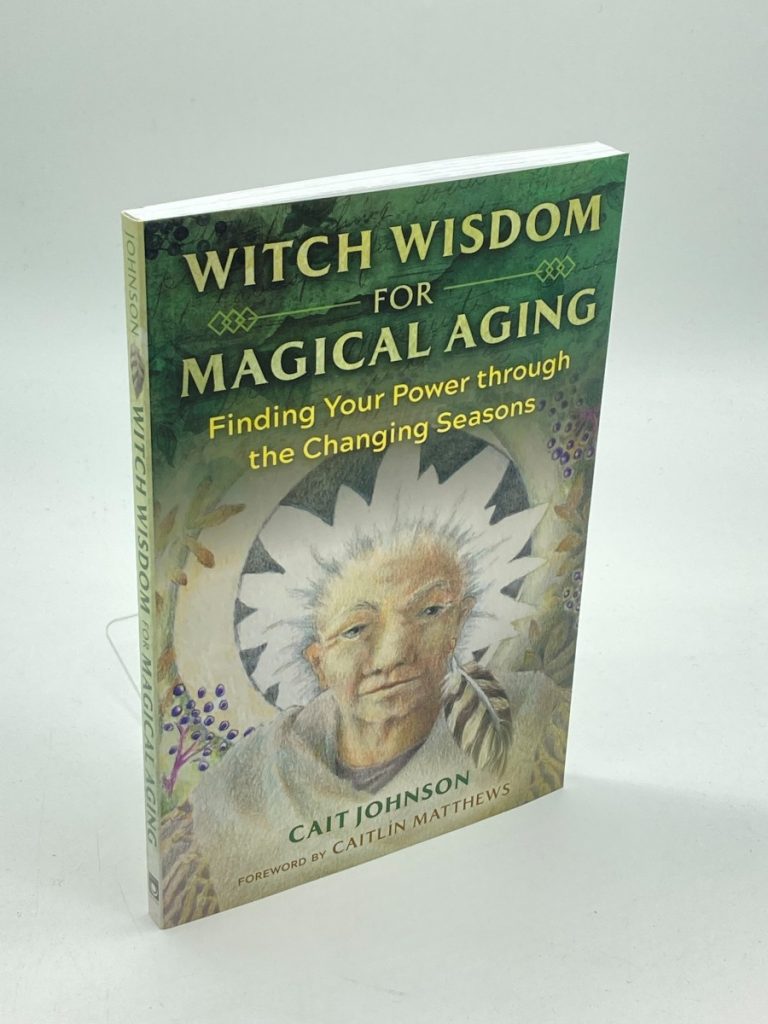
The one book I did finish was a small one, Witch Wisdom for Magical Aging: Finding Your Power through the Changing Seasons by Cait Johnson. Honestly, I feel like I am (and have been) living much like the four witch characters that speak to the reader throughout this quick book (just 164 pages). In the end, there wasn’t much in the book for me personally – like there was not any new information on the Craft and living as a Witch. But then, again, clearly I’m not the audience. However a newer Witch who is in mid-life and just now starting to think about what their Crone years might bring could potentially benefit from this book. I almost think that Johnson would have had more luck turning this into some kind of fictional work with the four season witches being in a coven and teaching mishap laden newbies. 

My friend also listened to the book on audio and said the narrator (Carolina Lendro) didn’t know proper pronunciation of words like Samhain, and referring to Romani as gypsy, and other problematic things like that. There also was some inching very close to co-option behaviors, they said. I can see where that likely happened in the text version and if I liked the book more, I might give it a listen to see, but I have other books to finish first. 

There was an interesting section on sex and the Crone in Witch Wisdom for Magical Aging, and good practical advice on de-cluttering. Again, Felt like there wasn’t any real revelation for a long-time practitioner, but likely would be revelatory for new Practitioners. This one, I’m afraid, is headed to the free library. 

Hope you’re enjoying summer. I’m working through three or four other titles right now and hope to have them to you next month. Enjoy the rest of Cancer season, readers and I look forward to your recs for reading or podcasts.
What the Witch Is Reading — May 2026

Posted on May 28, 2026 by runa
This section of my blog is dedicated to spreading the love of reading and books and the people who make them happen. I would not be the Witch I am today without books. I owe an obscene amount of gratitude to all the makers of books out there. This is my way of giving back. I hope that something I pick up and review will guide you to acquire the next tome on your To Be Read stack.

This month has been busy with spirit-work seminars, kin-keeping, garden-building, and the affects of Jupiter return energy (more on that later), so book reading time has been at a premium. Regardless, still have three titles to share with you. What have you been reading? Tell me, please in the comments!

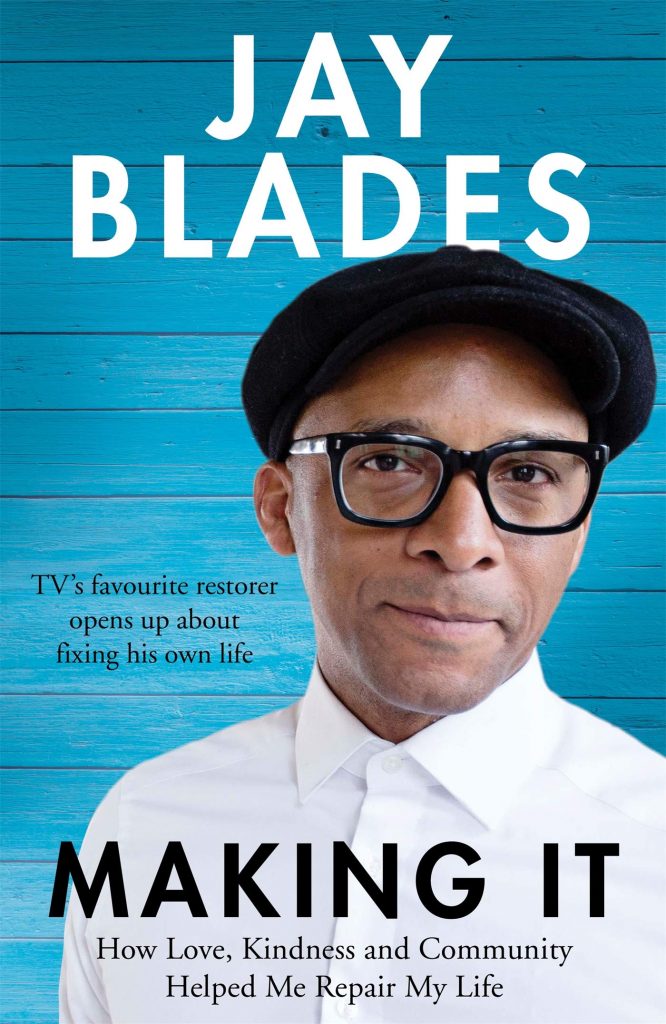
Making It: How Love, Kindness and Community Helped Me Repair My Life

By Jay Blades

I once had a friend who told me that the one thing he appreciated about me was that I made his life look good. Yeah, it wasn’t a compliment, but I felt that sentiment while reading Making It. Gratitude. Yet, hope has seemingly always powered Mr. Blades through his life. And it gave me gratitude and hope reading this. 

I also have a whole new perspective on the person many of us may have first met through the cozy show The Repair Shop. As a couple, my partner and I love treasure hunting in thrift stores, garage sales, and curb-side garbage picking.  So I deeply appreciate Blades and by default also The Repair Shop for saving what was important to the last generation. To me, this feels dutiful and appreciative for the those who came before. 

But like the layers of dirt and slapshod paint that Blades has removed from countless pieces of furniture, there’s more to this man than what one tv show portrays. I respect him even more having read this memoir, especially given all the bullshit he’s been through – As an American, to hear that Britain is just as bad as the United States in regards to young black men is bitter. Why did I think the UK was more progressive? 

Regardless, the memoir is certainly inspiring and the call for anti-racism, expressing emotion from men, especially in interpersonal relationships, as well as de-stigmatizing mental illness and behavioral health treatment, is threaded throughout his personal story. By the last chapter, I was left with the reassurance that if you just keep trying, keep showing up, the Universe makes sure the opportunities come forward. You just have to keep trying. You can’t give up. 

Well worth the read, or a listen if you’re into audio books.

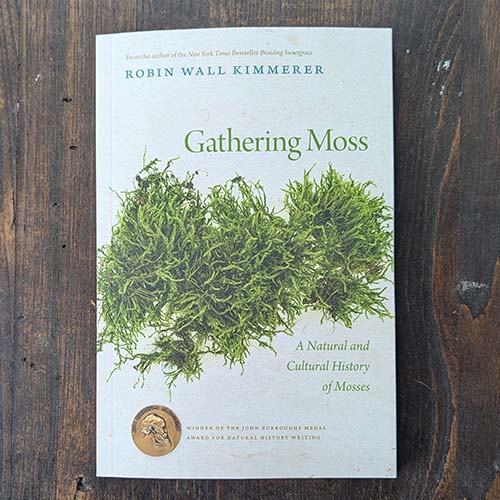
Gathering Moss: A Natural & Cultural History of Mosses

By Robin Wall Kimmerer

Up front, I need to tell you that I love listening to Professor Kimmerer while working the Land. So this book was definitely an audio listen. But, like all her books, I’ll listen, and then I’ll get the book for reference for my shelves. Each essay in Gathering Moss is peppered with wisdom inspired by the author’s indigenous worldview and of different types of mosses. They break down the science into stories and that’s some of my favorite reading. Kimmerer looks at mosses in this book not just scientifically but shows us the spirit within the moss, too. The fact that a PNW university helped publish this book is just a bonus for the collective culture of the Land where I reside as well. I’m shoving this book into my insurance companies face when they say I need to remove moss from my roof. It’s a capitalistic lie. I think I’ll take an Environmental and Forest Biology professor’s word for it and not yours. 

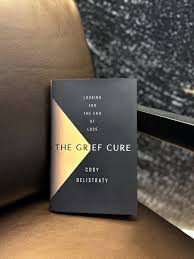
The Grief Cure: Looking for the End of Loss

By Cody Delistraty

Checked this one out of the library, because I’ve been doing a personal exploration of loss and grief, especially in the context of the culture of the United States. This book fit the bill, since the writer of this book explored an array of perspectives, actions, and events to deal with their grief, from trying to figure out if they had a disorder over their grief to trying to expand neural pathways with psychedelics. It’s clear this book was born of deep feelings. And reading it you will likely have lots of feelings about the author’s journey. I certainly did. 

The author was desperate to find the end of the feelings of loss they endured after their mother’s death. All of us have endured some sort of loss that produced grief, and the author’s situation is clearly relatable. They tried therapy, talked to AI, did mushroom therapy, laughter therapy (which made him have to force laugh in a very public place), visited shamans, did bibliotherapy (which I didn’t  know was a thing, but might check into it), etc. They wrote, “There is a difference, too, between closure on the one hand and memorials and rituals on the other. Memorials and rituals, I think, are healthy and helpful. It is the belief, however, that they signal the end to grief and reflection that can prove shortsighted.” As a person who has always side-eyed western funerals, this comparison between closure and grief’s end made so much sense. Portions of the book feel a bit too self-centered on the author, but moments like that kept me reading. 

Much that hampered the author’s journey with the grief over the loss of his mother, is our own society. Our own hang-ups, societies dictation, or even how loss and death presented itself in our lives. They write: “What a society chooses to grieve is ultimately its way of “posing the question of who ‘we’ are,” writes the philosopher Juidth Butler. “By asking whose lives are considered valuable, whose lives are mourned, and whose lives are considered ungrievable.” Yet Delistraty concludes quickly through half of the actions, therapies, and coping mechanisms, that: “In death and grief, there may be no singular truth at all, only what we tell ourselves.”

One of the interesting things is that the author themselves recommended text within the prose about other books on death and grief we should read. This includes: Mrs. Death Misses Death by poet Salena Godden; R.K. Narayan’s The Guide, which sound like more fodder for this Scorpio Stellium’s relationship with loss and death. Like the author of this grief exploration, it’s not how grief affects us, but what we do with it. “How easy it is to be engulfed by grief, drowned in it. To retain the positive memories is to be its master. To some extent that is the great experiment of life: to not become your loss, to alchemize it into wisdom.” 

What The Witch Is Reading – April 2026

Posted on April 29, 2026 by runa
A picture of library bookshelves stuffed full with one book in particular that reads RUNA TROY on the Spine. The words: WHA THE WITCH IS READING are in script over the top of the image. Underneath that title is the subtitle: Giving Back To All Books Gave To Me

This section of my blog is dedicated to spreading the love of reading and books and the people who make them happen. I would not be the Witch I am today without books. I owe an obscene amount of gratitude to all the makers of books out there. This is my way of giving back. I hope that something I pick up and review will guide you to acquire the next tome on your To Be Read stack.


Books That Shape a Witch’s Journey

I’m writing classes* again this season whilst trying to create a magical covenstead. Reading time has also been split between research and fun. The two fun books included getting perspective on Land tending from a former journalist turned farmer and some straight-up creepy fiction. Although it took me a minute to finish them all in between moving too many cubic yards of materials, they were all lovely companions during breaks and at the end of the day. Damn I love books. Here’s What The Witch Is Reading:

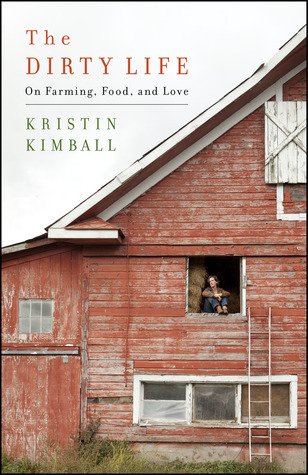
The Dirty Life – A Memoir of Farming, Food, and Love by Kristin Kimball

I overheard someone talking in our local food co-op about this book/ They said she was a jet-setting journalist with an Ivy-league background turned go-to-bed-exhausted New England farmer. Like the fiend that I am for books, I pulled up my phone and requested it from my local library asap. 

Kimball’s ability to recall the nitty gritty of being pulled to the Land (and the love of her life) was done with such tender-loving care that even if her worldview does not include the esoteric – you can tell they have a relationship. She also had me enthralled by the love of food and the semi-gourmand focus of the text. I will die on the hill that growing your own food and then preparing it to nourish self, kin, and community is some of the most powerful abundance magic anyone can conjure. Kimball seems to agree. She wrote, “Food, a French man told me once, is the first wealth. Grow it right, and you’ll feel insanely rich, no matter what you own.” No Lies Detected.

It also is an investment in healthcare that you didn’t know was a benefit on partnering with the Land and working it to live harmoniously with it and on it. In the book she details how she and her partner wanted what they did to be birthed from sustainability. Although she doesn’t talk about applying permaculture principles to the Land, many of their practices were at minimum regenerative, if not shadowing permaculture. That sustainability often meant more labor in the “start up” time of creating a prolific piece of Land that remains healthy. Doing that often makes the Land tender healthy, too. In The Dirty Life, Kimball records the alarming juxtaposition at a community meeting where old-school farmers who had plowed with draft horses like she did at her farm, against the younger generation that had embraced commercial farming practices – think lots of giant machinery and diesel fuel costs and harsh chemicals and a focus not on soil health, but that of output – showed physically the reflection of their methods in their appearance. She wrote, “…the old people looked healthier than the young who tended toward the obese.” Again, another telltale sign that she’s really in league with Land and community. 

The most quotable moment in the text which now is typed up and hung on the wall in the harvest shed here at #VillaWestwyk: 

“A farm is a manipulative creature. There is no such thing as finished. Work comes in a stream and has no end. There are only the things that must be doe and things that can be done later. The threat the farm has got on you, the one that keeps you running from can until can’t, is this: do it now or some living thing will wilt or suffer or die. It’s blackmail, really.” 

Seriously though, living close to the Land – whether its a community park that you tend or a huge farm like Kimball, or a tiny covenstead like yours truly, there is a richness there that defines that relationship:

“On our evening farm walks, the list of crops to harvest grew longer, we cruised the peas as the sun went down, grazing on handfuls of pods so full they looked dented…This is the farmer’s privilege, a form of decadence, and it made us feel rich.”

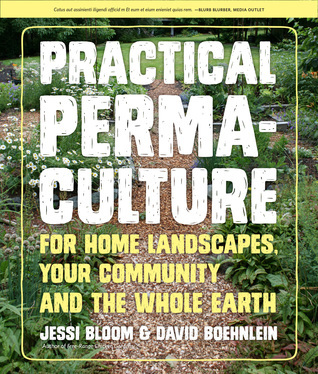
Practical Permaculture for Home Landscapes, Your Community, and the Whole Earth by Jessie Bloom & Dave Boehnlein

The Home Landscapes part of the title is what pulled me to this book. Also, I’ve read just about everything that Jessie Bloom has written about permaculture as well as heard her lecture. She has a lived experience in permaculture design and knowledge that is “local” in its approach, meaning she knows the nuances of doing what I’m doing in the Pacific Northwest, because she is as well. So it wasn’t a tough sell to get this book, except this home landscapes bit.

My hope was this book would present an integration between permaculture and a more modest piece of land, be it city lot or small rural covenstead that tends to be missing in some of the books on permaculture. Most of them present the information under the pretense of huge swaths of land. We have two acres, which is perfect for the covenstead, our neighbors, and community to live abundantly. Therefore, I was deeply interested in Bloom’s perspective on integrating smaller spaces in a permaculture design. I’m less familiar with her co-author, but his CV is clutch and I’m always ready to learn from others who are living their consulting/writing/business. They didn’t disappoint.

This book has actionable insights and advice to apply permaculture anywhere. It’s a comprehensive how-to whether you’re a beginner or a more intermediate designer. There’s not a lot of preachy language in this book, which I appreciate. Permaculturists are tired of preaching, but it still comes out in other texts I’ve read. 

I would say this book is great for beginners or veteran permaculturists, because if nothing else it’s a great idea generator. Apparently, it is used by the Oregon State University Permaculture Design Certificate course. Bloom & Boehnlein definitely get expert status in this covenstead of Beaver alum. There is a PNW bias to the book, I found, but not that it was a problem for me. Given that Bloom cut her permaculture teeth in this environment, many of the stories and lessons would happen in that coastal maritime zone. But all growing zones are featured and the diagrams and lists are super helpful. Want to learn more about the bones of permaculture? This is definitely a good place to start. 

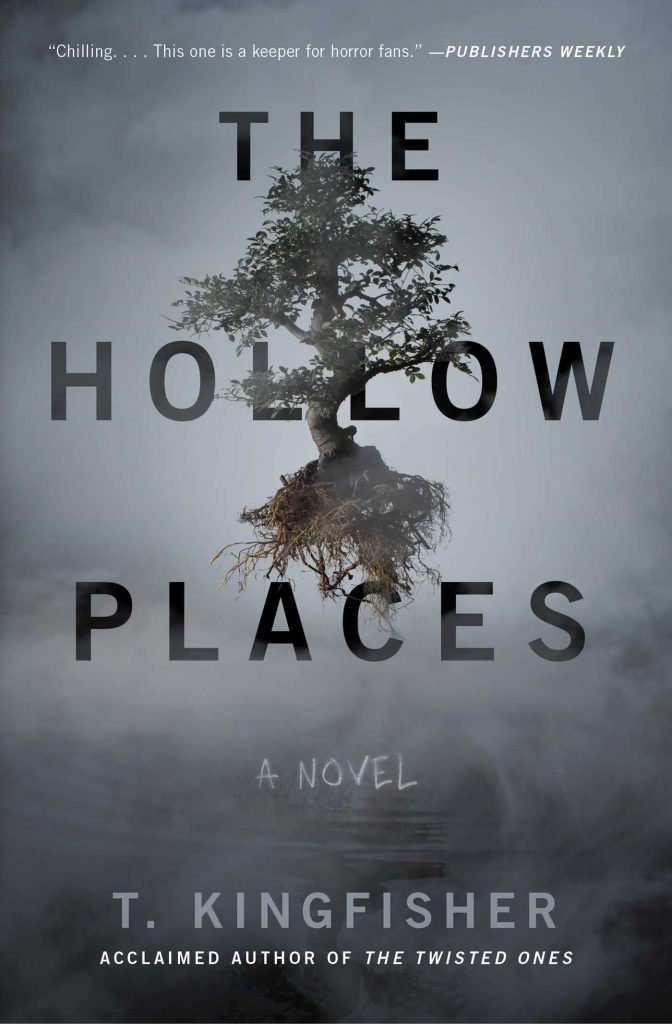
The Hollow Places by T. Kingfisher

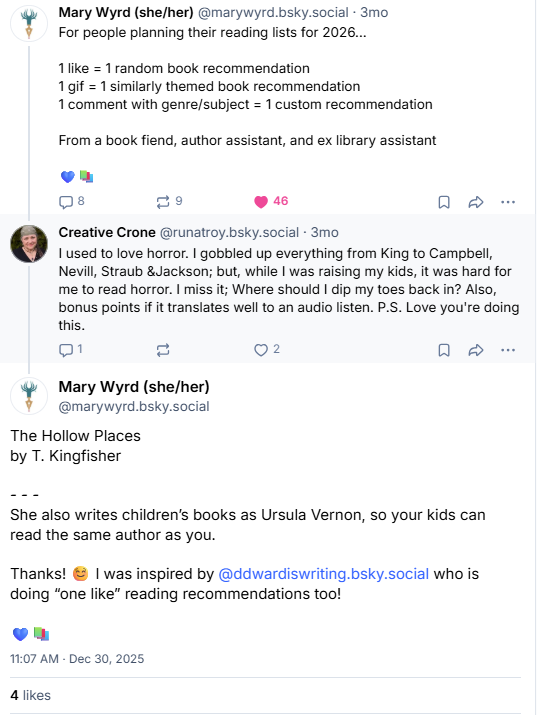
First horror novel I’ve read in a very long time and was recommended to me by @marywyrd.bsky.social (see photo). I love stories where the people are accidental heroes and this one fills the bill. The characters are so relatable and charming and you’re like, OMG don’t die! 

It centers on a recently divorce woman, Kara, who finds a portal to a terrifying, unstable dimension in her uncle’s museum of curiosities. That setting and Uncle Earl’s adorableness, helps bring comedy into this horror genre book so skillfully that my forage back into horror reading (I used to fancy myself a horror writer…until I had kids).

Add in some external complicated relationships (ex-husband, mother) and you’ll be nodding along with her desire to keep the crazy at bay. Little does she know it’s abutting her own bedroom. Kara’s sidekick Simon, the barista that works and lives next door, navigate this very weird other world together in regular-peeps bravery and fortitude. No superheroes here. Just two folx not wanting to die in a world that wants them dead (sound familiar?)

The setting both in the Museum of Natural Wonders, Curiosities and Taxidermy and the unnamed one they find behind a hole in the wall, is absolutely a character in itself and you may feel creeped out just by the eccentricity of Uncle Earl’s world and the other one filled with creepiness like none you’ve ever read before. 

The Hollow Places, for me, was darkly entertaining and full of unexpected laughter. When faced with the horrors of this world and the one on the other side of the hole in the wall have you wanting to scream and you laugh instead – good read, I say. Anything that horrific that kept me picking it up to finish is a winner – especially after decades of not reading horror. Good rec, Mary. Might have to check out more of Kingfisher’s work.  

As mentioned above, we’re still in high garden building and planting season here #OnTheCovenstead; but, there’s still plenty of reading being done. Currently I’m blazing through the memoir Making It: How Love, Kindness and Community Helped Me Repair My Life by Jay Blades of The Repair Shop fame. Do have to sometimes put it down and grieve for how so many of the countries that should know better are racist to the core. Yet, inspiration can be found in overcoming adversity, and Blades storytelling comes through like a chum giving you a chinwag at the pub. More on that next month! 


(*Walking the Path of the Elder Futhark is coming soon to the Creative Crone Shop)

What The Witch Is Reading – March 2026

Posted on March 12, 2026March 13, 2026 by runa

This section of my blog is dedicated to spreading the love of reading and books and the people who make them happen. I would not be the Witch I am today without books. I owe an obscene amount of gratitude to all the makers of books out there. This is my way of giving back. I hope that something I pick up and review will guide you to acquire the next tome on your To Be Read stack. 


This month’s What The Witch Is Reading features a diverse collection of titles. With each edition of this column, I mention my habit of exploring literature across various genres. I’ve found that delving into different styles enriches our understanding and broadens our perspectives on, well, life. And thereby the magic we make in it.

Each book presents an opportunity to engage with new ideas, and there’s something valuable to discover in every exploration. This month you’ll encounter authoritarian resistance, the importance of being a responsible ancestor, and challenging patriarchal norms. It’s a rich selection that invites deeper contemplation, dialogue, and spell work. I’m excited to share all the various voices within these books. I hope you find them as thought-provoking as I do. 

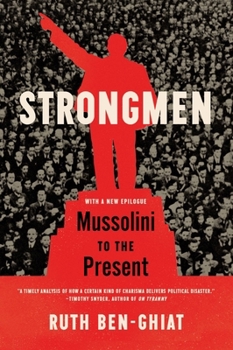
Strongmen: Mussolini to the Present by Ruth Ben-Ghiat

A mentor of mine listened to me howl about current politics one day over a virtual coffee date. They recommended this book because it not only explains how authoritarian leaders gain and keep power, it connects historical dictatorships to modern politics, and helps the reader recognize warning signs and defend democracy. 

This book caught me right away when it listed that many of the autocrats from Amine to Trump and Erdogan, Gaddafi, and Putin all came to office through elections. It also highlighted that women aren’t normally the ones causing autocratic or fascist rule.

“Some readers may wonder why I do not discuss strong female leaders in modern history, such as Britain’s prime minister Margaret Thatcher or India’s prime minister Indira Gandhi. While some of these women may have had certain strongman traits (Thatcher’s nickname was “The Iron Lady”) or engaged in repressive actions against minority populations, none of them sought to destroy democracy, and so they are not addressed here. 

And these guys are real pieces of work as Ben-Ghiat points out later.

“When US Secretary of State Condoleezza Rice visited Gaddafi in 2008, he insisted she dine in his private kitchen. He showed her a videotape he made of her – a montage of photos of her with Putin and other male leaders, set to a song, “Black Flower in the White House,” he had commissioned in her honor.”

As my nation continues to backtrack on social and justice issues, the examinations in this book made plain some of the idiocy we’re seeing today (think RFK Jr. and Kid Rock’s embarrassing reel on how manly and healthy they were–🤢), but Berlusconi seems, as Ben-Ghiat writes, inspired them. “The goal, in these and many other cases, was to demean professional women and make viewers laugh with him, and at them.” 

Is there hope to get out from under these strong men? The book definitely details great ideas on how to combat these unhealthy leaders. The means to the end of any strongmen is the people. “At its core, though, resistance remains anchored in physical presence: people reclaiming public space and making a different nation visible and audible. In-person protest has crated the images and tactics that still inspire protestors today. … Around the world, one resistance action inspires others.”

However, it’s not going to be a fast switch. And we may want to start by tearing down anything and everything that has TFG’s name on it (and there are many). 

“Undoing the effects of a leader’s oppressive presence and policies takes years, especially when his symbols, burial sites, and buildings live on… The strongman’s stadiums, highways, and airports, which his admirers see as proof that he brought the nation to greatness, cannot cover over the catastrophic loss that results from his rule. Expropriated assets, raided companies, interrupted schooling, disappeared parents, kidnapped children, and massacred communities leave voids that cannot be filled.”

Yes, Americans, she featured our current leader.

“The drive to accumulate and control bodies, territory, and wealth is a hallmark of strongman rule. The leader needs these possessions as much as he needs food and sleep. The rituals and pageantry of authoritarian rule, from rallies for the masses to the elite gatherings staged at private spaces like…Trump’s Mar-a-Lago resort in Florida, play to his bottomless need for control and adoration.”

“To oppose Authoritarians effectively, we must have a clear-eyed view of how they manage to get into power and stay there. The strongman brand of charisma, equal parts seduction and threat, attracts many followers by celebrating male authority. The autocrat bolsters patriarchal authority when it is seen as under threat…”

In short, hex the patriarchy (more on that later). But our country has a lot of shadow work, too in order to strengthen our democracy and heal the wounds currently being made, even as I write this and you read this. 

“America has played an outsized role in the success of authoritarianism around the world, starting with the US banks and media outlets that supported Mussolini’s dictatorship in the 1920s. Although American backing of strongmen was most visible in the age of military coups, the US continues to prop up authoritarians. Lawyers and wealth managers help to keep them in power by securing the money they loot from their nations in offshore accounts.”

But the most chilling piece of evidence in this examination of Strongmen and the steps to recovering form it is founded in hope. She writes:  “There are two paths people can take when faced with the proliferation of polarization and hatred in their societies. They can dig their trenches deeper, or they can reach across the lines to stop a new cycle of destruction, knowing solidarity, love, and dialogue are what the strongman most fears. History shows the importance of keeping hope and faith in humanity and supporting those who struggle for freedom in our own time. We can carry with us the stories of those who lived and died over a century of democracy’s destruction and resurrection. They are precious counsel for us today.”

If you have the tickets, I highly encourage you to read this. I was left with feeling that they mostly will self implode, but we as the people will need to keep the pressure up. I wrote my congressional people and told them to read this book, too. 

Like Sun Tzu wrote in The Art of War, “If you know the enemy and know yourself, you need not fear the result of a hundred battles. If you know yourself but not the enemy, for every victory gained you will also suffer a defeat. If you know neither the enemy nor yourself, you will succumb in every battle.”

In the end, the book left me with this thought: We Witches tend to know ourselves well or are working on it. Knowing the enemy is maybe where the rest of us struggle. The enemy has shown themselves. Do we know them?

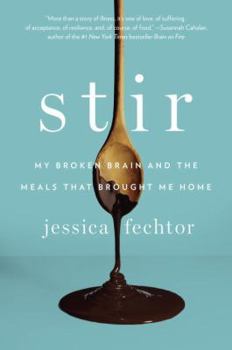
Stir: My Broken Brain and the meals That Brought Me Home by Jessica Fechtor

I picked up this book because the food nerd in me demanded it. This book was an audio ‘read’ for me. It’s language was beautiful and the writer weaved in food love and illness in a brilliant way. It’s largely a feel-good story, but there is one quote in the book I may have to have someone needlepoint some art:

“…felt the power of a recipe in a new way. How it takes you by the hand and tells you just what to do. A good recipe makes you brave.” 

If you need a read that you feel like you’re rooting for the main character, Sitr will be a quick and delightful read. Apparently the actual hold-in-your-hand book had 27 recipes. My library download of this book didn’t host that. I may have to remedy that and buy a physical copy. ::rushes to put it on the list of book-store wish list:: 

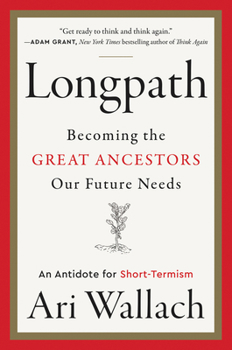
Longpath: Becoming the Great Ancestors Our Future Needs; An Antidote for Short Termism by Ari Wallach

I liked this book’s main theme in that it really pushes folx to look beyond their own lifetime. In the author’s words there are distinct actons that need to happen in order for us to become Great Ancestors. 

“Longpath has two critical pillars that are designed to combat the forces of short-termism, and to help you “garden” a brain that brings in a much bigger picture with every decision, even when those decisions lie deep beneath the surface of your consciousness. Those pillars are: 

Transgenerational Empathy: A continual awareness of your place in a chain of being, wherein you reckon with your inherited history, find alignment in and with the present, and make adjustments to improve the future.

Futures Thinking and Telos: An expansive capacity to think about many different types of futures and an invitation to imagine the future you want.

For those of us who have deep empathy, Wallach contends that we are futurists in our own right.  “That’s why empathy for the past has everything to do with the future. Transgenerational Empathy allows you to see what made you.” Transgenerational Empathy. If you’re an empathic person, that’s a heavy term. Long after returning the book to the library, I was still pondering the term Transgenerational Empathy throughout my day. 

Mostly, the book defines that there needs to be a shift in not only how we learn, the author details, “There’s a lot of learning and realignment for us to do during our life spans and a finite amount of time to do it all in. Living an aligned life, comes with an acceptance that inevitable. One day, we won’t be alive, and this fact gives everything we do in our life meaning.”

One day, we won’t be alive. We have to care about what happens after. If we don’t are we even human?

The book’s spotlight on how current politics blocks our ability to be good ancestors, especially where the technology sector is concerned.

“Tech even created the ecosystem that enabled the manipulation of the US political system, as a 2018 report released by the Senate explained: “Social media have gone from being the natural infrastructure for sharing collective grievances and coordinating civic engagement, to being a computational tool for social control, manipulated by canny political consultants and available to politicians in democracies and dictatorships alike.” 

Although I feel the book suffered from a bit of an advertising undercurrent throughout the text (the author teaches these tenets to organizations and leaders), and gives me pause to wholeheartedly recommend it, I liked that the book goes well beyond the Socratic view of examining life, but that an examined future is worth fighting for. 

It did give me hope that there are people trying to get others to think about our grandchildren’s grandchildren, and act accordingly. For that, I was grateful to read it. 

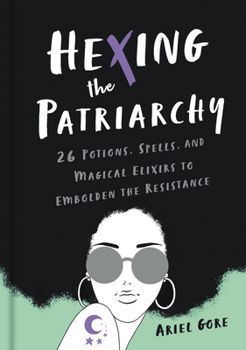
Hexing the Patriarchy: 26 Potions, Spells, and Magical Elixirs to Embolden The Resistance by Ariel Gore

This book has been in my TBR pile for too long. But it felt like the perfect brain cleanse after reading Ben-Ghiat’s Strongmen. And it was. As a former student of Gore (seriously if you have a chance to learn with her, do it), I have long loved the eclectic mix of people she has in her life and writes about. In this book, Gore brought out all the powerful witches and there’s 26 different spells to choose from, A to Z, from the most incredibly diverse and powerful group one could assemble as a, dare I say, Mega-coven. 

Gore suggests that you start with the letters of your first name and work those, as to not be overwhelmed. But I can see how each and ever witch out there just might get through the whole dang alphabet. If I were to follow that guidance to do the spells of my name, we’d be looking at the following spells:

R – Reclaiming Power. Call on the goddess of transformation to do no harm and take no shit. (Every B’Witch I know could use a dose of this magic. A more powerful you is a more powerful ally.)

U – Unleashing Nemesis. Let the goddess of retribution and reparations explode in all her glorious pent-up fury. (The intro to this spell is all about Nazi Germany and I was like,  holy shit, is this relevant, prophetic shit, Gore wrote.)

N – Never Erase. Raze the border walls to the ground: no person is “illegal.” (This entire section gave me chills and is so apropos given the collective fuckery we’re all dealing with right now.)

A – Ancestors. Hit up your dead relatives to help you smash the system. (Where our inheritance merges and how that mashes with our magic. Next layer ancestor veneration, readers.)

And there are 22 other sections to spell out the end of white supremacy and its older brother patriarchy. Pretty slay. 

Gore weaved a special kind of magic in the book by using dozens of other practitioners from around the world in every representation. You can feel that powerful energy coming throughout each letter’s of the larger spell work. Imagine if every witch out there worked all 26 of these spells. From my words to the Universe’s desire. So it is. All this or better, witches.  

I only have two concerns about this book. First is the inclusion of glitter in one of the workings. As a land-tender I am all too aware that commercially produced ‘glitter’ is harmful to the environment. However, it is easily substituted with colored sugar, salt, dried herbs, or mica. The second disappointment I had was that it took me so long to get to this one. I could have used this book when it first came out. Better late than never. Regardless, it’ll be well worn before too long. 

See you for the next post on What The Witch Is Reading. Thanks for reading and comment if you have any questions, anecdotes, or requests.


As you can see, I read a little of everything. I’m always curious about what others are reading. What book are you working through right now? Let me know that, too!

What The Witch Is Reading – February 2026

Posted on February 1, 2026January 27, 2026 by runa

This section of my blog is dedicated to spreading the love of reading and books and the people who make them happen. I would not be the Witch I am today without books. I owe an obscene amount of gratitude to all the makers of books out there. This is my way of giving back. I hope that something I pick up and review will guide you to acquire the next tome on your To Be Read stack.


Reading in the winter is one of the things I most enjoy. Snuggling up in my reading chair with my puppers, next to the fire and sipping tea whilst I work my way through a book is heavenly. As I mentioned in my last post, most of my reading has been dedicated to recent research I’m doing for an ongoing project while still doing my Witch Work and running a permaculture Covenstead. Those books won’t appear here as to not give the project away before it’s ready for its public. But I’m always reading. Since my last post, I have finished two books (I’m reading a total of 4 right now – what? I like variety!)

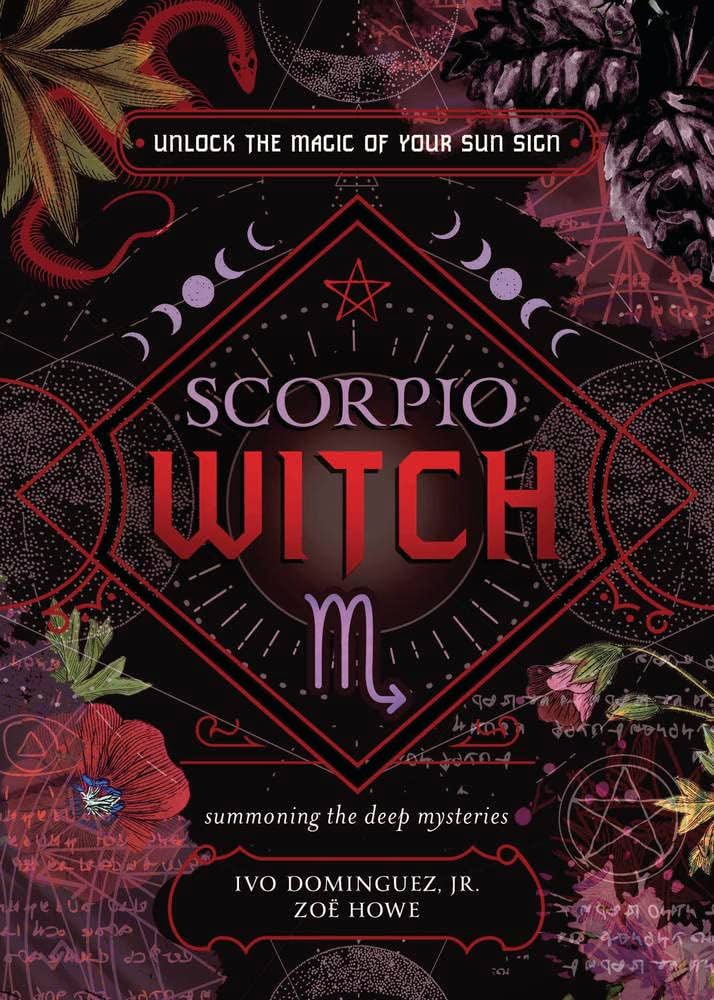
Scorpio Witch by Ivo Dominguez, Jr. and Zoë Howe

I would not call myself an astrologer. I only started deepening my astrology knowledge back in 2017, with a big increase in my application of it in my daily life and magical practice beginning during the pandemic. But even knowing enough to be dangerous allowed me to enjoy this book and learn more and solidify some of the knowledge that I have about the impact of a Scorpio Sun, which yours truly is. 

I saw myself in so much of the content for connecting more deeply with the Scorpionic aspects of holding this sun sign. I know what the stereotypes are – and Dominguez and Howe go beyond and provide great tips to lean into that power. This is done through clean, no-nonsense writing and the play off of Dominguez’s more professorial tone and Howe’s more rock-n-roll takes on things plays a nice yin and yang in the text. The reader is left more grounded yet invited to shake their Witch’s rattle. 

Howe details early that Scorpios are those lone wolf witches who are perfectly content with being a solitary practitioner, “…unless a very special group presents itself.” She continues the expose on Scorpio suns with, “… magical work is sacred and we, the Zodiac’s least trusting sign, have to feel certain before we allow ourselves to be vulnerable in the presence of others.” ON POINT, readers! 

The book also explores the different moon signs that a Scorpio sun might have and how you can use the sway of the lunar energy to balance the light and shadow within that Scorpio sun. 

Dominguez also explores the rising signs, so going into reading this, knowing your big three is a plus, but early in the book there are directions on how to find your sun, moon, and rising. The anointing oil instructions he provided in the book is dead-on Scorpio scent love. I’ve already created it and use it in my daily meditations when preparing my sacred space. 

The part of the book that I will return to often – this is a reference book to be sure, but not dry and stale, but something that will teach you over and over again – is the exercises, spells, and rituals included – many by other writers who hold that Scorpio Sun in their chart.

I would, however, like to purchase a copy where they didn’t use the script font in the section titled “Postcard from a Scorpio Witch” by Lisa Jade. Utterly difficult to read and feels inaccessible depending on the reader’s mood, lighting, and eyesight. But the way it presents definitely feels like someone writing you a postcard – or letter even as it’s a few pages long. So the design choice made sense. But, maybe a clearer script font would be more appropriate?

However, I’m already awaiting the arrival of two more in this astro-witch series. When they get to the top of the TBR pile, you’ll hear from me on those books, too.

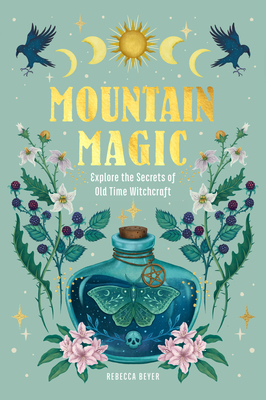
Mountain Magic: Explore the Secrets of Old Time Witchcraft by Rebecca Beyer

In 2025, along with reclaiming spirit work, I also had the goal of learning more about the cultural and societal influences on my ancestors. These goals continue through 2026, and if you’ve not explored your ancestors’ lives as we recall them, I highly encourage it. 

My path to explore these ancestral influences led me to Mountain Magic. It was on a stand right by the cash register, so maybe a spontaneous purchase, but also someone nudging me on my elbow, saying, “read this.” A good few branches of my family tree begin and branch from Appalachia USA. Beyer’s knowledge of that is fairly well rounded. As I mentioned last month, Wild Witchcraft, also by Beyer, sits on my shelf and I referenced it in Magic In Your Cup. Beyer loves research, as I do, and so getting a second book by her didn’t take much thinking. 

Like so many Craft books, this one hosts all kinds of working recipes. The ones in this book were inspired or done by generations of Appalachian folk magic. There’s some things in the mix of what is presented in this book that may make even the most devoted of Witches raise an eyebrow. But again, this is an education in how our beloved dead perhaps saw and ‘worked’ the world. It was nice to see validation of the materia magica that continues in my own practice naturally, but new ones to try, especially as I try to work with Beloved Dead in my spirit work. 

One interesting thing happened whilst I was reading this book. I had just finished the section on using Witchballs for Protection. Now in my lineage, witchballs were decorative, often hollow, glass spheres hung in windows to do the same things the Appalachia Witchballs did – trap evil, spells, and ill fortune, protecting the household. In other cultures they can be called spirit balls or friendship balls. Again, I had just finished that section when my partner and I were off on errands. Part of that was dropping off a donation to a thrift charity shop. When we drop, we often pause to shop, too. Treasure hunting is one of our favorite pastimes. What did I find? But a huge, six-inch diameter Witchball featuring all my favorite colors, with a motive of waves through the center. I’m heavy in the water element in my Natal chart, and it was like my ancestors said, “Here, you need more wards. We found this for you and now you know more about how to employ it.” 

Another thing is that I found the same Abracadabra energy in Mountain Witch that also appears in Scorpio Witch. Given that Abracadabra has been part of magic for millenia is encouraging to see it worked from different Practitioners perspectives. Absolutely they use similar tools, but employed slightly different – something that is not unusual within different paths of the Craft. Beyer folk magic; Dominguez with a more Witch/Wicca/Pagan viewpoint. Both powerful magic speaks to different paths and sympathies. And that synchronicity was electric to discover in this month’s readings.  

Up Next:

I am reading more research I can’t reveal yet; but, you know I’m not just reading one book at a time. I picked up two books at my local library – both a little more secular subjects, but I followed my intuition again for book selection. The books are: 

Strongmen: Mussolini to the Present by Ruth Ben-Ghiat, and 

The Pursuits of Philosophy: An Introduction to the Life and Thought of David Hume by Annette C. Baier. 

I’m in the midst of writing a fiction short story, so heady non-fiction is the way to read for me now. However, sudden urges to hit the used book store may bring a different work to the next Bookish Witch post.

See you for the next post on What The Witch Is Reading. Thanks for reading and comment if you have any questions, anecdotes, or requests.


As you can see, I read a little of everything. I’m always curious about what others are reading. What book are you working through right now? Let me know that, too!

What The Witch Is Reading – A Writing Break -April/May 2025

Posted on May 12, 2025May 12, 2025 by runa
This section of my blog is dedicated to spreading the love of reading and books and the people who make them happen. I would not be the Witch I am today without books. I owe an obscene amount of gratitude to all the makers of books out there. This is my way of giving back. I hope that something I pick up and review will guide you to acquire the next tome on your To Be Read stack. 

I have currently been doing a lot of reading. A lot. But it’s not the on-brand for a Witch reading I was doing over the last year where I reviewed the fun, interesting, and often esoteric books. Nope, this reading has been all for research for my current manuscript in progress. I should clarify that I still find this interesting and engaging – a lot of it in a field I’m sure is going to change so many people’s lives. But the subject matter is hush-hush until public announcements can be made. I will say it’s going to merge science, everyday life, and Witchcraft. 

Despite having read a near Witch’s dozen of books since the last What The Witch Is Reading post, It hasn’t left a lot of fodder for ‘reviewable’ content. Posting a WTWIR on all these books would potentially give away the secret too soon. But it did make me want to write a bit about how reading helps our writing skills. Reading is a great writing teacher. 

“Read, read, read. Read everything — trash, classics, good and bad, and see how they do it. Just like a carpenter who works as an apprentice and studies the master. Read! You’ll absorb it. Then write. If it is good, you’ll find out. If it’s not, throw it out the window,” as famously reported by John Ochwat as a William Faulkner quote. 

I have read widely and intentionally as one of the more effective ways for me to become a better writer. Although my studio’s bookshelf is full of mainly esoteric books, the other shelves within my home feature everything from how to turn dirt into soil, writing books, novels in every genre, text books, biographies, poetry volumes – all of it. 

Here’s what my daily reading habit (specifically book reading without the screen) has done for me over the years: 

  1. Word Nerd Love. Reading builds vocabulary and language skills. As you read you’re exposed to different words and phrases. You unconsciously absorb grammar, syntax, and rhythm. You begin to see ways of improving your own sentence clarity and word choice. 
  2. Story Set Up. Reading teaches structure and form. As you read you’re digesting narrative structures, pacing, story arcs, tension through observation, the conventions that each genre uses, and just the sheer vastness of formats from essays, to novels, to one of my favorites: flash fiction. 
  3. Cheap Inspiration. It’s rare I’ll be reading a book that doesn’t rev-up  my inner good-idea fairy. Books spark new ideas, themes, perspectives, and melded with your worldview, creates layers of possibilities. Have a writing block? Go to a museum or read new poetry. It unblocks things often in my experience.
  4. All The Feels. Reading enhances empathy, character development, and where rules are broken successfully. There are innumerable ways to see how different writers grow their characters, pace their stories, and get you – the reader – to relate to the text. You read how other writers make you feel something with their writing. That teaches us how we might accomplish the same within our own writing. Making the reader feel something is the whole point of being a writer. Reading allows us to contrast and compare, too, It shows us where the rules we’ve learned – both via reading or training – can be broken successfully, which often clicks open a new pathway via point #3 above. 
  5. Think Better. Reading encourages critical thinking and reflection. You might notice when a writer isn’t as successful, but noticing when they are on point teaches us as well. You can see how others use voice, tone, and reflective phrases to make the reader pause and think. The more we do this the more we become better self-editors and begin to read like a writer – like noticing when a writer leans too heavily on adverbs or passive verbs, and then you’re scouring your manuscript to make sure you haven’t fallen for the same foible. 
  6. Community. Reading motivates and sustains writers. Being able to talk about books ala clubs or within friendly circles is another way that reading helps us become better writers. Studying the discipline and craft of published writers propels our own craft forward. Reading about the community of writers can illuminate all kinds of tips and tactics. Love a particular writer? There’s a good chance their career is inspiring your own and pushing you to finish that project you’ve been working on for five years. 

Reading is not just an enjoyable hobby, it can be a life-long teacher in writing. If you build a regular reading habit, and integrate it as part of your writing goals, things like new vocabulary, alternative structures, character development, and even critiquing others’ works energizes and brings new vigor to the writing process. 

What are you reading? How did it change your writing? 

Creator’s Note: I hope to return to regular What The Witch Is Reading selections very soon. This current Work In Progress is very demanding. 😉

What The Witch Is Reading – January 2025

Posted on January 22, 2025March 7, 2025 by runa

This section of my blog is dedicated to spreading the love of reading and books and the people who make them happen. I would not be the Witch I am today without books. I owe an obscene amount of gratitude to all the makers of books out there. This is my way of giving back. I hope that something I pick up and review will guide you to acquire the next tome on your To Be Read stack. 


January flew by and I’ve been spending extra time reading, which I adore. Next to the fire with my puppers in my lap and a cup of coffee nearby. It’s the best. My own book launch went off spectacularly and I am deep in drafting book two, so the bookish witch life continues.

Recently Finished:

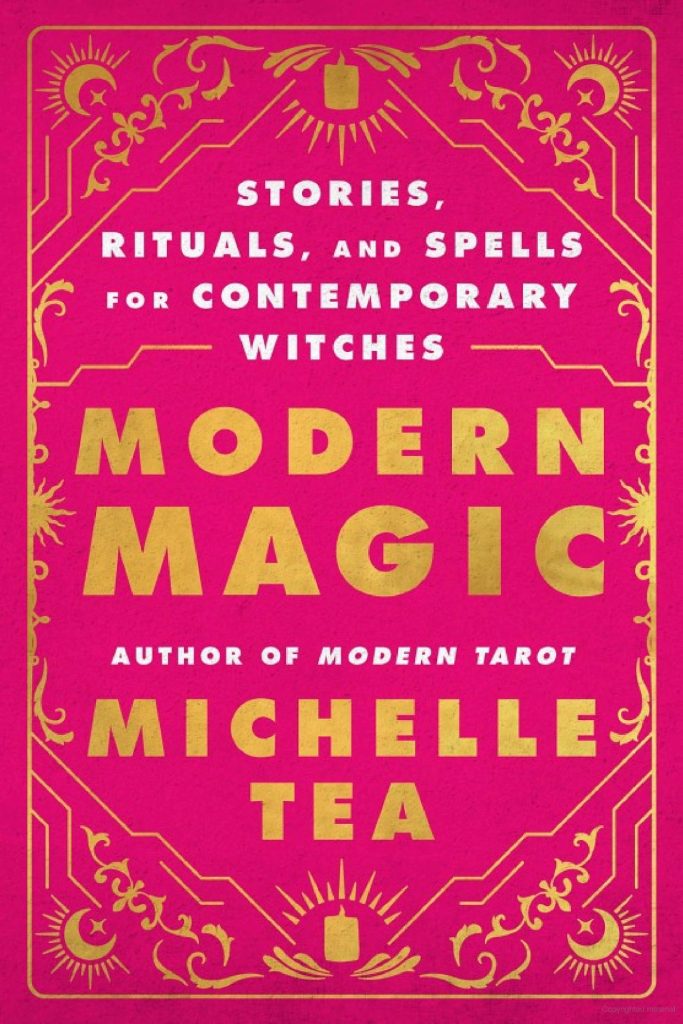
Modern Magic: Stories, Rituals, and Spells For Contemporary Witches by Michelle Tea. The magic in this book is certainly the storytelling prowess of its author. Another title could have been ‘Craft for Real Life,’ as Tea weaves the necessity of the magic throughout a life peppered with unconventional living arrangements, relationships, and recovery. Everything from working with Saints, Mystical Snacktivism, House magic, and more. My favorite part has to be Laurie’s Egg of Light under the chapter called ‘Witch Panic.’ I was screaming in delight with recognition of my own kind of Egg of Light spells I cast for protection on kindred. Laurie wherever you are, I see you, Witch. Also, I love the approachableness of how Tea writes of her magical practice. It’s fluid and flowing and weaved in her life from dreams to charms. From breathwork to hexing, whether you’re a Witchling or a Crone, you’re going to dig this book.

An Apostate’s Guide to Witchcraft: Finding Freedom Through Magic by Moss Matthey. There’s a soothing flow and voice in this book. Matthey’s ‘considerate, sensitive, and nurturing,’ nature as detailed by foreword writer Mhara Starling is evident throughout the book. The escape from a cult healing that happens through Witchcraft is so validating for those of us who had our own religious trauma to heal from. The book clearly represents all the lessons that Matthey pulls not just from his cult escape, but also his Welsh and German ancestry. The section of the book on identity and diversity under the chapter of The Queerness of Witchcraft especially resonated with me. But the amount of quotes I pulled out to remember for later was pretty high in this book. His section on progressive revelation and Doubt is Divine under chapter 10 has me considering many new things as well as a new list of books to acquire from said chapter. The amount of progressive revelation from this seemingly new Witch shows that Matthey just may be an older soul than we know. A seeker like many of us, Matthey’s book is one to help you shed anything that’s not serving you and find your way to your own journey of freedom through the Craft. 

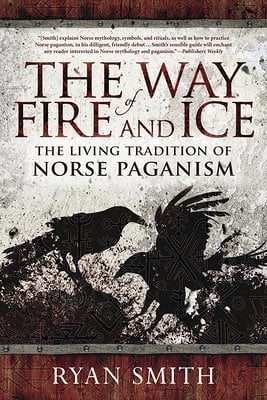
The Way of Fire and Ice: The Living Tradition of Norse Paganism by Ryan Smith. I love books with thick bibliographies and clear indexes, especially on subject matters that I may refer back to, like Nordic spirituality. Ryan Smith’s book is not only deeply knowledgeable in this path, but also its evident – if you study it – adaptable traditions that build community and resist fascism. This book is dense in all the subjects found under Norse mythology and the spiritual paths it has created. Smith’s radical look at this brings hope in a world seemingly bent on destroying healthy spirituality and its communities. If you’re called by the likes of Freyja or Thor, this book gives you a nice basis in understanding how to build relationships with these deities and develop practices (and songs) within a modern life. His section on Runes is making me seek out some other resources as well. As a long-time Rune caster there’s information in the book on the Elder Futhark that is counter to some of what I understood. I’m excited to find where the disconnect between what I understood and what he writes in the book may be bridged. I finished this book feeling like I had some new missions in my own spiritual practice, so good on ya, Smith. 

The Book of Delights by Ross Gay. This book was gifted to me near my birthday in November by the admirable Theresa Reed. It has been quite the solar-return blessing. This book brings us soothing prose, even I might add practical hopefulness in the light of so much violence and terror in the world. Gay is an award-winning poet and clearly a Knight for finding enchantment in our lives. Pleasure and happiness are the balance to the pain and sadness of modern life. Bite-sized essays are great to read when the world is too heavy. Grab your cat, cup, and get this book in your lap for a quick pick-me-up, or a long session of reading for bliss. My favorite – which will be unsurprising to anyone who knows me – surrounds an interaction with a praying mantis. It is essay number 7, which gets my numerology nerd excited. Birds and crows figure prominently, too, so Gay gets another stamp of approval from me. Seriously, the weaving of language to convey healing balm for the reader for the wounds and weariness of the world.

The Old Farmer’s 2025 Almanac. Every year this periodical finds its way to me. This year it was a Yule gift from my eldest daughter and her family, including my dear Grand Witchling. As a ‘farmer’ of sorts my whole life, the Sun, Moon, Stars, and Planets included in this book are always appreciated, but as I grow older, the coverage of farming trends and the people behind it are a bigger pull. This year’s volume has me planning a trip to the home-stomping grounds of Canadian kindred and the cheese makers in British Columbia. Such synchronicity – which often happens when you’re paying attention to the land and cosmic weather, which the TOFA has done for 233 years. I’d really love to see less advertising in it, or keep the advertising to the back, since sometimes the latest and greatest in land care can be found there. But this year’s publication seems to be especially fraught with commercialization. But the inspiration found inside of it is still gold. 

Up Next:

Blackthorn’s Protection Magic: A Witch’s Guide to Mental & Physical Self Defense by Amy Blackthorn. Many a book on my TBR pile comes from recommendations from a community I belong to and adore. Laura Tempest Zakroff has a patreon that I participate in as much as I can (I wish I could attend all the time!). If you want your TBR pile to grow, come hang out with this well-read crowd, too. I just dipped into this one the night before penning this post, so only initial reactions from me on this. But Blackthorn really wants the reader to understand where they stand in the world of magic before proceeding and that kind of expectation is something I deeply support. Looking forward to more. 

The Serviceberry: Abundance and Reciprocity in the Natural World by Robin Wall Kimmerer. From the author of Braiding Sweetgrass and Gathering Moss comes another title that seems destined for more in my own life, as getting more serviceberries here at Villa Westwyk is a goal. 

Kimmerer is known as a great teacher and I’m ready to learn all about natural wealth distributions and the idea that all flourishing is mutual. In a world where the rich cannot be satisfied, this book already feels like the start of realigning ‘enough’ in our lives. 


As you can see, I read a little of everything. I’m always curious about what others are reading. What book are you working through right now? Let’s talk about books! Comment below. If you have a book you think I should read, let me know that, too!

  • 1
  • 2
  • Next

Tomorrow, The Wild Covenant launches. Found only on my Patreon. This course takes you slowly step by step to tend soil, soul, and the spaces in between. Here's a bit more: www.patreon.com/RunaTroy/pos...

— Creative Crone (@runatroy.bsky.social) 2026-09-09T22:01:13.597Z
  • What The Witch Is Reading – September 2026
  • Protected: Brewing Your Backyard: A Guide to Localizing Your Fire Cider
  • What The Witch Is Reading – August 2026
  • What The Witch Is Reading – July 2026
  • What The Witch Is Reading — June 2026
© 2026 Runa Troy – Creative Crone | Powered by Minimalist Blog WordPress Theme