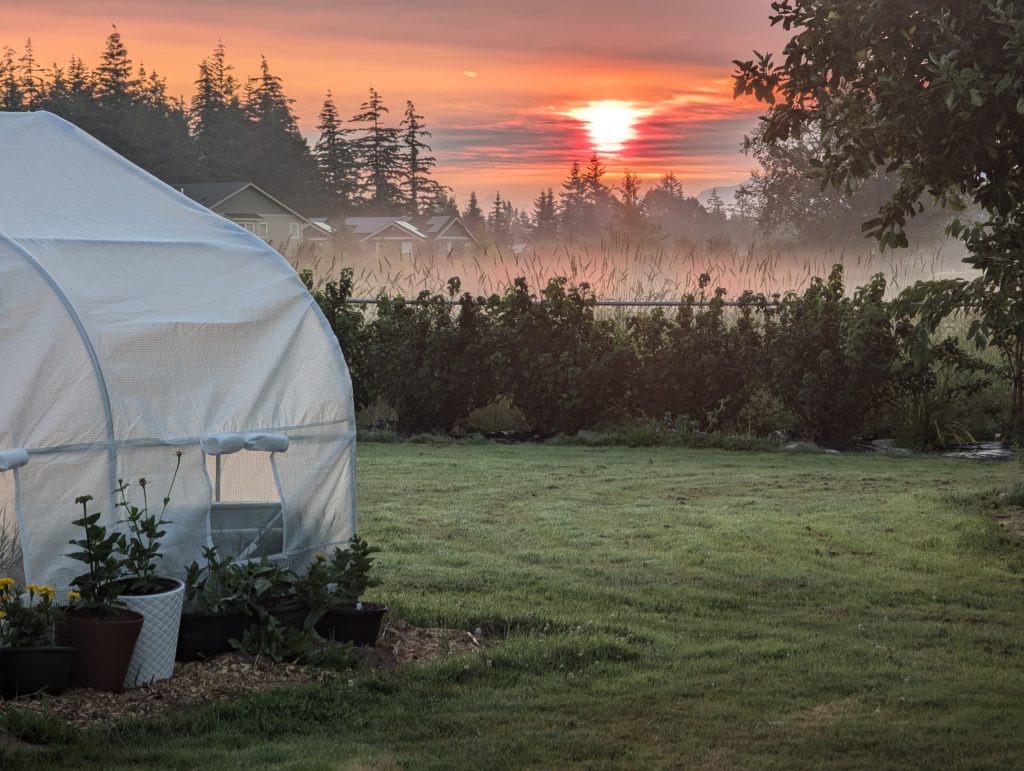
It’s high food-planting season. Over on Bluesky I’ve posted about the things we’re doing each day #OnTheCovenstead to live in concert with the Land. Part of that is growing our own food – obtaining a yield, as us permaculturists like to say. At the end of the farm-work day I’ll record what was done. I’ve been sharing the highlights – like I said on Bluesky (are we following each other?) – as the work to grow as much food as we can – for us, for our kindred, and for the community* – reaches a fevered pitch.
And then someone asked for photos of what I was talking about (thanks Pamelia!). This took me down such a long road to be able to snap some photos and share. It also had me thinking about sustainability, because, well, as a practicing permaculturalist Witch, I’m constantly thinking about that. Looking to snap some current photos, then had me looking at where we’ve been on this property. It’s been six years since we had a half-crocked idea to take two acres of abused land and create a covenstead that was ecologically sustainable for a magical life.
I’ve blogged before about my love of small, slow solutions, a tenet of permaculture, because it allows you to make mistakes, adjust along the way, learn from those lessons, and create something stronger moving forward. The systems needed to mimic nature in order to live as a human being can be intense. Everything from composting, planting food forests, and rainwater harvesting takes time. A forest doesn’t shoot up overnight. Neither does a covenstead. Gradual lets you incrementally act in a manageable form.
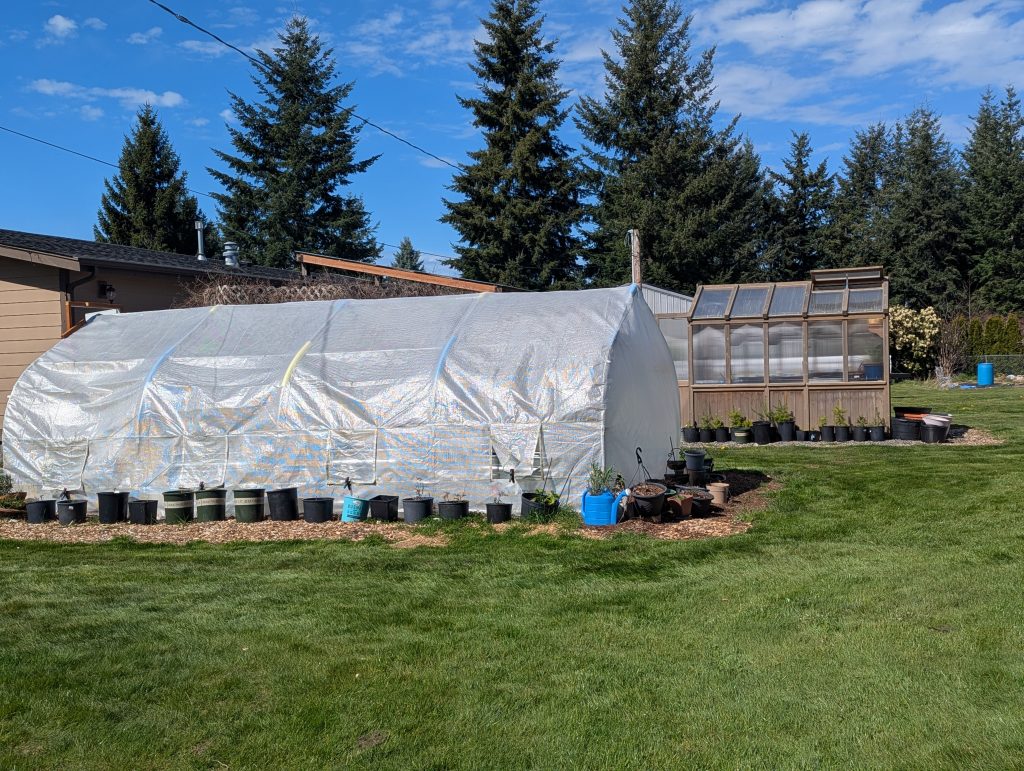
Let me lay it out in picture form – here’s where we started:
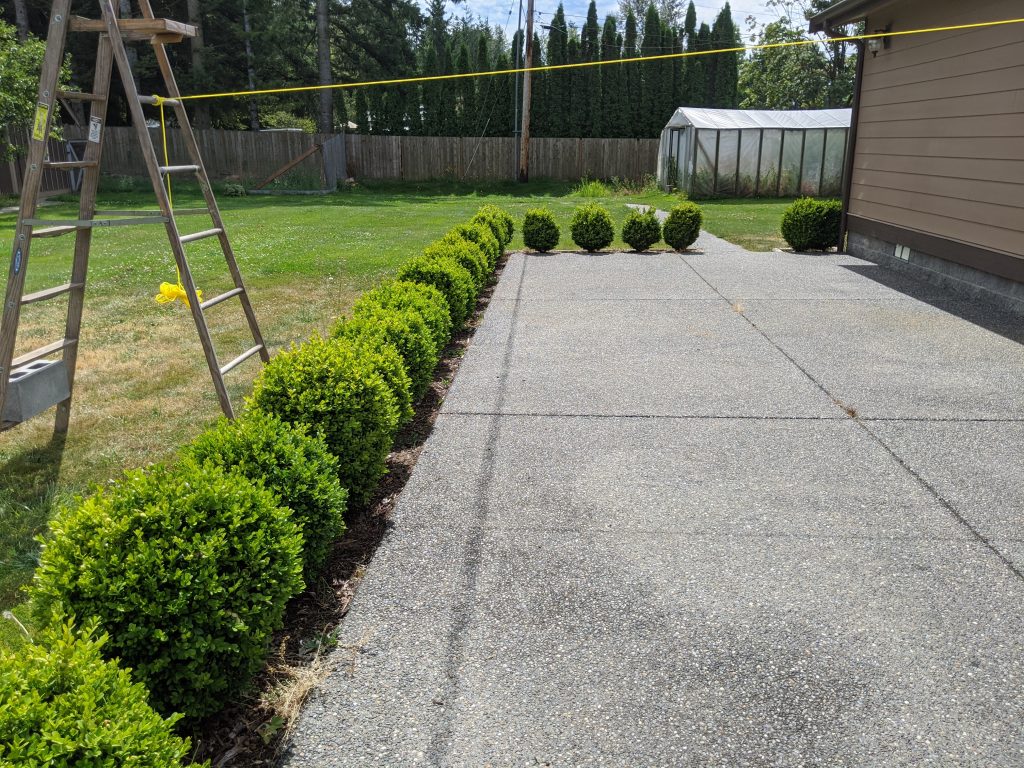
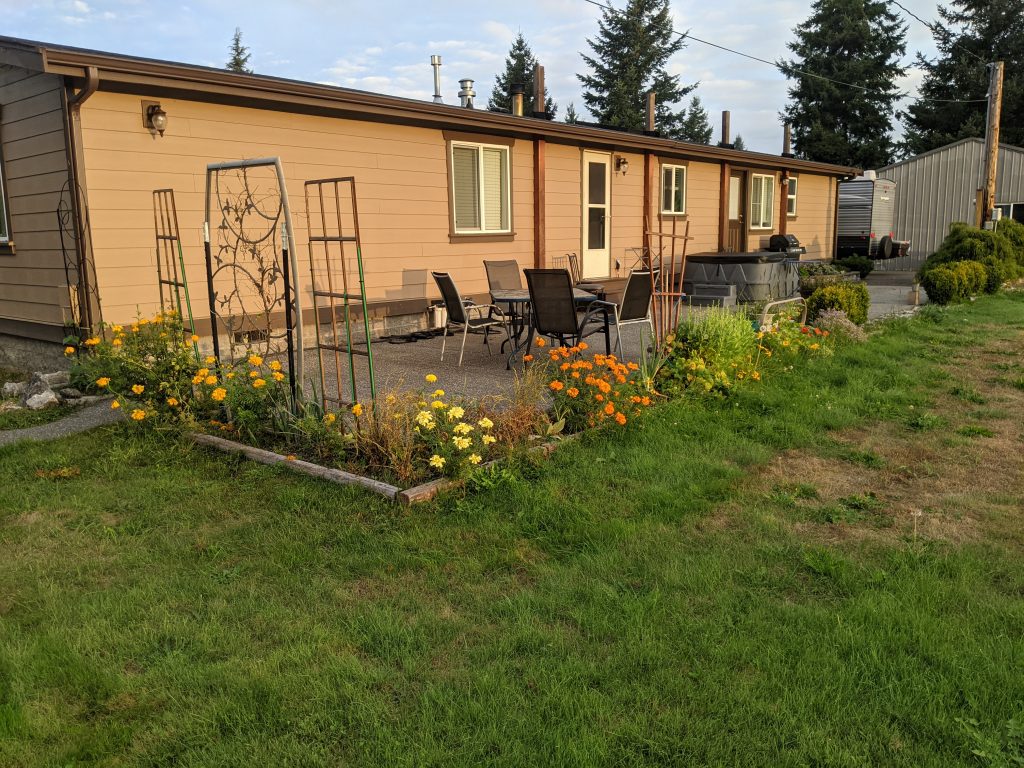
We installed the polytunnel in the fall of 2023. The photo below is Spring of 2024. Small, slow solutions in action.
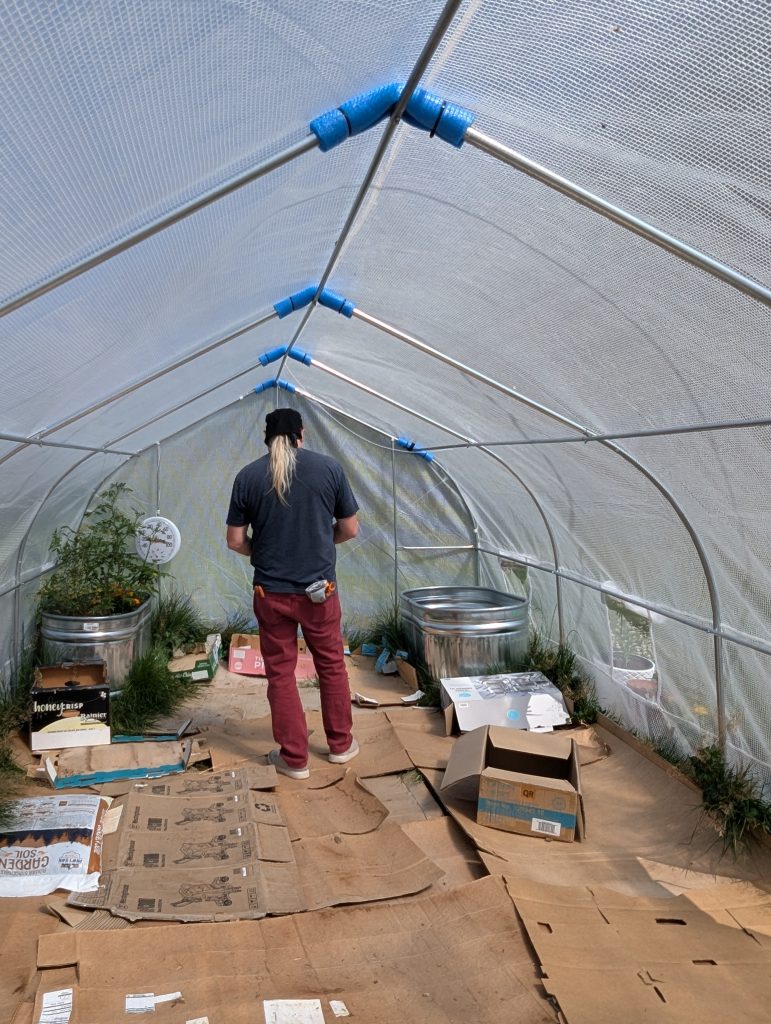
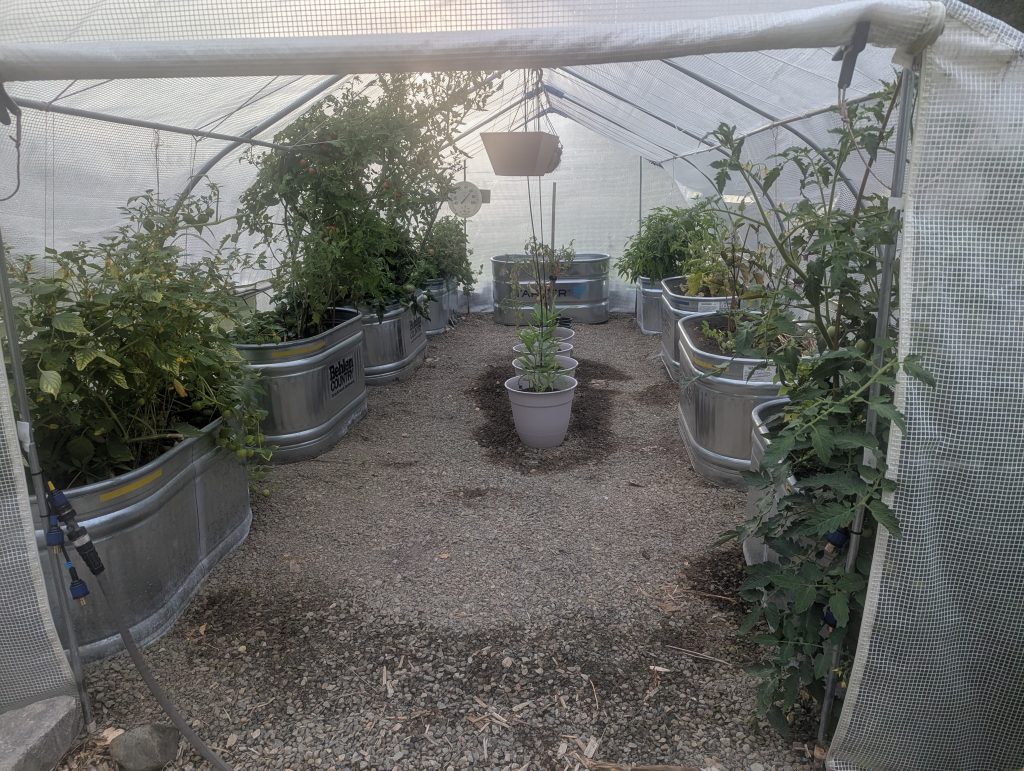
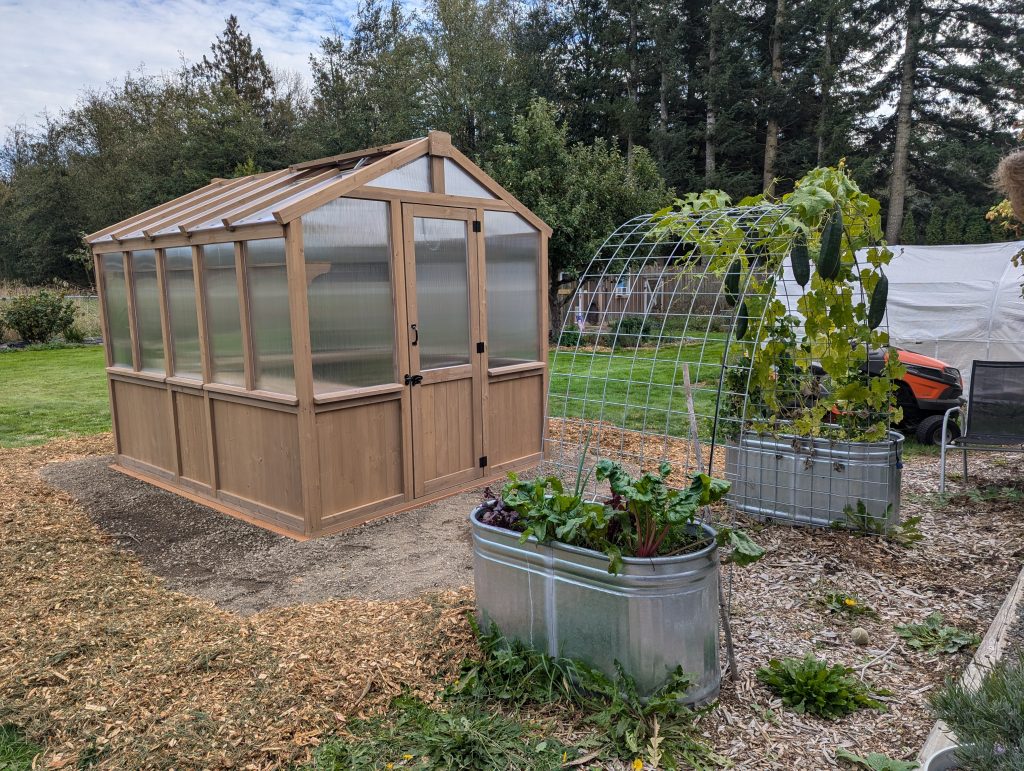
Investing in the infrastructure of a new poly tunnel to replace the dilapidated one that was here when we moved into Villa Westwyk, took a bit of small-scale steps. Same with the greenhouse. Bit by bit we took planned and intentionally thought-out actions in order to reduce adding too much at once, and minimizing risk. Like Jessi Bloom wrote in “Practical Permaculture” it’s easier to fail spending $100 versus $1000. If I’d planted all the trees I planted to today’s count (17), there’s a good chance I would have put them in the wrong place. It’s taken me some time to observe & interact with the environment here. As a witch, I also needed to get to know the Land and its needs, strengths, and where it needed extra special attention towards energetic things. Notably, this often leads to understanding the physical needs of the Land as well. Like, there is no way in heck there will ever be anything that grows in the southeast corner here. Why? Well, I had to learn that. (It’s keeping something else out – story for another blog post.)
Heck, do you know where the prevailing wind is where you live? Does it change seasonally? Which direction does your front door face? All of these things factor into how you implement affordable, scalable projects to live with the Land as much as possible.
The same is true for our spiritual lives. As a Witch you cultivate power over time. Small repeated acts, lighting a candle daily, keeping a lunar magic calendar, or an intention journal, build a deeper connection than dramatic, infrequent rituals. Burning your magical candle at both ends does nothing but lead to burnout (why readers like myself take energetic cleansing seriously). A Witch cannot expect instant manifestations until you can feel the subtle shifts of energy.
One of the key strengths of small slow solutions is their adaptability – whether it’s practicing the Craft or designing the landscape of the environment around you with generations to come in mind. As a Witch I aim to be a good ancestor. As a permaculturist I aim to provide for my great-great-great grandchildren. This led my thoughts to noting where this simple question of “Pictures?” how both as a Witch and a permaculturist, there is a harm-reduction mindset. Small, slow solutions make sure you have the space and time and energy to do things as kindly and considerately as possible.
Incremental changes allow for continuous observation and adjustment. If a system fails or a spell underperforms, the consequences are limited, and lessons can be applied immediately. This iterative process builds a resilient system capable of responding to environmental, economic, social, or energetic changes. You don’t buy a ready-made altar, you curate it over time. A slowly built one becomes a living system, not just a collection of items.
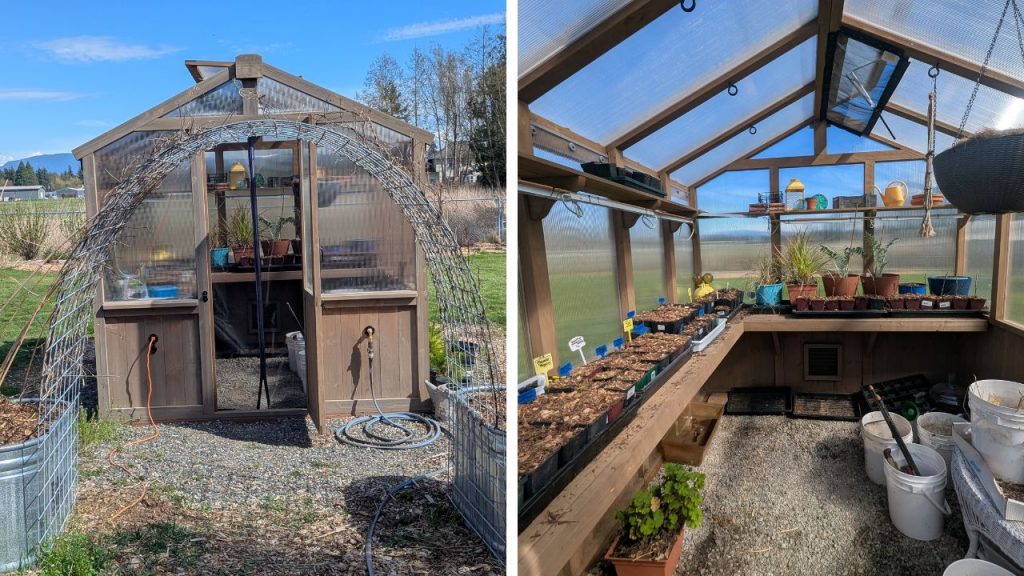
Small, slow solutions align closely with natural rhythms: the seasons, moon phases, plant growth. A Practice grounded in these cycles becomes more sustainable and intuitive, I’ve found and each year as I practice this becomes more and more concrete that magic and permaculture go together. A slower approach to your Craft creates space for reflection, which mirrors the interacting part of the permaculture tenet of observe & interact. I’m constantly asking myself why I want to do a spell? What are the potential outcomes (and dare I say consequences)? Is there a simpler or more aligned way to move forward? Like sometimes just having a conversation with someone is a whole lot faster than a cord-cutting spell.
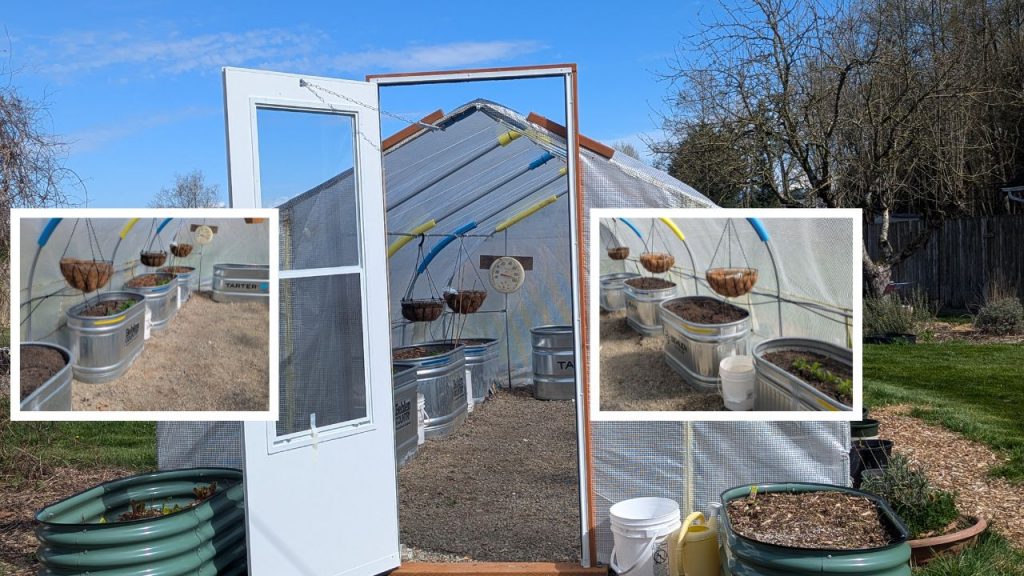
Patience, observations, and intentional design are held up by small, slow solutions. Creating a garden or a magical practice that grows and adapts over time, creates a practical and resilient path forward. Magic is alive; just like the Land here at Villa Westwyk. Witchcraft is an ecosystem; not a transaction. The subtle shift in perspective can be very profound. It also opens the door for a Practice that fits into daily life.
I’m not the same Witch I was six years ago. As the Land evolved, so did my Practice. Today my magic is deeper, I’m more skilled, and my intuition has never been stronger.
Here’s to an abundant growing season – for both the Land & our Practice(s)!
* (I’m dropping off another 9 dozen eggs to the food bank this week).